






















How Much Snow Did Boston Get After a Record-Breaking Northeast Blizzard?

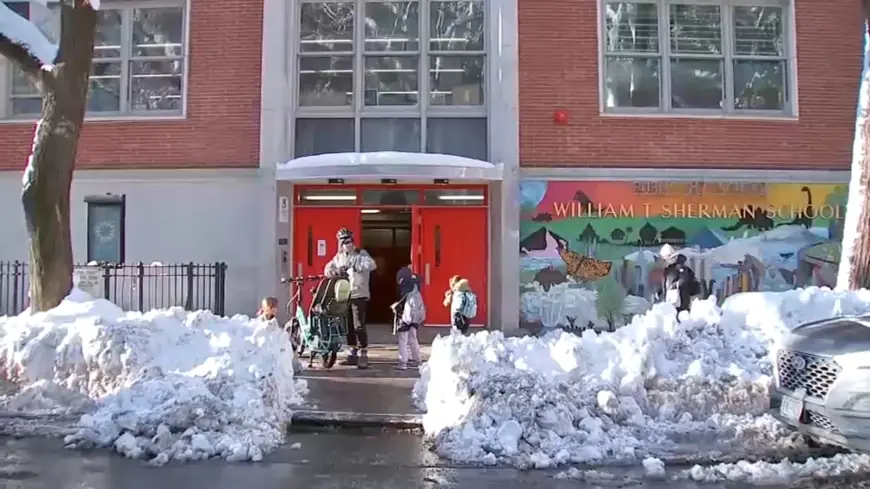
How much snow did boston get is unclear in the provided context, even as a late-February blizzard dumped record amounts across the Northeast on Monday and forced states, cities and schools to scramble.
How Much Snow Did Boston Get — what the measurements show elsewhere
While Boston-specific totals are unclear in the provided context, nearby measurements underline the storm's severity: parts of Rhode Island and Massachusetts saw nearly 37 inches of snow, Providence recorded 36 inches, and T. F. Green International Airport outside Providence logged 32. 8 inches as of Monday afternoon. The National Weather Service posted video on X from the GOES East satellite showing the February 22-23, 2026 blizzard; one post carried a 9: 25 a. m. timestamp for the satellite view. The 32. 8-inch count at T. F. Green surpassed the previous single-storm record of 28. 6 inches set in February 1978.
Storm scale: warnings, wind and record tallies
The blizzard left more than 40 million people under warnings at one point on Monday and brought heavy snowfall and hurricane-force winds. Some areas saw up to 3 feet of snow, with more than 19 inches recorded in New York City's Central Park and widespread expectations that measurements in some places could rise as crews continue to check totals later in the day. Candice Hrencecin, an NWS meteorologist in Boston, said, "It completely smashed it. "
Travel bans, state emergencies and school decisions
New Jersey, Rhode Island, Pennsylvania and Connecticut declared states of emergency and imposed travel restrictions, and 20 counties in New York were placed under emergency declarations. A ban on non-essential travel was implemented in Rhode Island and Connecticut, and Massachusetts Governor Maura Healey later imposed a travel ban, saying in an online post, "White-out conditions are making travel extremely dangerous. If you get stuck, help will have a hard time reaching you... I strongly urge everyone to stay off the roads no matter where you live. " The context defines a white-out as when snow significantly reduces visibility.
School systems diverged in their responses. New York City Public Schools reopened for in-person learning, with Mayor Zohran Mamdani saying, "You can still pelt me with snowballs when you see me, " and adding that "students may be excused for up to two hours for weather and transportation-related delays on Tuesday morning. " The decision drew criticism: more than 169, 000 New Yorkers signed an online petition asking for remote learning on Tuesday, and parents and the teachers' union raised safety concerns. In contrast, all Boston Public Schools were announced closed for Tuesday, Feb. 24, "due to the ongoing snow emergency. "
Flights, outages and municipal orders
Travel disruption was widespread: more than 5, 000 flights were cancelled as the U. S. east coast dug out, and thousands of other cancellations were reported nationwide. Power outages affected hundreds of thousands of customers across the region: one monitor showed at least 500, 000 customers without power in the Northeast as of early Monday evening, while a separate tally noted more than 600, 000 properties on the U. S. east coast endured outages. In Massachusetts nearly 300, 000 customers were without power, including 85% of customers in Barnstable County. The Boston Globe said it would not go to print for the first time in its 153-year history because of the storm.
Municipal operations shifted as conditions eased in some places: a city's sanitation department declared an official end of storm at 4: 30 p. m. local time on Monday and said property owners must shovel sidewalks by 8: 30 p. m., leaving a four-foot path for wheelchairs and strollers and clearing around curb ramps, fire hydrants and unsheltered bus stops. In New York, crews worked overnight to clear school grounds and the Department of Sanitation has been plowing city streets; alternate side parking was suspended through the weekend.
Voices from the streets and what comes next
Residents described disrupted lives: Boston resident Bradley Jay said the storm left him feeling like "a prisoner, " adding, "I won't be able to really walk around town for another ten days. So I'm stuck inside. " In New York, parent Michelle Thomas said there is "no place to walk" with people walking dogs in the middle of the street, and Tottenville High School junior Luke Thomas said taking public transportation with roads as they were over the prior 12-24 hours "is going to be a good ride. " Parent James Lecce, Sr. said, "It's very bad out here. It's slippery. It's a mess. I think they deserve an extra day home. At least one more day. " The teachers' union said "no one should jeopardize their safety to report to work. "
Reassessments and the immediate calendar
Rhode Island Governor Dan McKee said the state's emergency and travel ban would remain in effect so plow crews could continue clearing roads overnight and that the situation would be reassessed on Tuesday morning; he added that state offices would remain closed on Tuesday. Officials in other states said they would continue to monitor conditions as the nor'easter moved across coastal parts of eastern Canada while strong winds were expected to persist. Boston Public Schools are scheduled to remain closed on Tuesday, Feb. 24, and local officials have set deadlines for sidewalk clearing that evening.