

























Babar Azam Fighting to Stay Relevant as Hesson Confirms Middle-Order Role

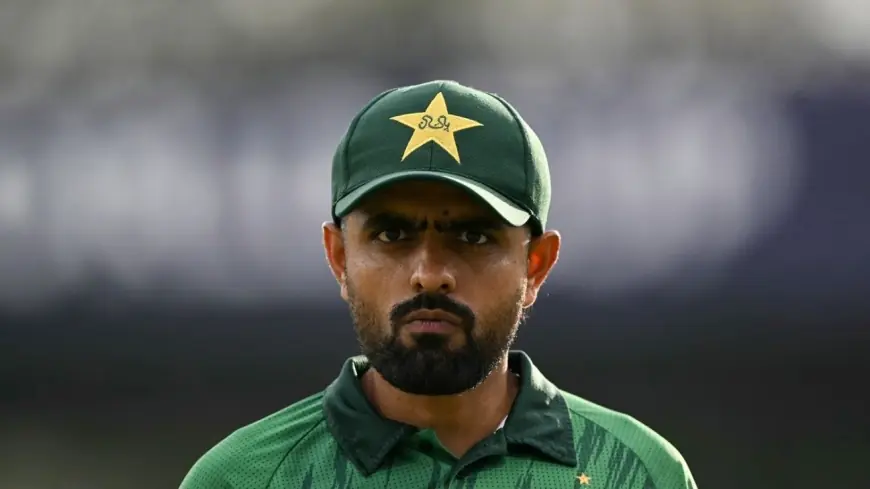
babar azam has been moved away from the top of Pakistan’s T20 batting order, a change coach Mike Hesson confirmed ahead of the Super Eights meeting with New Zealand. The shift matters now because the format rewards big hitting in the powerplay and the finishing overs, and Hesson has pointed to measurable shortcomings in Babar’s powerplay numbers that underpin the decision.
Mike Hesson and Babar Azam role
Hesson stated that Babar will not return to the top of the order and described him as "a fine player through the middle if required. " He criticised Babar’s performance specifically in the powerplay and made clear the team does not want that role filled by a batter whose strike rate in that phase is below 100 in T20 World Cups. Hesson framed the move as tactical: Pakistan brought Babar back after the Asia Cup for "batsmanship through the middle, " with the expectation he would adjust to a lower position.
Powerplay statistics and T20 World Cup history
Measured data underpins Hesson’s assessment. Across the four T20 World Cups Babar has played, he has faced 217 deliveries in the powerplay and scored 187 runs — a strike rate of 86. 17. That figure leaves him as the only player in T20 World Cup history to have faced 200 balls in the powerplay and finished with a strike rate below 90. Mohammad Rizwan sits third on that same list, with a powerplay strike rate of 98. 17.
No. 4 position after the Asia Cup and recent returns
After losing his place earlier amid a dip in T20 form, Babar was recalled following the Asia Cup and has most often batted at No. 4. He occupied that position in Pakistan’s bilateral T20I series against Australia and has continued in it for the first three games of this World Cup. At No. 4 his output has been described as serviceable rather than explosive, registering a strike rate of just over 120.
Namibia match and batting-order consequences
Events in the match against Namibia illustrated how the altered team composition can limit Babar’s opportunities. Pakistan’s second wicket did not fall until the 13th over; Khawaja Nafay and then Shadab Khan were sent out, and for the first time in Babar’s T20I career he did not come out to bat. Hesson explained the selection and order choices by saying other players in the side can perform the finishing role "more efficiently, " making Babar less likely to be required late in innings that are already advanced.
Mitchell Santner, Rachin Ravindra and spin challenges
New Zealand, Pakistan’s opponent in the Super Eights opener, presents a specific test in the middle overs. Mitchell Santner and Rachin Ravindra operate as left-arm options who can thrive when the game moves beyond the powerplay. Despite perceptions of Babar’s struggles against left-arm spin, neither Santner nor Ravindra has taken his wicket: Santner has gone wicketless in nine innings against Babar, and Ravindra in two T20I meetings. Still, run-scoring has been modest—Babar made 61 off 56 balls against the New Zealand captain, a strike rate just under 109, and managed 11 off 12 balls against Ravindra.
Commentary, scrutiny and wider implications
Broadcast and written commentary has amplified the debate: Ian Bishop and Urooj Mumtaz have offered analysis of Babar Azam’s innings, and Urooj Mumtaz has highlighted forthcoming fixtures, including Pakistan’s match against India in Colombo. Hesson also referenced a specific example—Pakistan’s game against the USA—when noting that Babar can raise his strike rate once set, but that the team often needs a different profile earlier or later in matches. What makes this notable is the combination of historical powerplay data (217 balls faced, strike rate 86. 17) with recent match situations—such as the Namibia game—creating a tactical pressure that limits Babar’s opportunities to influence outcomes.
The pattern is clear: lower powerplay efficiency has caused a coaching decision that moved Babar from the top to a middle-order role, which in turn reduces his chances to bat in innings where the finishing role is required. The timing matters because Pakistan must balance immediate tournament needs in the Super Eights with the longer-term question of how a player with Babar’s record fits into a T20 format that favours rapid scoring at both ends.