
























Lirr: Northeast Digs Out After Historic Bomb Cyclone as Another Storm Looms

The Northeast is digging out after a record-breaking bomb cyclone that dumped more than two feet of snow in places, shut down air travel and knocked out power to hundreds of thousands. The status of lirr is unclear in the provided context as forecasters warn another storm could arrive later in the week.
Mikie Sherrill on New Jersey power outages
New Jersey Gov. Mikie Sherrill said the storm was “not normal” and cautioned that officials were “not out of the woods yet. ” The storm produced widespread outages in the Garden State: 365, 000 customers lost power at the peak, and by late Tuesday morning Sherrill said just 35, 000 remained without electricity. Restoration was under way while roads and services slowly reopened.
Rhode Island Emergency Management Agency and Marc Pappas
Rhode Island set a travel ban that was scheduled to be lifted at noon ET, though officials urged residents to remain home where possible so heavy machinery could clear the snow. Marc Pappas, director of the Rhode Island Emergency Management Agency, warned that cleanup would be protracted: “This is not a quick cleanup. Recovery will take time, patience, and coordination, ” he said, adding that “snow removal at this scale is a massive, massive operation. ”
New York City schools and local leaders
New York City’s mayor, Zohran Mamdani, announced that schools would reopen for in-person learning on Tuesday, a decision that drew immediate pushback from Staten Island Borough President Vito Fossella, who said schools should remain closed. Michael Mulgrew, president of the United Federation of Teachers, called the situation “a big mess, ” and cautioned that both student and staff attendance would likely be low because many people would be uncertain whether they could travel to schools: “There’s going to be low attendance of students. You’re going to have low attendance of staff because people don’t know if they can travel, if they can get to schools, ” he said. Spokespeople for Mamdani did not respond to an email seeking comment, while Chancellor Kamar Samuels posted on X that the administration was “confident in our decision to reopen. ”
Flight cancellations, fatalities and road conditions
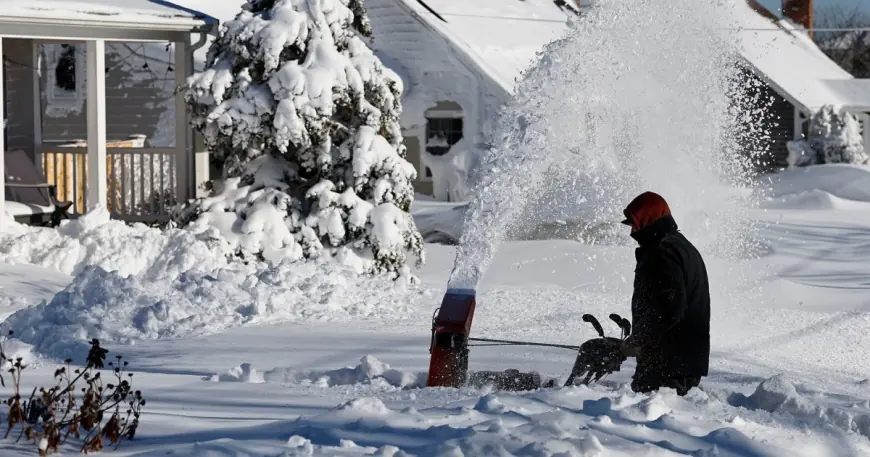
The storm paralyzed travel across the region, producing thousands of canceled flights and snarling commutes. Neighbors, government workers and a railroad snow-clearing machine nicknamed “Darth Vader” scrambled Tuesday to clear streets and rail lines. The blizzard, described by meteorologists as the strongest in a decade, dumped more than two feet of snow in parts of the Northeast. Two people died and one person was critically injured when a fallen tree struck a Maryland road during the storm. By Tuesday, roads were beginning to reopen and mass transportation was returning to service in some cities, though local conditions varied.
Lirr: status unclear in the provided context
The available information does not state the condition of Lirr service; the status of lirr is unclear in the provided context. What is known is that the National Weather Service is tracking another storm that could bring additional snow later in the week. Forecasters said the areas hardest hit by the current blizzard should see only light amounts from that follow-up system—a dusting to as much as 3 inches—but warned that even a few extra inches on top of the existing accumulation could complicate cleanup. Frank Pereira, a meteorologist for the weather service in College Park, Maryland, said that while the next storm is not expected to match the recent one, “Any additional snow at this point is probably not going to be welcome. ”
As communities coordinate heavy equipment and crews to restore power and reopen roads, officials emphasized patience and coordination. School districts on Long Island and in other New York suburbs announced additional cancellations for Tuesday, while Philadelphia moved to online learning Monday and Tuesday as officials balanced reopening decisions with travel and safety challenges.