

























Ibm Stock Rout Wipes Out $31 Billion — Who Feels It First and Why It Matters

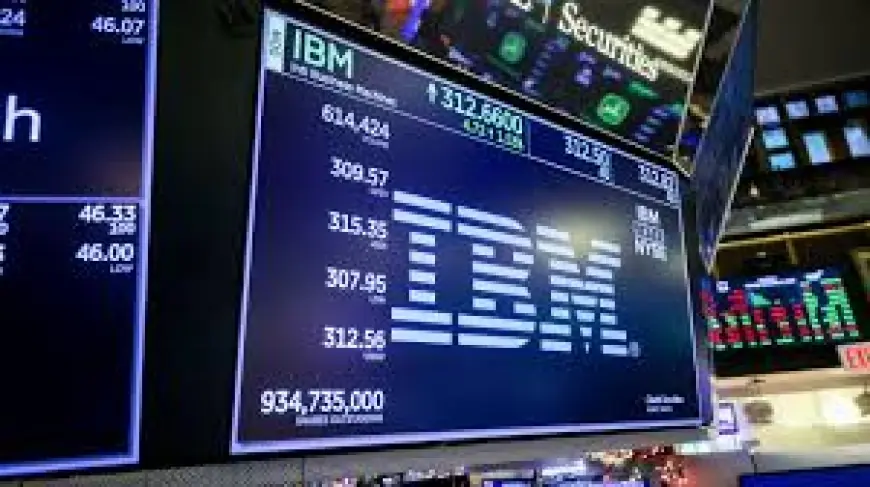
The immediate impact landed on customers and investors: ibm stock plunged after a fresh Anthropic scare about AI code assistants and legacy COBOL workloads, and that drop erased about $31 billion in market value. For organizations running payments, financial systems, airlines and government infrastructure the signal is acute — their daily production still depends on COBOL — and the market reaction changes short‑term risk tolerances for those clients and for shareholders.
Which groups face the direct shock
Here’s the part that matters: industries that rely on COBOL are the ones most immediately exposed. Anthropic (ANTH. PVT) renewed concerns that AI code assistants could automate analysis and speed migrations, and it noted hundreds of billions of lines of COBOL remain in daily production across finance, airlines, and government. Those sectors operate mission‑critical systems — payments and financial systems are singled out — so any perceived disruption to legacy workloads reverberates through customer planning and investor sentiment.
Ibm Stock slide: the Anthropic trigger and the COBOL context
The market sold first: ibm stock fell about 13. 5% on Monday after Anthropic published a blog post restating the scale of COBOL in production and suggesting AI can automate analysis tasks that have traditionally made modernization slow and costly. COBOL is identified in the post as the common business‑oriented language still underpinning many mission‑critical workloads. The rout erased roughly $31 billion in market value; shares were up only slightly on Tuesday. Read more about IBM's stock moves and today's market action remains a focus for investors watching how sentiment settles.
Evercore’s counterpoint: why mainframes still command advantages
Evercore analyst Amit Daryanani pushed back on the panic, highlighting that IBM has invested in code modernization for years, including skilling and generative AI efforts. He noted IBM launched watsonx Code Assistant for Z more than two years ago as part of that work. Translating COBOL is, in his view, the easier piece; the harder engineering tasks are things like data architecture redesign, runtime replacement, transaction processing integrity and hardware‑accelerated performance rooted in decades of tight software‑hardware coupling. He argued AI is the most powerful tool yet to help solve those problems.
Daryanani also laid out six practical reasons customers often remain on mainframes rather than migrate: 1) Reliability — cited as 100% uptime with hot‑swap capability (versus cloud uptime noted at roughly 5–6 nines), 2) speed, volume and throughput, 3) better cost efficiency at very large scale, 4) on‑prem AI inferencing for real‑time analytics, 5) security including quantum‑safe encryption, and 6) regulatory considerations in sensitive verticals such as government, healthcare and financial services where public cloud migration may not be feasible. He concluded the sell‑off looked unwarranted and said Evercore would be buyers on weakness, maintaining an Outperform rating and a $345 price target.
Jefferies’ framing: a software growth story with broader vectors
Jefferies analyst Brent Thill framed the move as a sentiment shock rather than an existential threat. He described IBM as fundamentally a software‑driven story with secular growth vectors across hybrid cloud, AI, automation and data. Mainframe software remains an important, high‑margin and durable contributor — cited at roughly ~23%/29% of IBM's 2025 total revenue/software revenue — but not the sole driver. Thill pointed to portfolio expansion in areas like Red Hat, watsonx, automation and data platforms beyond Z as the engine aiming for sustained 10%+ software growth, and he characterized the sell‑off as a near‑term overhang on legacy services instead of a structural collapse.
Earnings‑day touchpoint and remaining unknowns
The writer also noted a brief exchange with IBM's longtime CFO Jim Kavanaugh on Jan. 28 — IBM's earnings day — but the provided record of that conversation is incomplete in the provided context and the rest of the CFO's comment is unclear in the provided context. The gap leaves a small but notable reporting hole on management's immediate reaction that market participants may want clarified.
It’s easy to overlook, but the market’s knee‑jerk move compressed near‑term valuation before the practical engineering hurdles of large‑scale modernization are fully evaluated. The real question now is whether investor sentiment will reprice risk around legacy services or whether these analyst views — stressing durability, on‑prem capabilities and broader software growth — will blunt the sell‑off.
- Key stakeholders: investors, clients running COBOL in finance/airlines/government, and mainframe software teams.
- Forward signal to watch: stabilization of share price and clearer management commentary on customer demand beyond the incomplete earnings‑day note.
What’s easy to miss is the scale mismatch between a rapidly changing AI narrative and the decades of engineering embedded in mission‑critical systems; that gap explains why some analysts see a trading panic rather than a structural threat.