






















Revolution Bloomed and Died in Damascus, but the City's Atmosphere Has Shifted

The revolution that swept Syria unfolded in extremes, and its aftermath remains visible in both scars and small recoveries. That trajectory matters now because a shift in Damascus’s atmosphere is allowing everyday life and speech to reassert themselves even as material ruin persists.
Revolution in July 2012
In July 2012 the city reached a bitter apex: roughly a year into Syria’s democratic uprising, armed militias had begun to battle the national army and what the writer calls the "gates of hell" opened in Damascus. Every night brought distant bombs and gunfire that sounded like firecrackers; protests that had been daily skidded to a halt as security forces arrested people en masse and executed some on the spot. People vanished or left the country, and hospitals produced stories so horrific that many preferred treatment in improvised living‑room field hospitals rather than risk detention and torture.
Amer and the Tetanus Vials
The account centers on a personal thread: the writer had been staying in the studio of Amer, a Christian painter who had quietly resisted the government long before the uprising. That July Amer’s fridge became a storage cooler for vials of tetanus vaccine rather than water and fruit. The writer did not ask how Amer obtained them; they may have been smuggled from hospitals by a doctor who traded access for acts of loyalty, a detail presented as possible but not confirmed. For weeks the writer’s mission was to distribute the vaccine to neighborhoods with field hospitals, taking needles wrapped in a towel frozen overnight and carrying the bag under a seat on a public minibus while aware that checkpoints could search them.
The Mountain, Checkpoints and Daily Risks
Daily routines and geography shifted into risk. A mountain that once hosted coffee shops, hookah bars and panoramic views became a military no‑go zone. In field hospitals limb amputations became commonplace and surgeons removed shrapnel from oozing wounds without anesthetic. Injured patients were sometimes chained to hospital beds while doctors, accompanied by security forces, poured rubbing alcohol into open wounds; doctors also burned the genitals of detainees, accounts that drove many to seek care in private living rooms. The writer notes practical measures taken to avoid detection: if the bag of shots were found, the writer could blame the person next to them, counting on an ID hometown that marked them as Alawite and a last name connected to Assad’s inner sanctum for a fragile form of protection.
Atmosphere in Damascus and the Memory of Violence
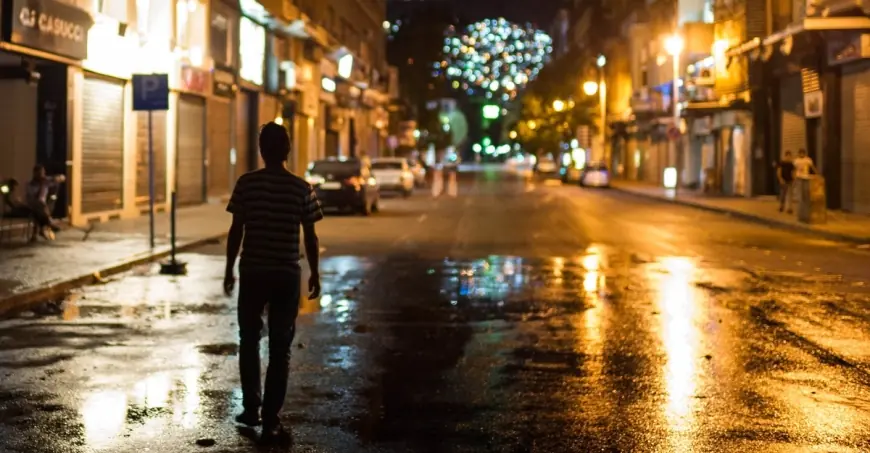
Years later the city shows both damage and a renewed pulse. Buildings are tired, infrastructure worn down, and the economy remains clearly strained after civil war, sanctions and foreign intervention. Still, streets feel alive in a way that interrupts the outside narrative of paralysis: cafés are full, noise and dynamism return, and women move through public space without visible hesitation. The writer, a political scientist focused on Arab‑speaking MENA and Turkey, emphasizes that this is not a full recovery nor an erasure of what the Assad dynasty did—Damascus was preserved as a showcase even as it was controlled as a prison—but an atmosphere in which people talk and criticize and measure words less carefully than before.
Ahmad al‑Sharra, Transitional Government and Public Speech
The broader political picture remains polarized. From afar the story is written in extremes: a former jihadist now leads the transitional government, and Ahmad al‑Sharra is perceived by some as an inevitable tyrant poised to strike against his own people, especially women, while others view him as a savior. On the ground the scene is described as less theatrical and more complicated: society testing the limits of speech after decades of fear. What makes this notable is that cracks in the architecture of silence, messy and uncertain as they are, reveal where real pressure built and create breathing space without promising immediate outcomes.
Umayyad Mosque and Small Freedoms
Concrete moments illustrate the shift. At the Umayyad Mosque women gather in groups of four and let their children run freely so they can have ten minutes of peace without constant interruption; they will eat a small bite from their bags in a place where no one asks anything of them, at least for the time being. These small acts of ordinary insistence on daily life—the ability to convene, to speak, to share public space—stand alongside enduring memories of violence. The narrative also references Robert F. Worth’s The fall of the house of Assad as part of the broader reckoning with the regime’s role.
Personal consequences endure: the writer had come to Damascus five months earlier to break from a cultivated identity and privileges tied to being an Alawite and the daughter of a family close to the regime, yet that protection could backfire. The writer slipped into early protest circles while knowing discovery would bring severe punishment. An Alawite protester the writer knew left the country after being shot in the leg and detained; his fate is unclear in the provided context.
The story that unfolds is one of contested meaning—how a revolution that bloomed and was violently suppressed still leaves room for resilience, speech and small recoveries amid longstanding damage.