






















Peter Mandelson arrest accelerates political and diplomatic fallout — consequences for Starmer’s leadership and a fast-unraveling timeline

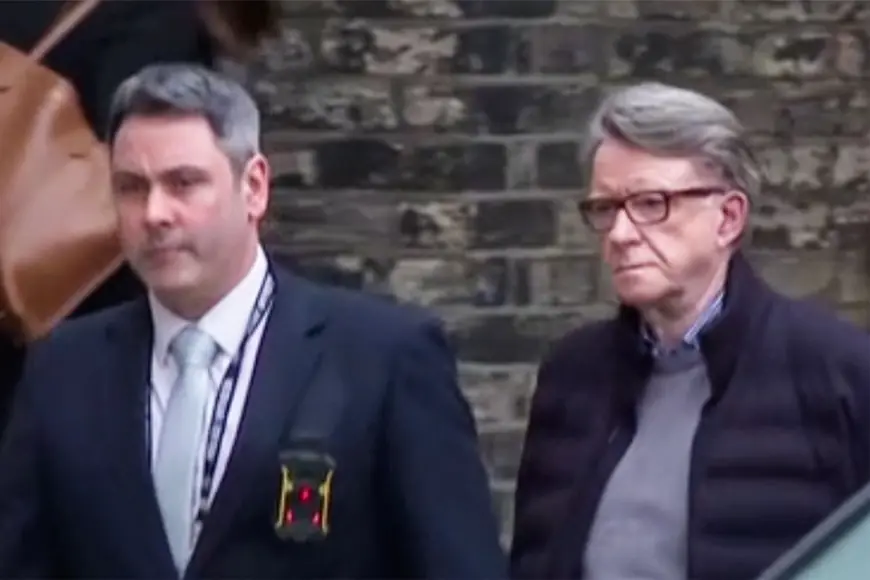
The arrest of lord peter mandelson on suspicion of misconduct in public office has already shifted the political terrain: it intensifies scrutiny on the prime minister’s decision to appoint him as ambassador to the United States, risks complicating a crucial byelection in Gorton and Denton, and deepens the commercial damage to the advisory firm he co-founded. The peers, police action and the release on bail combine to make this an immediate governance and reputational problem rather than a slow-burning scandal.
Peter Mandelson: what this moves for politics and diplomacy
The practical consequences are coming into focus quickly. Senior figures face renewed questioning over the vetting and timing of Mandelson’s ambassadorial role, backbench unease is growing, and a byelection in Manchester is now framed by the arrest. Here's the part that matters: the arrest and rapid release on bail remove any slow-burn timeline for resolution and force near-term choices in Westminster about handling appointments and accountability.
How the arrest and immediate legal steps unfolded
Lord Peter Mandelson was arrested on suspicion of misconduct in public office and taken from his London home by police before being taken to a London police station. Detectives were expected to interview him late on Monday night, and he was later released on bail; footage and accounts note his arrival home after that release. The police action followed the launch of an investigation earlier this month into allegations that, while serving as business secretary, he passed sensitive and market-sensitive government information to Jeffrey Epstein. Search warrants were executed at two properties in Wiltshire and Camden as part of the inquiry.
Commercial and personal fallout already visible
- The advisory firm Mandelson co-founded stopped trading and went into administration; UK staff were being made redundant and directors appointed administrators for the London-based lobbying business after reported client departures.
- He was sacked as the UK ambassador to the US in September 2025 and later stepped down from the House of Lords; earlier in February he resigned his membership of the Labour Party stating he did not want to cause further embarrassment.
- Family reactions have reached the public record: Virginia Giuffre’s brother and sister-in-law, Sky and Amanda Roberts, commended British authorities for taking meaningful action and treating the Epstein files with urgency.
Press framing, public reactions and adjacent headlines
National front pages ran dramatic visuals of Mandelson being led away and used language that framed the moment as a fresh blow to the prime minister and a possible re‑ignition of earlier controversies over the ambassadorial appointment. Some national coverage compared the scene to other high-profile arrests and noted denials of wrongdoing by others previously linked to Jeffrey Epstein. Other national coverage in the same round-up included a presidential interview about the fourth anniversary of the war in Ukraine that described the conflict as at the "beginning of the end" and urged the US to look past negotiating games, a brief about the fourth anniversary being marked as four years of tears, a note that Shamima Begum may be planning a return despite being stripped of citizenship, and the announcement of the first UK baby born using a transplanted womb from a deceased donor, with the parents paying tribute to the donor.
It’s easy to overlook, but the breadth of those front pages underlines how quickly the arrest reshuffled public conversation: legal procedure and geopolitical anniversaries sat side by side on the same morning’s coverage.
Document trail, communications and a compressed downward arc
The unraveling traces back through a series of released documents and emails and a sequence of revelations that accelerated over recent years. US lawmakers released some of the relevant emails in September 2025. Earlier items in the record included a 2003 letter in which Mandelson described Epstein as a close friend, and a 2008 message in which he pledged to advocate for Epstein’s early release when the financier faced charges. A financial-sector review published in mid-2023 noted evidence Mandelson had stayed in Epstein’s Manhattan townhouse in 2009 while Epstein was in jail. Subsequent emails suggested continued contact through 2010 and later messages indicated contact until at least 2016. In December 2025 Mandelson said he believed his sexual orientation played a role in how he was positioned relative to Epstein’s crimes. In the mass release of files in January this year, millions of pages showed that Epstein sent thousands of pounds in bank transfers in September 2009 to Mandelson and to his partner and now husband, Reinaldo Avila da Silva, roughly two months after Epstein’s release from prison. In a January 2026 interview, Mandelson initially declined to apologise and described himself as not culpable and unaware of the scale of Epstein’s crimes.
- Immediate political strain: the arrest sharpens questions about appointment processes and the prime minister’s judgement.
- Commercial consequence: the advisory firm’s collapse shows tangible client and financial fallout tied to the revelations.
- Legal process now trumps PR: searches, interviews and bail mean a formal investigatory clock is running.
- Public reactions vary—from family of an Epstein accuser praising action to headlines that link the episode to other prominent cases—raising reputational stakes for several figures.
The real question now is how quickly evidence from the ongoing investigation and the released files will translate into decisive political moves. A short chronology of key public moments embedded in the coverage helps make that clearer:
- June 2023: financial review documented a 2009 stay in Epstein’s Manhattan townhouse while Epstein was in jail.
- September 2025: some Epstein emails were released by US lawmakers, triggering renewed attention.
- December 2025–January 2026: large-scale file releases and revelations about transfers and communications, followed by a January 2026 interview in which Mandelson said he was not culpable.
What to look for next are formal investigative steps being authorities, any changes to Mandelson’s bail conditions, and whether parliamentary pressure forces sharper choices on appointments and party discipline. The real test will be how quickly the investigation produces material the public and parliament can evaluate, and whether political leaders alter course in response.
Here’s one final, practical note for readers: the situation remains active and granular details are still emerging; any new interview, charge or corporate filing will change the shape of the story.