










Mexico News: Post-raid violence raises fresh doubts about World Cup hosting


The killing of Nemesio Oseguera Cervantes, known as "El Mencho, " in a federal operation has triggered a nationwide wave of cartel retaliation that has left security forces dead, torched roads and disrupted travel — developments that matter because Mexico is co-hosting the summer Fifa World Cup in cities directly affected by the unrest.
El Mencho and the raid in Jalisco
Federal authorities attempted to capture Nemesio Rubén Oseguera Cervantes in the western state of Jalisco on Sunday, and the raid escalated into a firefight that fatally wounded the 59-year-old leader and killed six of his accomplices. Defence minister Ricardo Trevilla said information that led to the operation came from a romantic partner. The death of the longtime head of the Jalisco New Generation Cartel (CJNG) set off the subsequent chain of attacks.
CJNG retaliation and National Guard casualties
In direct response to the killing, CJNG gunmen engaged Mexican military forces, blocked roads and burned vehicles. The violent backlash has been lethal: at least 25 members of the National Guard were killed within 24 hours, and another account puts the toll at 25 National Guard members plus one security guard. Mexico’s security minister, Omar García Harfuch, also reported 30 cartel operatives killed and one bystander dead amid the clashes. The cartel’s nationwide tactics included patrolling streets and setting cities ablaze, images of which circulated widely online.
Puerto Vallarta, Guadalajara and airport disruptions
Roads in the west were blocked by torched cars and buses, prompting school closures and leaving international travellers stranded. In Puerto Vallarta, videos showed cars and buildings on fire while tourists walked beaches with smoke rising. Authorities in Puerto Vallarta advised residents and visitors to stay indoors, and more than 1, 000 people sheltered overnight inside Guadalajara’s zoo, where director Luis Soto Rendón said small children and senior citizens were among those kept safe. Rumours spread that large airports had closed after footage showed people running for cover in terminals, but airports in Guadalajara, Puerto Vallarta and Tepic remained operating while some flights were diverted; flight tracking apps showed many aeroplanes returning to their departure points. Canada cancelled flights to Puerto Vallarta and the US government warned Americans in Jalisco to shelter indoors until further notice.
Mexico News — World Cup matches in Guadalajara, Mexico City and Monterrey
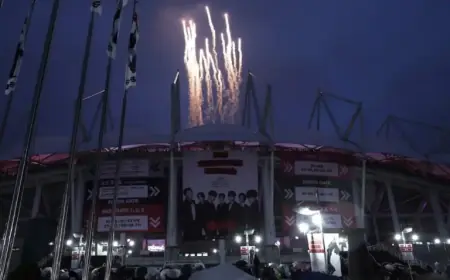
Security officials and analysts are confronting an immediate test: Guadalajara, Mexico City and Monterrey are listed as host cities for the summer tournament, with Guadalajara scheduled to host four matches, Mexico City five and Monterrey four. The violence began in Jalisco and has since spread to at least a dozen more regions, prompting a code red security declaration in Jalisco. Officials and experts have pointed to the risk that such unrest could compromise Mexico’s co-hosting role if the security situation cannot be contained.
Government response, cleared roadblocks and broader implications
President Claudia Sheinbaum urged calm while authorities said more than 250 cartel roadblocks across 20 states had been cleared. The ministry of foreign affairs issued a statement asserting that the rule of law prevails and that work continues under presidential leadership to ensure security and wellbeing. Analysts warned that removing a centralised leader can create instability: David Mora of the International Crisis Group expects violence to spike because El Mencho ran a highly centralised organisation with no clear direct heir, and rival factions may compete for control. Javier Eskauriatza, an assistant professor of criminal law, noted that cartels often have an economic interest in maintaining peace around major events; they pay off officials, buy businesses and can benefit financially if tourists from Britain, the United States and elsewhere spend money in Mexico.
What makes this notable is the combination of scale and economic stakes: the CJNG is estimated to be worth more than £10bn, has tens of thousands of members and has been linked to massacres, kidnappings and killings since its formation in 2009, yet some figures retain local popularity by financing infrastructure. The defence of public safety has therefore involved clearing hundreds of blockades and reassuring travel channels while grappling with a possible power vacuum that could prolong unrest.
It remains unclear in the provided context whether the violence will subside or escalate further, but the immediate effects are measurable: multiple fatalities among security forces and civilians, more than 250 cleared roadblocks across 20 states, thousands sheltered from danger and the temporary rerouting and cancellation of flights affecting international travel. The coming days will determine whether the security operations stem the unrest or whether broader disruption poses a sustained threat to major events and public safety.