

























IBM Stock Crashes 13% After Anthropic's Claude AI Targets COBOL — IBM's Core Business

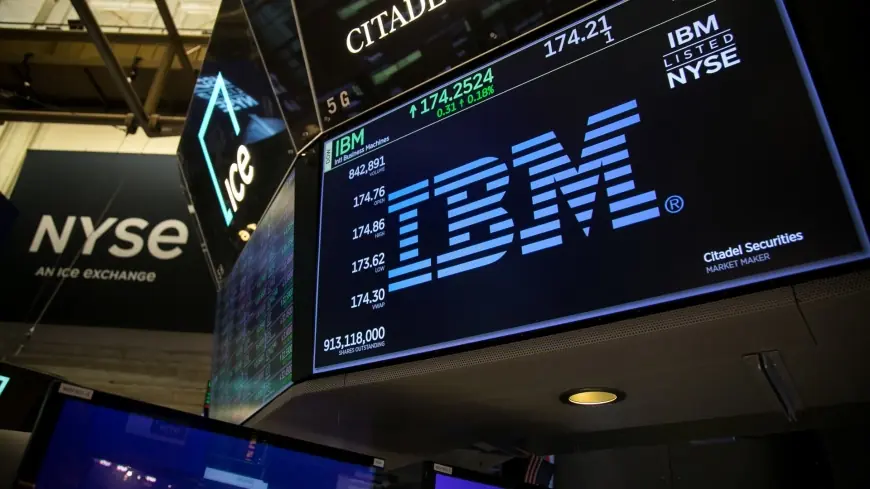
IBM stock suffered its worst single day in more than 25 years on Monday after Anthropic, the AI company behind Claude, announced that its Claude Code tool can now automate the most complex and expensive parts of modernizing legacy COBOL systems — striking at the very heart of IBM's business model.
IBM Stock Today: How Far It Fell
Shares of IBM closed Monday lower by nearly 13.2%, at $223.35 per share. Monday's sell-off brought IBM shares down more than 24% year to date.
The stock plunged 13% in its biggest single-day percentage loss since October 2000. With the decline, IBM shares have fallen 27% in February — on track for its biggest one-month slide since at least 1968, according to data compiled by Bloomberg.
What Anthropic Announced: Claude Code and COBOL
Anthropic said on Monday that Claude Code could be used to automate the exploration and analysis work that drives most of the complexity in COBOL modernization — a key IBM business. IBM has long sold mainframe systems optimized for large-scale transaction processing, where COBOL has often been used.
Anthropic said that Claude Code's COBOL modernization works by mapping dependencies across thousands of lines of code, documenting workflows, identifying risks faster than human analysts, and providing teams with deep insights for informed decision-making. "With AI, teams can modernize their COBOL codebase in quarters instead of years," Anthropic said.
Why COBOL Is So Critical — and Why IBM Is So Exposed
Short for Common Business-Oriented Language, COBOL is a dominant code system developed in the late 1950s often used in business data processing, such as payment processing and retail transaction systems. An estimated 95% of ATM transactions in the U.S. use COBOL, according to Anthropic, making it a prime target for cost-efficient AI disruption. "Hundreds of billions of lines of COBOL run in production every day, powering critical systems in finance, airlines, and government. Despite that, the number of people who understand it shrinks every year," Anthropic wrote in its blog post.
IBM Stock Snapshot vs. Sector
| Company | Monday Move | Reason |
|---|---|---|
| IBM (NYSE: IBM) | -13.2% | Direct COBOL business threat |
| Accenture (NYSE: ACN) | Down | COBOL consulting exposure |
| Cognizant (NASDAQ: CTSH) | Down | Legacy modernization exposure |
IBM, Accenture, and Cognizant have significant legacy system modernization practices that generate revenue from helping organizations update decades-old COBOL systems. Anthropic's new tool automates the exploration and analysis phases of COBOL modernization that traditionally required large consulting teams.
Anthropic's Pattern of Disruption: IBM Is Not the First
IBM is the latest stock to fall on AI fears, which have rattled investors in recent weeks and contributed to a volatile "sell first and ask questions later" trading environment. On Friday, a slew of cybersecurity companies tumbled after Anthropic unveiled a new capability built into Claude Code, called Claude Code Security, that it said can scan codebases for security vulnerabilities and find software vulnerabilities for humans to review.
Can IBM Fight Back?
IBM faces pressure to integrate similar AI capabilities into its watsonx platform or risk losing ground in modernization contracts. Analysts maintain a moderate buy rating with a $314.06 target price, suggesting potential recovery if IBM counters effectively. IBM's strong financial health, with an Altman Z-Score of 3.34, positions it to adapt through acquisitions or partnerships.
One retail investor on Stocktwits noted that modernizing critical COBOL systems requires far more than code analysis, and that for core customers like large banks and insurers, IBM's integrated ecosystem still offers unique value. Anthropic released a Code Modernization Playbook alongside its announcement on February 23, 2026 — signaling this is not a one-time headline, but a deliberate push into legacy enterprise territory that directly challenges IBM's largest recurring revenue stream.