

























Stonehenge: The Mystery of Its Moved Stones Finally Finds an Explanation — Mineral fingerprints shift the debate away from glacial delivery

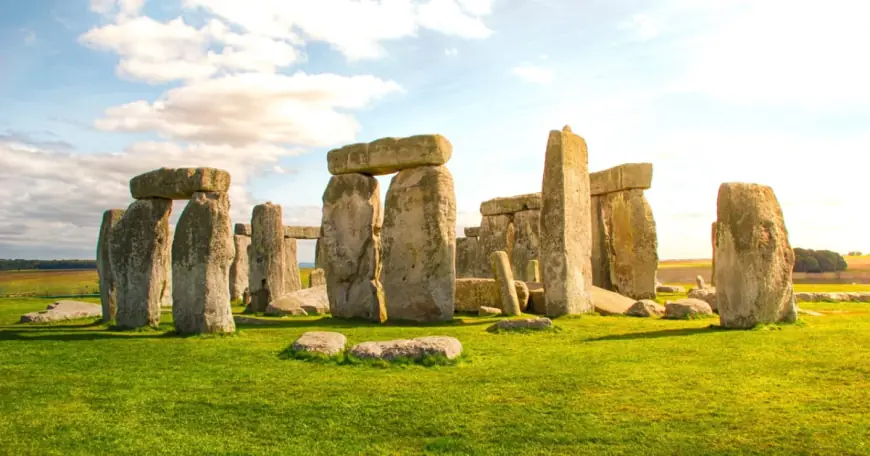
Why this matters now: a study published on 21 January applies advanced mineral fingerprinting to river sands around stonehenge and delivers the first clear evidence that giant ice sheets did not ferry the monument’s distinctive stones to Salisbury Plain. That shifts a decades-long debate from plausible imagery of glaciers-as-delivery-trucks to a different story about local sedimentary sources and the decisions of prehistoric builders.
Stonehenge: a rewind that changes the frame of the debate
Before we get into the technical test, put the change in perspective: the glacial transport hypothesis was long popular because it offered a simple physical mechanism for moving large stones. The new work rejects that mechanism on empirical grounds, forcing scholars to re-evaluate where the bluestones and the Altar Stone actually came from and how prehistoric people obtained them. Here’s the part that matters — the method looks for microscopic mineral signatures that would have been left behind if ice sheets had carried rocks southward, and those signatures are missing.
- Implication: The absence of a Welsh or Scottish mineral fingerprint in local sands reduces the likelihood that glaciers dropped those stones on Salisbury Plain.
- Affected groups: archaeologists, geologists and heritage interpreters will need to adjust models about sourcing and movement of megaliths.
- Signals to watch for: additional mineral-fingerprinting from other nearby catchments or direct sampling of stone interiors could confirm or refine this shift.
What’s easy to miss is that this is not merely an argument about moving rocks; it changes the starting assumptions for reconstructing ancient human effort and mobility. If the stones were not delivered by glacial action, then choices by people — whether local extraction or targeted transport from nearer sources — regain prominence in explanations.
How the study tested the ice-transport idea and what it found
Rather than focusing only on the monument’s visible faces, researchers analyzed river sands from the area surrounding the site, searching for tiny mineral grains — zircon and apatite — that act like geological fingerprints. They examined more than 700 individual grains, using age distributions to match grains to potential source regions. If glaciers had carried stones from distant Welsh or Scottish outcrops, the local rivers should retain clear traces of grains with ages characteristic of those sources; that signature was not found.
Instead, most zircon grains clustered within an age range between 1. 7 and 1. 1 billion years. Those ages correspond to the Thanet Formation, a sheet of weakly cemented sands that once covered much of southern England and now survives as fragments in today’s river deposits. The result was described as striking: hardly any grains matched the mineral ages tied to the Welsh bluestone sources or the Scottish origin proposed for the Altar Stone. In short, today’s river sands appear to be dominated by ancient local sedimentary material rather than debris left behind by ice sheets during the last ice age.
The study also notes that typical glacial landscapes leave visible marks — scratched bedrock, chaotic rock piles and sculpted landforms — and that those telltale signs are either absent or ambiguous around Salisbury Plain. Earlier work had cast doubts on the glacial reach into the area, but this study uses microscopic evidence to make the case more directly. Recent updates indicate the mineral record in local rivers does not support broad glacial delivery to the site.
Micro timeline:
- Last ice age southern reach referenced historically between 26, 000 and 20, 000 BCE.
- On 21 January, a new mineral-fingerprinting study published findings that challenge the glacial-transport idea.
The real question now is how models of procurement and movement will be recalibrated in light of a reduced role for glacial delivery. Further sampling in neighboring catchments and direct analyses of stone interiors could be decisive signals that confirm or refine the new picture.
It’s easy to overlook, but this kind of mineral fingerprinting shifts the primary evidence from large-scale landscape features to microscopic archives preserved in river sediment — and that means debates will increasingly pivot on lab-based traces rather than grand physical narratives alone.