
























Ibm Stock Faces Fresh Uncertainty After 15% Global Tariff — What Changes for Investors


The reimposition of a 15% global tariff under the Trade Act of 1974 has introduced a new layer of risk that changes how investors value multinational technology and consulting firms. For many, the practical question is how this trade-policy shift reshapes earnings assumptions, cost pressure and the timing of any recovery — and that recalibration is already being reflected in moves in ibm stock.
Ibm Stock: immediate consequences for valuation and investor decisions
Here’s the part that matters: the tariff — set for up to 150 days — and the fast policy pivot have pushed traders to reprice near-term risk. A 4% intraday drop shows markets view the announcement as meaningful; combined with recent valuation scrutiny and rising macro pressure, the change forces investors to rethink projected earnings growth and the discount rate they apply to future cash flows. That matters especially for companies with heavier exposure to cross-border supply chains and services revenue tied to global clients.
- Tariff detail: 15% global tariff, actionable for up to 150 days.
- Market reaction snapshot: a 4% morning-session decline in the stock.
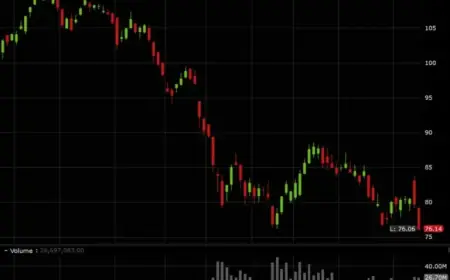
- Recent trading context: ibm stock is down 15. 3% year-to-date and trading 21. 7% below its 52-week high of $314. 98 (November 2025); current quoted level is $246. 78 per share.
- Volatility pattern: roughly 10 moves greater than 5% over the last year; a prior 8. 1% drop occurred about 20 days earlier tied to sector weakness.
It’s easy to overlook, but the market reaction blends a one-off policy shock with an existing thread of valuation pressure and sector slowdown concerns — the tariff doesn’t exist in isolation.
Event details and where the pressure started
The tariff action followed a legal shift that removed one route previously cited for similar duties, prompting the administration to use the Trade Act of 1974 instead. That switch produced immediate trade-policy uncertainty, which rippled into stocks that depend on international trade. Separately, investors were already digesting signs of weakness in the IT services and consulting space after a major industry report showed consulting revenue decline of 12. 8%, a drop that helped spark a recent steep move lower in the sector and in related names.
Against that backdrop, macro dynamics have been tightening investor focus on valuation: higher yields on U. S. Treasuries tend to raise the discount rate applied to future earnings, and that dynamic has been cited as a contributing factor to recent multi-week declines in share prices for some firms. For ibm stock, those combined forces—policy uncertainty, sector growth questions and valuation pressure—are colliding in the short term.
Key figures summarized:
- Tariff: 15% globally, up to 150 days
- Recent single-session move: -4%
- Year-to-date performance: -15. 3%
- Current quote cited: $246. 78; 21. 7% below 52-week high of $314. 98 (Nov 2025)
- Notable sector data point: consulting revenue decline of 12. 8% from a major industry report
Micro Q& A
Q: Should investors treat the dip as a buying opportunity?
A: Market commentary notes that large intraday drops can create chances to purchase quality names, but the current environment mixes policy uncertainty with existing sector questions — investors will need clearer signs on earnings resilience and macro trends before treating the move as a definitive entry point.
Q: Who feels the impact first?
A: Companies with international supply chains and sizable global consulting or services revenues are likely to feel the earliest effects of added trade costs and client budget shifts.
Q: Which signals would confirm a stabilization or reversal?
A: A roll-back or clarity on tariff duration beyond the initial 150-day window, an improvement in consulting revenue trends, or a retreat in the upward pressure on yields would all be credible indicators that risk is receding.
The real question now is whether near-term policy noise will prove temporary or whether it will compound valuation headwinds already pressuring the sector. Market participants are watching multiple threads at once; the path for ibm stock will depend on how those threads resolve in the coming weeks.
[Writer’s aside] The bigger signal here is that similar price drops have clustered around tangible macro or sector events rather than isolated firm-level news — which suggests investors are re-evaluating industry-wide growth assumptions as much as company-specific forecasts.