
























Ibm Stock Plunge Reverberates: Taleb, Citrini and Anthropic Combine to Trigger a Broad Market Shock

The immediate impact landed on investors and companies tied to payments, delivery apps and legacy enterprise software: ibm stock fell sharply as a weekend thought exercise and an AI tool announcement collided with a high-profile warning about market fragility. Here’s the part that matters — this sequence pushed some leaders into steep one-day losses and left portfolios exposed to a wider AI-driven repricing of risk.
Ibm Stock fallout and who felt it first
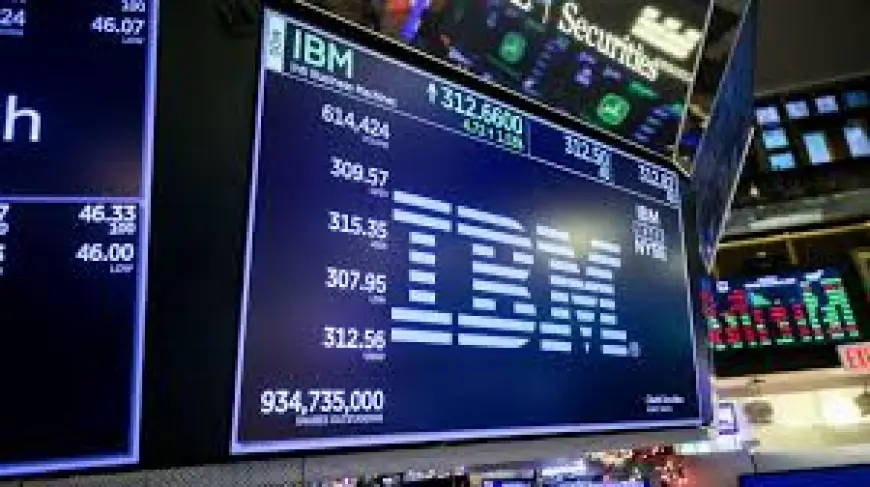
Shares of IBM closed down 13%—the largest one-day drop for the company since 2000—while several firms named in the weekend scenario also slumped. DoorDash, American Express, KKR and Blackstone each fell by at least 6%, and a second group including Uber, Mastercard, Visa, Capital One and Apollo declined by 4% or more. The market reaction read less like an isolated shock and more like a coordinated repricing of businesses that depend on transaction fees, delivery economics and legacy enterprise stacks.
How the chain of events unfolded (details embedded)
The selling pressure followed a string of linked items: a bearish thought exercise released on social media over the weekend by Citrini Research; an AI startup’s public note about a new tool for modernizing a dated programming language that runs on many IBM systems; and a public warning from Nassim Taleb about escalating volatility and potential bankruptcies as an AI rally becomes fragile. The Citrini piece, founded by James van Geelen, sketched hypothetical scenarios set in June 2028 where AI disruption causes mass white-collar unemployment, weaker consumer spending, software-backed loan defaults and broader economic contraction. The report explicitly framed its work as a modeling exercise rather than a prediction, and it singled out food delivery services and payment processors as sectors facing disruption.
Immediate market winners and losers named in the scenario
- Moved down at least 6%: DoorDash, American Express, KKR, Blackstone (each fell by at least 6%).
- Moved down 4% or more: Uber, Mastercard, Visa, Capital One, Apollo.
- Company at the center of the surge and slide: IBM, down 13%—its biggest one-day drop since 2000—and described in coverage as facing partial blame tied to the Anthropic announcement.
Signals, reactions and what could change next
One clear signal to watch is whether market moves extend beyond a clustered selloff into sustained sector rotation. If payments and delivery names continue under pressure while enterprise software metrics show early signs of displacement, the scenario that triggered the panic will start to look less theoretical. If the losses prove short-lived and earnings remain steady, the selloff may be read as an overreaction to a vivid—but explicitly hypothetical—report.
If you’re wondering why this keeps coming up, Anthropic’s note about a tool to help modernize COBOL—software historically associated with many IBM systems—served as a concrete technical trigger after the weekend scenario amplified worries about AI-driven disintermediation. DoorDash’s co-founder Andy Fang pushed back in a public post, saying agentic commerce could be transformative and that the industry will need to adapt as the ground shifts.
What’s easy to miss is how the narrative mix of a speculative future scenario, a technical product announcement, and a market strategist’s warning can amplify each other. The underlying facts are straightforward, but their combination created an outsized market reaction.
Micro timeline (compressed):
- Weekend: Citrini Research published a scenario on social media outlining future AI disruption.
- Sunday: The Citrini piece appeared publicly on social platforms and emphasized it was a scenario exercise.
- Monday: Anthropic posted about a tool aimed at modernizing COBOL; market commentary from Nassim Taleb flagged rising structural risk; IBM and several named firms experienced sharp declines that day.
Final practical note: the Citrini scenario places many of its outcomes in June 2028 and stresses that not all elements will occur. Recent updates indicate market positioning and narratives can shift rapidly; details may evolve.