









Kenneth Williams was unabashedly different in an age of conformity

kenneth williams, born to working-class London parents on 22 February 1926, remains a defining and divisive figure in British comedy: celebrated for razor-sharp wit and physical oddity, and remembered for a tragic death that left questions about intention. His centenary has reopened discussion of his work, appearance and private life.
Voices praising his subversive wit and outsiderness
Comedians and stars have pointed to Williams’s subversive brilliance. Tom Allen used an acceptance speech at Attitude magazine’s comedy award last year to salute the subversive wits who paved the way for freedoms now enjoyed by queer people, naming Oscar Wilde, Noël Coward and saying Kenneth Williams was “a big hero of mine. ” Allen said he connected with Williams’s outsiderness, that Williams did not apologise for being different and was “queer in every sense, truly at odds with the world in which he found himself. ”
Others who praised Williams include Orson Welles, Judy Garland, Maggie Smith and Morrissey; Dame Maggie Smith said he could make a place “suddenly marvellous just by being there. ” Fenella Fielding said “he could be hideous, ” and Gyles Brandreth described him as “Outrageous, waspish, wickedly funny, and often wicked simply to be funny. ”
How his voice and physicality became his comic tools
Williams’s presence cut across stage, screen and radio in the second half of the last century. He was a fixture on radio and on stage and screen, and his adenoidal voice was described as inescapable—sliding “swanee whistle-style” from sandpapery cockney to Sandringham pomp, the vowels elastic enough to travel across class. He also described himself as a “dried-up prune-like poof. ”
Contemporaries and commentators emphasised his striking looks: like a living Gerald Scarfe caricature with flared nostrils “wide as shotgun barrels, ” twitching eyebrows and pinprick eyes; when he tipped his head and peered down his “knife of a nose” he was likened to an anteater. He once said, “Perhaps it’s my duty to be a sort of mosquito. Someone’s got to continually remind people that we are animal. ”
Kenneth Williams’s stagecraft, Michael Sheen and the comic of contradictions
Michael Sheen played Williams in the 2006 film Kenneth Williams: Fantabulosa! and argued that Williams’s appeal came from mixing erudition with the vulgar. Sheen recalled that Williams “would be chatting about something intellectual and high-class, then suddenly be talking about his bumhole, ” and said that contrast lent Williams “a sort of danger and spontaneity. ” Sheen compared Williams to a commedia dell’arte trickster and went so far as to say, “What David Lynch did for America, Kenneth Williams did for Britain, but in the form of light entertainment. ”
Carry On films, famous moments and a final, unfinished note
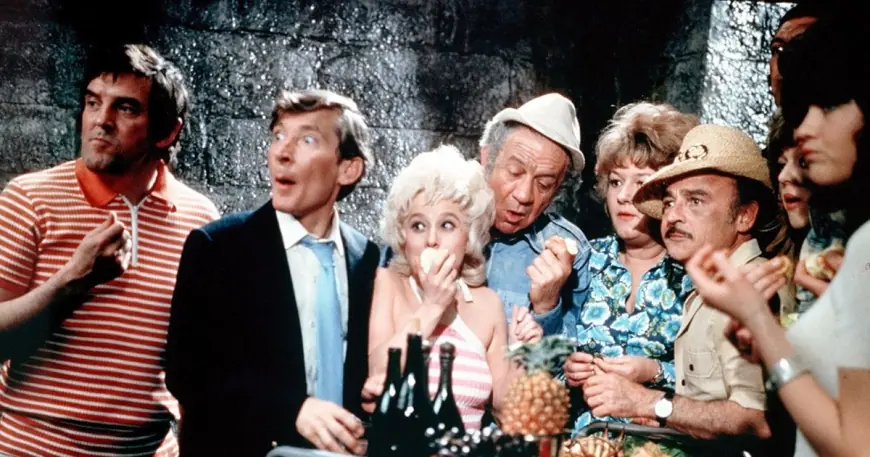
Williams is best known as a mainstay of the coarse, innuendo-drenched Carry On films. He appeared in 26 of them, including Carry On Cleo—whose line “Infamy, infamy, they’ve all got it in for me!” is indelible—and Carry On Camping, remembered for the image of Barbara Windsor’s bikini top being catapulted onto his horrified face during an overenthusiastic morning workout. His final contribution to the series came in 1978 in the dismal Carry On Emmannuelle [sic], in which he plays the French ambassador, continually refusing sex with his y
Death, estate and lasting charitable gifts
Kenneth Williams died in April 1988 at the age of 62 from a drug overdose. The coroner recorded an open verdict because it could not be established whether he intentionally took his own life or accidentally overdosed on medication prescribed to treat chronic health issues including stomach ulcers and back pain. Friends suggested the death was an accident, saying he would not have died by suicide while his elderly mother was still alive and living next door.
After his death he left parts of his estate to his close friend and neighbour Paul Richardson, including a collection of diaries and letters. A Will Trust was arranged to manage annual donations from his estate, which was valued at more than £500, 000. Figures from 2024 show donations of £46, 000 each to Guide Dogs For The Blind and Battersea Dogs Home, £34, 500 to the PDSA and £57, 500 to the RNLI.
Farley Court flat, Round The Horne and the blue plaque
Williams occupied Flat 62 on the upper floor of Farley Court, a 1929 apartment building near Madame Tussauds, between 1963 and 1970. He lived there while shooting Carry On Cleo, Carry On Up The Khyber and Carry On Camping at Pinewood Studios, and had regular slots on the radio comedy programme Round The Horne as his national prominence grew. On 22 February 2014 Barbara Windsor unveiled a blue plaque on the London flat to commemorate what would have been his 88th birthday; she said she was “absolutely chuffed” that he was being celebrated and described him as “a one-off, a true original, and a great friend. ”
In his diary Williams wrote that he felt “elated” about moving to the property, noting, “My bedroom looks out over Regent's Park. The trees are turning now and the sight is beautiful. I can see all the traffic twinkling down the Marylebone Rd - It's all so marvellous, I could cry. ” On another occasion he described being able to see “the nits crowding round outside the waxworks. How I loathe them and Madame Tussaud. ”