










Why Kenneth Williams’s centenary still unsettles: the subversive genius who refused to fit in

The centenary of kenneth williams is a moment to reckon with a performer whose outsiderness reshaped British light entertainment. Born 22 February 1926, his style — equal parts erudition and bawdiness — made him both beloved and divisive. Here’s the part that matters: his work still sends ripples today through public memory, charitable gifts from his estate and the unresolved circumstances of his death.
Contextual rewind: outsiders, admirers and a comedic lineage
Long after his death, fellow comedians and cultural figures named him as an influence. A modern standup used a comedy-award acceptance to salute Williams as a hero and connected with his outsiderness, saying he went in the opposite direction rather than trying to fit in and did not apologise for being different. Williams was celebrated by figures spanning Orson Welles to Judy Garland, and from Maggie Smith to Morrissey, demonstrating a reach across generations and sensibilities.
Kenneth Williams: persona, performance and the Carry On imprint
Kenneth Williams could play humble or haughty, cheeky or Chekhov, yet he always stole the show. Physically striking, he once described himself as a "dried-up prune-like poof, " but was more often recalled as resembling a living caricature: flared nostrils, twitching eyebrows and pinprick eyes above a knife of a nose. His adenoidal voice travelled the class scale—sandpapery cockney to Sandringham pomp—and he mined contrasts between highbrow and vulgar material, saying "Someone’s got to continually remind people that we are animal. "
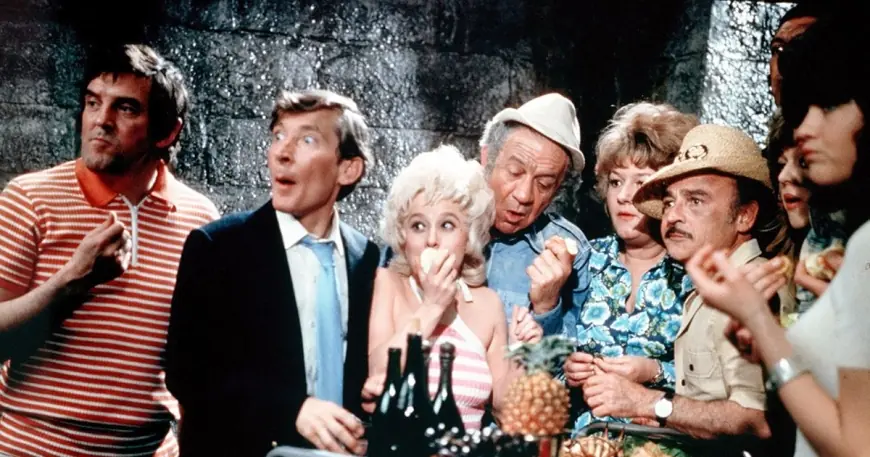
He became best known as a mainstay of the coarse, innuendo-drenched Carry On films, appearing in 26 of them, among them Carry On Cleo and Carry On Camping (noted for a scene where Barbara Windsor’s bikini top is catapulted onto his horrified face). His final contribution to the series came in 1978 in Carry On Emmannuelle, in which he plays the French ambassador and is described as continually refusing sex with his y — unclear in the provided context.
Contemporary portrayals later revisited his contradictions: Michael Sheen played him in the 2006 film Kenneth Williams: Fantabulosa!, framing him as a trickster who delighted in pricking pomposity by mixing intellectual chat with sudden crude asides.
Death, coroner finding and the estate left behind
Kenneth Williams died in April 1988 at the age of 62. The coroner recorded an open verdict because it could not be established whether he intentionally took his own life or accidentally overdosed on medication prescribed to treat chronic health issues, including stomach ulcers and back pain. Friends argued the death was likely an accident and said he would not have died by suicide while his elderly mother was still alive and living next door.
After his death he left part of his estate to a close friend and neighbour, Paul Richardson, including diaries and letters. A Will Trust was set up to administer annual donations from his estate; the estate was valued at more than £500, 000. Figures for 2024 show donations from that arrangement: £46, 000 each to Guide Dogs For The Blind and Battersea Dogs Home, £34, 500 to the PDSA and £57, 500 to the RNLI.
Residences, diaries and public commemoration
Williams lived in Flat 62 on the upper floor of Farley Court, a 1929 apartment building near Madame Tussauds, between 1963 and 1970. He wrote in his diary that he felt "elated" on relocating there, describing a bedroom that looked out over Regent's Park and watching traffic twinkle down the Marylebone Rd. On another occasion he recorded seeing "the nits crowding round outside the waxworks. How I loathe them and Madame Tussaud. "
On 22 February 2014 a blue plaque was unveiled at the London flat to mark what would have been his 88th birthday; a close colleague and friend who worked with him in the Carry On films paid tribute at the unveiling and noted his status as a "one-off, a true original. " The plaque marks the flat where he lived during the 1960s and where his profile rose through film work and regular slots on the radio programme Round The Horne.
Mini timeline and lingering signals
- Born 22 February 1926.
- Occupied Flat 62, Farley Court, between 1963 and 1970; worked on Carry On Cleo, Carry On Up The Khyber and Carry On Camping during that era.
- Died April 1988, aged 62; coroner returned an open verdict.
- Estate valued at more than £500, 000; 2024 donations from a Will Trust include recorded gifts to animal charities.
The real question now is how his mixture of brilliance and discomfort will be framed for new audiences: as subversive liberation, comic provocation, or both. What's easy to miss is how those contradictory strands—erudition and vulgarity, public affection and private pain—are all part of why his centenary still prompts strong responses.
If you’re wondering why this keeps coming up, note that the continuing charitable disbursements and commemorations mean Williams remains an active datum in public memory rather than a closed historical footnote.