


















Duke Vs Michigan: Why February Nonconference Showdowns Are Reshaping Tournament Resumes

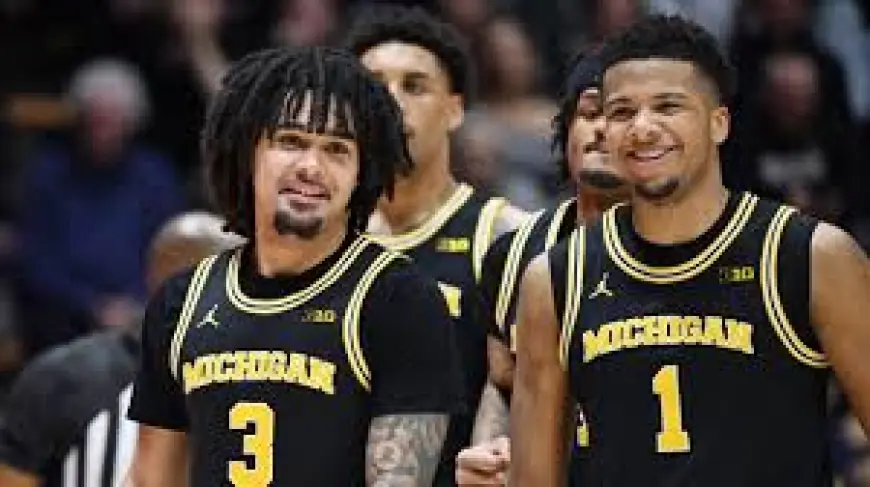
This weekend’s duke vs michigan clash in Washington, D. C., is the latest sign of a growing trend: marquee programs interrupting conference schedules in late February to sharpen NCAA Tournament résumés. That shift matters because these games offer a postseason-style test and can directly influence seeding and qualification trajectories.
Duke Vs Michigan: A February Final-Four Preview
No. 1 Michigan and No. 3 Duke are set to square off in Washington, D. C., in a matchup billed as a Final Four preview and noted for sky-high ticket prices. The pairing exemplifies the new appetite among elite programs to seek tough, neutral-site opponents late in the season rather than leaving all nonconference tests to November and December.
How one late nonconference game sparked the trend
Last season, Illinois suffered a 110-67 loss to Duke and Cooper Flagg. Illinois coach Brad Underwood found his phone ringing constantly from peers curious not about the margin but about the timing: the game was in late February, played at Madison Square Garden in New York City. Michigan’s Dusty May and Ohio State’s Jake Diebler were among the coaches who probed Underwood’s thinking. When May asked whether he would play such a matchup again, Underwood replied that he would do it "100 times out of 100, " underscoring that timing and neutral venues can outweigh a lopsided outcome in the eyes of some coaches.
Recent examples that show the pattern
- Louisville (from the ACC) defeated Baylor (from the Big 12) in Fort Worth, Texas, over a recent weekend.
- Virginia (also from the ACC) outlasted Ohio State (from the Big Ten) in the Nashville Hoops Showdown in Tennessee on the same day.
These matchups, clustered late in conference calendars, demonstrate teams are seeking unfamiliar opponents to simulate the quick-turnaround scouting of the NCAA Tournament.
Why coaches are embracing late nonconference tests
Coaches describe late nonconference games as a way to prepare players for the range of styles they might face in March. Virginia coach Ryan Odom framed the benefit as prepping for a different style and conference, creating an NCAA Tournament-like feel. Ohio State’s Jake Diebler emphasized the change of pace such games provide, noting teams get a February rep that helps prepare them for the postseason.
Scouting, style and the seeding calculus
In conference play, opponents often know the opponent’s year-over-year tendencies and personnel. The argument for late nonconference clashes is that they force teams to adapt quickly to unfamiliar systems—mirroring March routines. Examples mentioned in recent coverage highlight how conferences and coaches are viewed: Big 12 teams anticipate Kelvin Sampson and Houston to blitz ball screens; ACC opponents expect Duke under Jon Scheyer to present exceptional positional length; Big Ten programs recognize the physicality of Michigan State defense under Tom Izzo. Those stylistic contrasts are precisely what coaches say they want their teams to experience.
Roster resumes, realignment and the scheduling calculus
Conference realignment has produced super-sized leagues and expanded schedules intended to accommodate them. The result can be a watered-down league slate that some believe hurts teams trying to bolster their tournament résumés. Historical outliers exist: a BracketBusters series of February games between mid-majors and the Big 12-SEC Challenge, which was played in late January from 2016 through 2022, are examples of nontraditional timing for cross-conference matchups.
What this means going forward
Coaches and programs appear willing to accept one-off lopsided losses if the payoff is a more battle-tested team and a stronger résumé heading into Selection Sunday. The strategy is evident in the cluster of high-profile, late nonconference games and in the market reaction to marquee matchups—most notably the elevated ticket prices for major neutral-site clashes. An unrelated item in the recent packet carried the title "429 Too Many Requests. "
Take Duke last season. The Blue Devils, who went on t — unclear in the provided context.
Photo credit: Sarah Stier.