























Freeze Watch: Freeze warning for South Central Oregon Coast and Curry County Coast

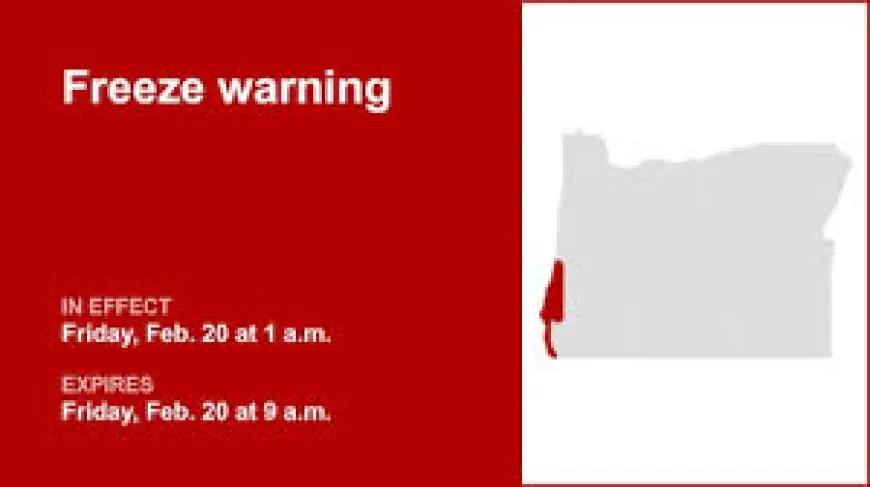
The National Weather Service issued a freeze watch and later upgraded to freeze warnings for the South Central Oregon Coast and Curry County Coast, raising immediate concerns for growers and homeowners. The freeze watch is part of a sequence of advisories spanning the week and matters now because sub-freezing temperatures as low as the mid-20s are forecast, creating a short window when sensitive vegetation and outdoor plumbing face damage.
Freeze Watch and timing
On Monday at 4: 26 p. m. ET an updated freeze watch was posted for the area, valid for Wednesday between 3: 00 a. m. and 12: 00 p. m. ET. That watch was followed by an updated freeze warning issued on Tuesday at 11: 30 a. m. ET that covered the same overnight-to-morning window. A subsequent update on Friday at 8: 21 a. m. ET placed a freeze warning in effect until 12: 00 p. m. ET for the South Central Oregon Coast and Curry County Coast. The sequence of watch then warning reflects an increasing confidence that temperatures will drop to damaging levels during the overnight hours highlighted above.
Expected low temperatures along coast
Forecast statements in recent updates list a range of possible lows: sub-freezing readings as low as 25 degrees have been noted for some inland spots, with temperatures along the immediate coast expected around 28 to 32 degrees. Earlier guidance set the possible low at 27 degrees for the coldest morning of the week, while another update cited lows near 28 degrees. Beyond the primary overnight threat, lows in the mid-30s are forecast for the following Thursday and Friday mornings, presenting a reduced but still elevated risk for frost in vulnerable areas.
Protecting plants and plumbing
Forecasters warned that frost and freeze conditions could kill crops and other sensitive vegetation and possibly damage unprotected outdoor plumbing. Guidance notes that when a freeze warning or watch is in effect there are limited options to protect plants; moving potted or otherwise movable sensitive plants indoors is the most reliable step. The advisories also emphasize that freeze warnings are typically issued during the May–October window when lows are expected near the 29–32 degree range, though warnings can be extended if necessary.
- Key takeaways: Expect freezing lows overnight; there is a risk to crops and outdoor plumbing; moving sensitive plants indoors is advised where possible.
What happens next depends on the confirmed overnight temperature readings during the posted windows. If the observed temperatures reach the lower end of the ranges cited in current guidance, impacts to unprotected plants and plumbing are likely. Local residents in the affected coastal zones should treat the posted watch and warnings as active weather threats for the specific overnight periods noted and take the mitigation steps recommended for sensitive vegetation and exposed outdoor systems.