





















Nancy Guthrie Disappearance Enters Fourth Week as Investigation Widens Beyond Tucson

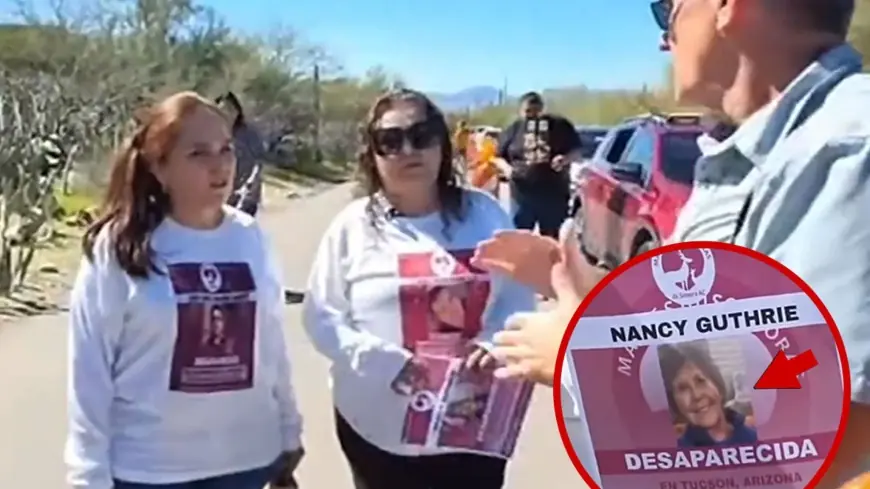
Three weeks after 84-year-old Nancy Guthrie vanished from her home in the Catalina Foothills area outside Tucson, investigators say the case remains active, evidence is still being processed, and no suspect has been publicly identified. As of Saturday, Feb. 21, 2026 (ET), officials are emphasizing two parallel efforts: a continuing field-and-forensics push around the home and a growing workload of tips arriving from across the country.
Nancy Guthrie disappearance: What investigators confirm at week three
Authorities have said they believe Guthrie was taken against her will. She was last known to be at her residence on the evening of Saturday, Jan. 31, 2026 (ET), and she was reported missing the following day when she did not appear for a scheduled commitment and relatives could not locate her.
Investigators have not publicly described a clear motive. Recent coverage has raised the possibility the incident began as a burglary that escalated, but officials have not confirmed a definitive sequence of events. They have also said close family members have been cleared.
One point that has been consistent in public briefings is restraint on details: detectives are keeping key findings confidential to protect the integrity of interviews and future prosecutions.
The video lead: masked person with gloves and backpack
The most visible public lead remains surveillance footage captured near Guthrie’s home. Investigators have asked for help identifying a masked individual seen outside the residence around the time Guthrie went missing. The person is described as a man of average build, roughly 5 feet 9 inches to 5 feet 10 inches tall, wearing gloves and carrying a dark backpack.
Detectives have urged anyone who recognizes the individual’s clothing, gait, or routine to come forward, and they have repeatedly stressed that even “small” observations can help narrow a timeline—such as unusual foot traffic, unfamiliar vehicles, or late-night movement in the neighborhood.
So far, authorities have not publicly linked a specific vehicle to the incident, a gap that can make it harder to trace a route away from the area.
Evidence testing: gloves, biological material, and DNA limits
Investigators have recovered multiple items for forensic analysis in and around the neighborhood, including gloves found in the surrounding desert area. One DNA profile obtained from a glove and submitted to the national database did not produce a match, officials have said.
That result does not end the DNA avenue. A non-match can mean the person’s profile is not in the database, the sample was partial or mixed, or it belonged to someone unrelated to the abduction. Authorities have also said biological evidence from the home is being analyzed, without specifying what it is or what it may indicate.
Sheriff’s officials have cautioned that some advanced forensic techniques can take time—sometimes months—to yield clear results, especially when labs must separate complex samples or confirm findings with additional testing.
Tips and rewards surge as attention grows
The tip pipeline has expanded quickly. Investigators say they are reviewing nearly 20,000 tips, with many leads coming from out of state. Officials have asked people to be careful about what they send in—prioritizing first-hand information, clear time-and-location details, and anything that can be verified.
The reward pool has climbed to more than $200,000 for information that leads to Guthrie’s safe recovery or an arrest. Authorities have framed the reward as a way to encourage someone with direct knowledge—an acquaintance, a witness, or an accomplice—to come forward.
Key takeaways
-
The case remains classified by investigators as an apparent abduction, with no suspect publicly named.
-
Surveillance footage of a masked person near the home remains central to identification efforts.
-
DNA from at least one glove did not match the national database; other evidence is still being tested.
-
Tips have approached 20,000, and the reward has risen to above $200,000.
What changes after three weeks, and what comes next
As missing-person investigations move past the initial surge, they often shift from broad searches to more targeted work: lab results, digital trails, focused canvassing, and tip triage. Recent public comments have suggested the operation could evolve toward a smaller, more specialized task-force posture if large-scale searching stops producing new leads—while officials also say hundreds of personnel remain engaged and resources have not been formally cut.
The next likely inflection points are straightforward and evidence-driven:
-
Identification of the person seen on video, potentially through a tip that connects the backpack, clothing, or behavior to an individual.
-
Lab progress on biological evidence tied to the residence and items recovered nearby.
-
Any confirmed link to transportation—vehicle sightings, rides, or purchases—that helps establish a route and timeframe.
Until one of those pieces firms up, investigators appear to be balancing urgency with secrecy: keeping pressure on the case while limiting public disclosures that could compromise interviews or enable a suspect to adjust their story.