























Wales Vs Scotland: Cardiff chaos as Scotland complete a historic comeback and lift the Doddie Weir Cup

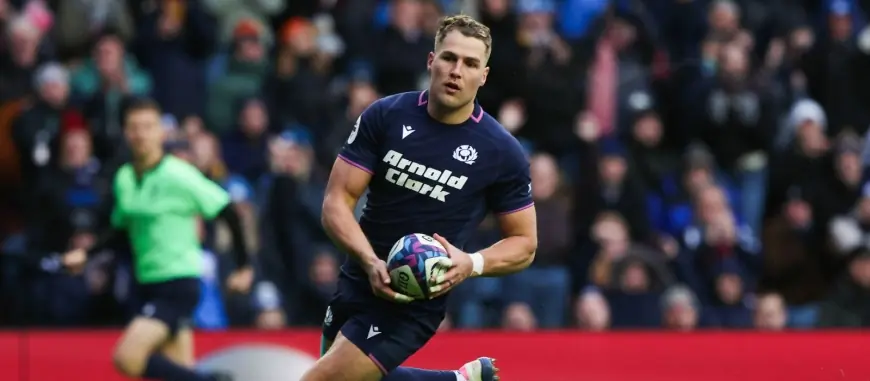
Why this matters now: the wales vs scotland clash in Cardiff rewired recent narratives — Scotland secured a fourth successive victory over Wales for the first time in 99 years while Wales's Six Nations run stretched deeper into a losing spiral. The 26-23 outcome shifted momentum and lifted the Doddie Weir Cup at the Principality Stadium, leaving immediate questions about recovery, selection and upcoming fixtures for both teams.
Wales Vs Scotland — context that changes how both teams move forward
Scotland’s fourth straight win over Wales is a rare historical marker: the first time in 99 years the visitors have strung together this many consecutive wins over Wales. The result also means Wales have now lost their last 14 games in the Six Nations; coming into this match they had been on a 13-game losing run and their three-year slumber had many hoping the Cardiff crowd might witness a revival.
Wales captain Dewi Lake called the outcome "gut-wrenching, " and former Wales captain Alun Wyn Jones described the day's performance as a "massive foundation builder" for Steve Tandy's side. What’s easy to miss is how much of the match hinged on a handful of rapid moments that turned momentum — a reminder that a single restart or penalty sequence can flip the narrative in this championship.
Event details and the turning points that decided a 26-23 scoreline
The scoreboard read Wales 23-26 Scotland. Wales led 17-5 at half-time after tries from prop Rhys Carre and wing Josh Adams. Scotland stayed in touch when wing Kyle Steyn crossed, but the second-half swing came from fly-half Finn Russell, and a defining passage saw Russell set up Darcy Graham directly from the restart after a Wales penalty. George Turner, the replacement hooker, finished a drive to claim the lead in the 74th minute and secure a bonus-point win for Scotland.
Other match details: Wales centre Joe Hawkins was shown a yellow card; Gabriel Hamer-Webb made his Wales debut; Blair Kinghorn and Duhan van der Merwe were recalled to the Scotland side; and Scotland lifted the Doddie Weir Cup at the Principality Stadium. The game was widely described in-the-moment as bizarre, pulsating, entertaining and frustrating — a compact example of why the Six Nations remains unpredictable.
Selection shake-up: five changes to Scotland’s starting XV and the full matchday 23
Gregor Townsend made five changes to his starting team for the clash in Cardiff. Blair Kinghorn, Duhan van der Merwe, Dave Cherry, Max Williamson and Matt Fagerson were the five starters brought in; Josh Bayliss and Grant Gilchrist completed seven changes to the 23 and were named among the replacements.
Scotland team to face Wales in the 2026 Guinness Men’s Six Nations at the Principality Stadium on Saturday 24 February 2026, kick-off 4. 40pm (listed team with clubs and caps):
- 15. Blair Kinghorn – Toulouse
- 14. Kyle Steyn – Glasgow Warriors
- 13. Huw Jones – Glasgow Warriors
- 12. Sione Tuipulotu – Glasgow Warriors – Captain
- 11. Duhan van der Merwe – Edinburgh Rugby
- 10. Finn Russell – Bath Rugby – Vice-captain
- 9. Ben White – Toulon
- 1. Nathan McBeth – Glasgow Warriors
- 2. Dave Cherry – Vannes
- 3. Zander Fagerson – Glasgow Warriors
- 4. Max Williamson – Glasgow Warriors
- 5. Scott Cummings – Glasgow Warriors
- 6. Gregor Brown – Glasgow Warriors
- 7. Rory Darge – Glasgow Warriors – Vice-captain
- 8. Matt Fagerson – Glasgow Warriors
- 16. George Turner – Harlequins
- 17. Pierre Schoeman – Edinburgh Rugby
- 18. Elliot Millar Mills – Northampton Saints
- 19. Grant Gilchrist – Edinburgh Rugby
- 20. Josh Bayliss – Bath Rugby
- 21. George Horne – Glasgow Warriors
- 22. Tom Jordan – Bristol Bears
- 23. Darcy Graham – Edinburgh Rugby
History, chaos and injuries: echoes of past finales at the Principality
If you’re wondering why this keeps coming up: the fixture has a history of dramatic finishes and serious incidents. In a famed 2010 encounter, Wales completed a remarkable 31-24 comeback after trailing by 10 points with five minutes left — Leigh Halfpenny ran in on 76 minutes, Lee Byrne was tripped by Phil Godman (who had come on two minutes earlier) and was sent to the bin, Stephen Jones then levelled with a kick and a late cross-field move finished with Shane Williams diving under the posts. That chaotic finish also saw two Scottish players taken to hospital: captain Chris Paterson split his kidney in a collision with Andy Powell and spent almost a week in hospital, while another team-mate had that match as their last in professional rugby.
In more recent action, Thom Evans of Scotland was taken off the field; shortly before half-time he had been stretchered off following a sickening incident that is unclear in the provided context.
- Wales travel to Ireland next on Friday, 5 March.
- Scotland host France the following day.
- Both teams have a Triple Crown showdown scheduled in Dublin on the final weekend.
Here’s the part that matters for both camps: Scotland leave Cardiff with momentum, a trophy and a clear selection template that produced points; Wales leave with reasons to reshape, but also signs — in pockets of the match and a debut for Gabriel Hamer-Webb — that can be built upon.
- Scotland achieved a rare four-match streak over Wales (first time in 99 years).
- Wales have now lost 14 successive Six Nations matches; they entered this game on a 13-game losing run.
- Key match moments: Rhys Carre and Josh Adams put Wales ahead; Finn Russell’s involvement and George Turner’s 74th-minute finish swung the result.
- Selection shake-up: five changes to Scotland’s starting XV and seven changes across the matchday 23.
- Schedule implications: both teams face tough fixtures in early March that will test response and recovery plans.
The real test will be how quickly Wales translate the flashes of life into sustained performance against Ireland, and whether Scotland can back up this landmark win when they host France. Tom English, named in the context as a chief sports writer, provided match reaction in post-game commentary present in the coverage.