
























Flights To Bucharest Disrupted as Severe Blizzard Grounds Air Traffic and Shuts Roads

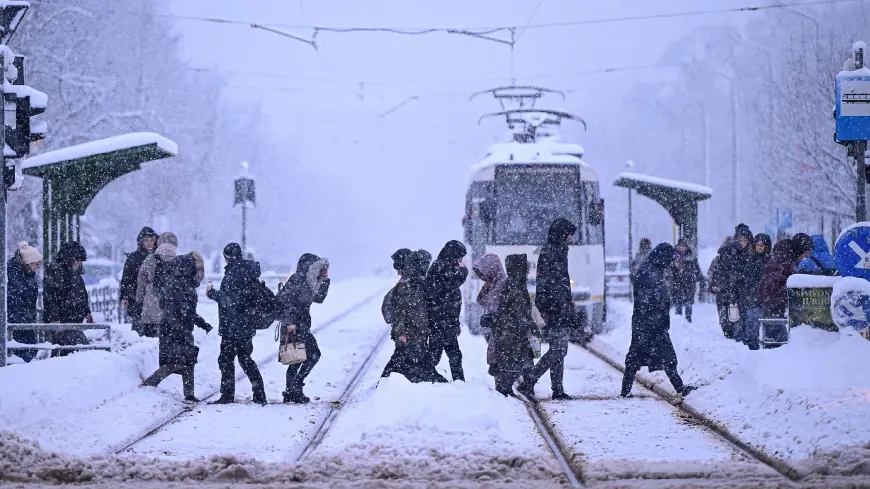
A powerful winter storm dumped heavy snowfall across southern and southeastern Romania, grounding flights to bucharest and triggering wide transport disruption and power cuts. The intensity of the blizzard and the scale of closures matter now because they halted airports, closed major road links and strained emergency services during sustained snowfall and strong winds.
Development details
Measured accumulations in the capital reached 40 centimetres, well above the local February average of 11 centimetres, while meteorological warnings signalled the potential for even deeper drifts, with forecasts expecting accumulations to exceed 50 centimetres in Bucharest. Public transport was severely affected: international airports were closed in the immediate wake of the storm, and at the country’s primary airport eight flights were cancelled, five were diverted and two runways were temporarily shuttered because of poor visibility and snow.
Rail services experienced major delays, with some trains held back by up to six hours. Motorway traffic was interrupted and several main routes into the capital were closed. Maritime operations in key Black Sea counties were suspended and lorry traffic at the Ruse–Giurgiu border crossing with a neighbouring country was halted. The Department for Emergency Situations noted that the red alert in the capital and surrounding county reflected an expectation of extremely heavy snow and hazardous conditions.
Flights To Bucharest: airport closures, cancellations and diversions
Operational disruption at the capital’s airport was among the most visible effects, as crews and ground operators contended with limited visibility and accumulations that temporarily reduced runway availability. Those attempting flights to bucharest faced a mix of cancellations and diversions; two runways were taken out of service for a period while snow clearance and safety checks were carried out. The closure of international connections compounded local transport snarl-ups, as travellers and freight movements were rerouted or delayed.
Authorities urged passengers to check the status of their itineraries before travelling to the airport and to avoid non-essential journeys while conditions remained severe. The combination of closed runways and redirected movements also fed into congestion on roads approaching the airport, amplifying the operational challenges for both passengers and logistics operators.
Context and pressure points
The storm struck a wide area: 67 localities across 21 counties were affected, prompting emergency responses on multiple fronts. Tree collapses and downed power lines under the weight of the snowfall compounded the transport crisis. Power outages were recorded at different scales in separate accounts—one assessment placed outages on the order of 200, 000 households, while the Department for Emergency Situations listed outages affecting about 18, 400 consumers across 21 localities in five counties. No injuries were reported in connection with the blizzard.
Road restrictions and motorway closures were implemented to reduce risk to motorists, and authorities explicitly advised residents to avoid non-essential travel while crews worked to clear key routes and restore services. The red alerts issued for the capital and adjacent county signalled the highest level of meteorological concern for heavy snowfall, reflecting both accumulation and accompanying strong winds that can create blizzard conditions and sudden visibility loss.
What makes this notable is the concurrence of extreme snowfall with critical transport hubs being taken offline, compressing the window for emergency services and clearance operations. The twin pressures of grounded air links and restricted road access focused response efforts on prioritising safety and maintaining essential supply lines.
Looking ahead, emergency agencies maintain contingency operations and have kept travel advisories in force while snow clearance continues. Authorities have warned that further snowfall and strong winds could prolong disruptions; in the near term, restoring power and reopening main routes and airport runways are the confirmed operational priorities. The timing matters because the next measurable window of improved conditions will determine how quickly transport and utility services can be normalized, and officials have underscored that residents should plan on continued disruption until crews complete clearing and safety assessments.