




















Wrongful Death Attorney: DFW Campaign Traffic Surges and OSHA Fines in Mobile Highlight Risks for Victims

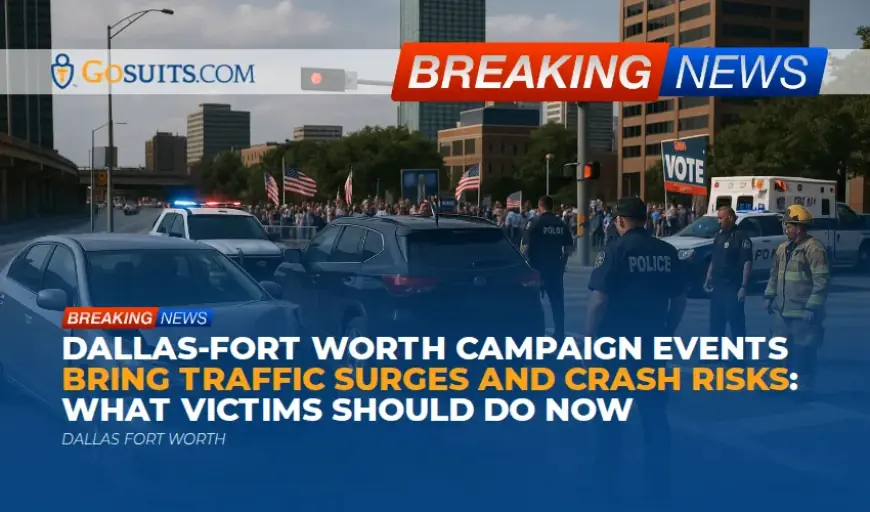
Recent updates indicate that campaign events in the Dallas-Fort Worth metro area are producing traffic surges and greater pedestrian exposure at night, and families facing fatal outcomes in those environments may need to consult a wrongful death attorney. Those local traffic pressures and separate workplace safety developments in Mobile, Alabama, together show how short-term surges and longer-term safety lapses can converge to create fatal incidents and complicated aftermaths for survivors.
DFW campaign events, traffic pressure and steps for crash victims
Early voting for the first major contest of the 2026 midterms has coincided with a schedule of campaign appearances across Dallas and Fort Worth, producing heavier surface-street use, busier parking lots near community venues, and intensified rideshare activity near transit hubs. In that environment, the practical options for people involved in collisions include prompt documentation and timely requests for records and footage.
Key actions outlined for local victims and families include:
- Secure official incident reports and identifying information for responding agencies as soon as they are available.
- Preserve physical evidence and photographic documentation of vehicle damage, roadway conditions, lighting, and any signage or blockages near the scene.
- Request available surveillance or transit footage within posted timeframes; accurate reporting helps identify which agencies hold those records.
- Notify insurers promptly but keep careful records of communication and deadlines when filing claims.
- Consider early consultation with a wrongful death attorney to safeguard claims, secure records, and coordinate evidence gathering while memories and documentation are fresh.
These steps are presented as actionable priorities for families in Dallas and Tarrant counties coping with injury or loss amid intensified event-driven traffic. Schedule changes and crowd surges can complicate access to timely records, so quick, methodical action improves a claimant’s ability to establish responsibility and preserve remedies.
Wrongful Death Attorney: How OSHA findings in Mobile affect civil claims
In a separate development, a six-month federal workplace investigation concluded with a determination that a lead contractor in the Mobile area committed multiple serious safety violations and a proposed penalty totaling $257, 707. The investigation followed a trench accident that killed two workers who were engaged in a sewer bypass project and were later found to have succumbed to sewer gas.
Those federal findings will not directly alter the mechanics of pending civil litigation, and monetary fines are assessed against the employer rather than paid to family claimants. Still, the federal enforcement action has been described by a lawyer representing one family as lending credence to allegations in the wrongful-death suit that the work site was unsafe and oversight was inadequate. The civil case names the lead contractor and a subcontractor; the subcontractor has not responded in the suit and a hearing is scheduled on a requested default judgment.
What families should expect and what to bring to a wrongful death attorney
When workplace fatalities are followed by both federal enforcement and civil filings, families typically confront two parallel processes: administrative enforcement that reviews compliance and assesses penalties, and civil litigation that seeks compensation for survivors. Because fines do not flow to families, civil claims become the primary route for recovery. Practical documentation to assemble for a consultation with a wrongful death attorney includes employer records, incident reports, medical examiner findings if available, witness statements, payroll and employment records, and any photographs or footage from the scene.
Recent developments in both Texas and Alabama illustrate two distinct risk environments—crowd-driven vehicle and pedestrian exposure in urban campaign settings, and acute hazards tied to workplace procedures at a construction site. In each case, methodical documentation, prompt preservation of records, and early legal review improve the family’s ability to protect claims and determine next steps. Where federal findings exist alongside a lawsuit, those enforcement conclusions can strengthen the factual context of civil allegations even though they do not substitute for the civil system’s separate remedies.
Details in these stories continue to develop; families seeking guidance should consider immediate evidence preservation and legal consultation to ensure deadlines and procedural steps are met.