



















Alysa Liu Mother Mention Is Absent as Free Skate Joy and Artistry Define Her Gold-Medal Return

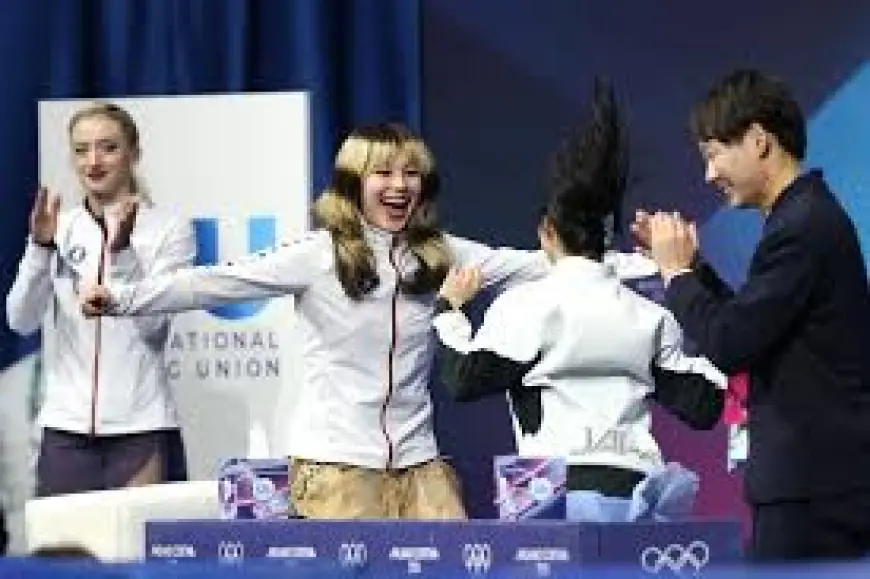
Alysa Liu won the gold medal in the figure skating free skate at the 2026 Winter Olympics with a performance praised for its joy and artistry. Coverage of that program centers on her skating and makes no mention of alysa liu mother.
Development details
In the free skate at the Milan-Cortina Games, the skater now 20 returned to competitive skating after retiring at 16 and was widely noted for choosing performance over pressure. She skated to Donna Summer’s “MacArthur Park Suite, ” opening with a smile and a poised gesture, and delivered a program built on fluid edge work, expressive hand and head movements, and polished jumping passes.
The routine included a playful transition into a double axel, a sequence of deep gliding edges, a layback spin, and a Biellmann finish. Observers emphasized the looseness and buoyancy of her movement — details such as a striped ponytail bouncing in the air and a theatrically loose finish were singled out as hallmarks of a performance that prioritized self-expression as much as technical merit.
Alysa Liu Mother and media focus
Reports and commentary on the program highlighted the skater’s return to competition on her own terms and her renewed focus on joy in performance. The narrative concentrated on the elements that made the free skate distinctive: a sense of abandon, fluidity that allowed power to be softened by lyric movement, and choreography that read as both athletic and theatrical. The available accounts do not include reference to alysa liu mother, and the emphasis remained on how the athlete carried herself on ice and in front of the audience.
What makes this notable is how the coverage narrowed tightly to technique and temperament: observers described a program that moved with the music’s pulse, threaded expressive footwork with controlled jumps, and culminated in an exclamation-point finish rather than a last-moment technical gamble.
Immediate impact
The immediate effect of the free skate and the gold-medal result was to reposition the athlete as a rare performer in the field — someone whose comeback was framed more as an artistic reclamation than a purely competitive campaign. The emotional toll of Olympic competition was acknowledged for other competitors, but her set was portrayed as delivered with remarkable ease, a contrast to the pressure that can unsettle many skaters.
Stakeholders in the sport—from judges and choreographers to audiences and commentators—were presented with a performance that foregrounded expressive skating over maximal technical accumulation. The program’s combination of signature moves, playful moments, and a polished finish produced a clear, demonstrable reason why viewers and critics singled out the skater as distinctive in the current competitive field.
Forward outlook
The confirmed milestones in the available accounts are the athlete’s prior early retirement at 16, her return to competition, and the gold-medal free skate at the Milan-Cortina Games. No subsequent competition schedule or next appearances are detailed in those accounts. The immediate evidence suggests a recalibration of priorities toward artistry and personal satisfaction in performance, which will be the defining context for any future appearances that are announced.
For readers tracking how elite skaters balance art and sport, the practical signal from this moment is clear: the performance reset was tangible and measurable on the ice. The matter of family background, including any reference to alysa liu mother, is not part of the presented coverage and therefore remains outside the confirmed record of these accounts.