

















Yankees' Rotation Breathes Easier as Gerrit Cole Hits 96.9 mph in First Live Session Since Surgery

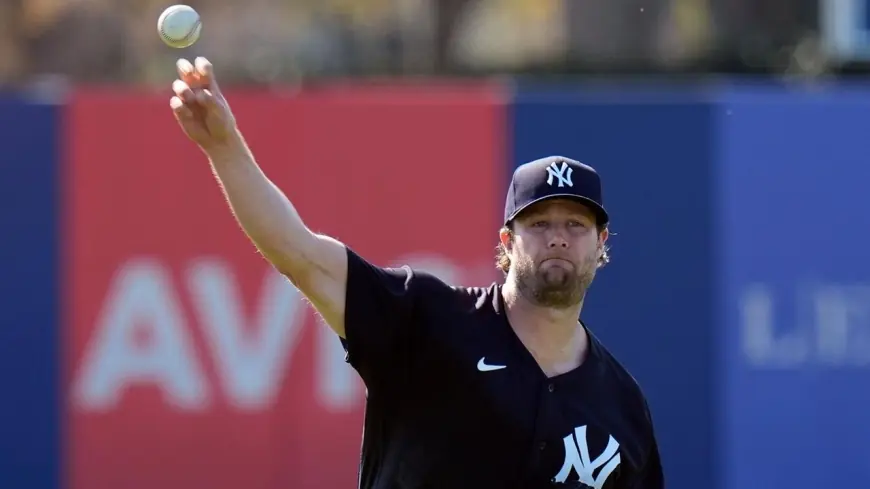
The immediate impact is on the pitching staff and clubhouse confidence: the yankees now have visual proof that Gerrit Cole’s arm strength and command can return after Tommy John surgery. That matters first to rotation planning and to teammates who will shoulder fewer short-term innings questions if Cole stays on the projected recovery path. Expect conversations about workload and a cautious acceleration of bullpen planning as the remaining tests unfold.
How Cole’s comeback shifts the Yankees’ rotation and clubhouse dynamics
Seeing Cole reach 96. 9 mph against live hitters isn't just a stat — it alters decision-making for coaches and front-office staff who must balance return timelines with roster construction. Coaches can plan fewer emergency starts and the bullpen may be managed with slightly less contingency padding if Cole progresses. Teammates who faced him in the session left with renewed confidence, and his presence at future checkpoints will affect pitch limits and rehab assignments across the staff.
Here’s the part that matters for daily operations: a healthy, high-velocity Cole compresses several what-if scenarios the team had to entertain while he recovered. If the rehab stays within the broadly stated May–September window, internal plans that assumed a long absence can start to shift toward integration rather than replacement.
Session specifics and the verified timeline
What happened on the field: Cole threw roughly 20 batting-practice pitches in his first session against hitters since undergoing Tommy John elbow surgery. He faced Trent Grisham, Aaron Judge and Jasson Domínguez in that workout. The session followed his first bullpen a week earlier and produced a peak fastball measurement of 96. 9 mph.
Mechanically, Cole has changed his windup by placing his hands over his head where previously he stopped at chest height. His last official outing prior to the surgery was in Game 5 of the World Series on Oct. 30. He had appeared in two spring training games in 2025, the last one on March 6, with surgery coming five days after that appearance. New York projects a readiness window from May through September, which aligns with the 14–18 month recovery range Cole had outlined as his target.
- Last regular-season/postseason outing: Game 5 of the World Series on Oct. 30.
- Most recent spring training appearance before surgery: March 6.
- Surgery occurred five days after that spring appearance; first live hitters session produced a 96. 9 mph peak.
- Club projection: readiness sometime between May and September (fits a 14–18 month recovery target).
It’s easy to overlook, but the visual evidence of velocity and control in a short session matters more than raw forecasts; recovery projections are useful, but on-field results like these shift how the team allocates innings now.
Beyond the mechanics and velocity, there was a human element to the return: the workout took place before a largely empty field aside from a few teammates, club staff and family members in attendance, underscoring both the personal side of rehab and the team’s close monitoring of each step in the process. The presence of family at that session added an emotional milestone to the physical one and reinforced why progress is being managed carefully.
If you’re wondering why this keeps coming up, the real question now is how subsequent bullpen sessions and minor-league tune-ups track compared with this initial reading. Managers and pitching coaches will look for consistent velocity, command across the zone and the new delivery holding up under higher pitch counts before any roster shifts are finalized. Recent updates indicate the situation is still unfolding and details may evolve as more outings are logged.
Key groups affected by these checkpoints include the rotation planners who will decide innings allocations, the bullpen staff whose workloads may be adjusted, and coaching staff responsible for sequencing his next appearances. Each of those stakeholders will use the next measurable sessions to decide whether to accelerate, hold, or reconfigure Cole’s path back to the major-league mound.
The real test will be consistency over several live outings rather than a single promising session; until then, optimism should be tempered with the usual caution that follows major elbow surgery.
Writer’s aside: What’s easy to miss is how much confidence a single controlled, high-velocity session can instill — not just in one pitcher, but across an entire staff planning for the long season ahead.