























MacKinnon's Late One-Timer Sends Canada to Olympic Hockey Gold Medal Game

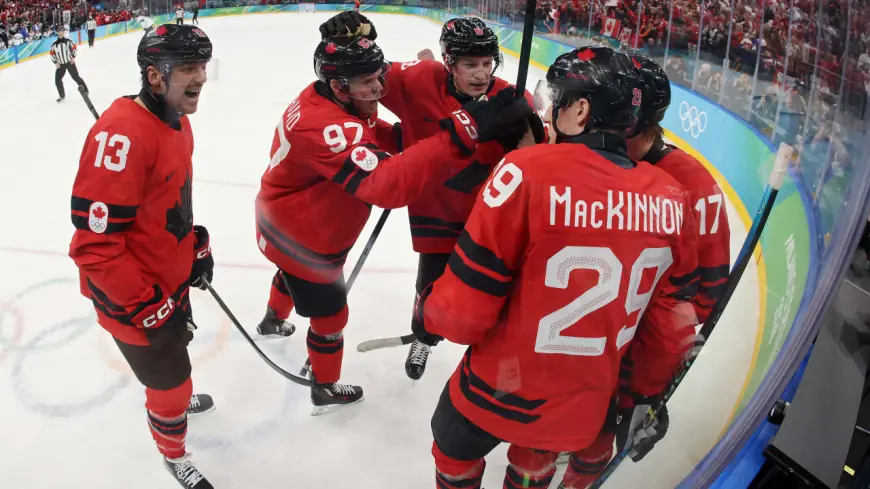
Nathan MacKinnon's power-play one-timer with 36 seconds left in regulation lifted Canada to a 3-2 semifinal victory over Finland at the Olympic Winter Games Milano Cortina 2026, a defining moment in olympic hockey. The goal not only settled a tense game in Milan but booked Canada's place in the gold medal game on Sunday, highlighting how a single deployed unit reshaped the contest in its closing minutes.
Development details: Olympic Hockey semifinal in Milan
The decisive sequence began with 2: 35 remaining in the third period, when coach Jon Cooper sent Nathan MacKinnon, Connor McDavid, Macklin Celebrini, Sam Reinhart and Cale Makar onto the ice to start a power play. Canada had already evened the score earlier in the period, and that late man-advantage proved decisive.
MacKinnon finished the set play with a one-timer from the left face-off circle, scoring with two seconds remaining on the power play and with 36 seconds left in regulation at Santagiulia Arena. The goal produced a 3-2 final and advanced Canada to the gold medal game Sunday.
The power-play unit that Cooper assembled carried a formidable mix of offensive firepower: three of the top four scorers in the League this season, a defenseman with the most points in the League since 2018-19, and a forward tied for second in goals since 2023-24. Sam Bennett captured the sentiment of the grouping, saying, "It's incredible. There are so many threats on that power play. " MacKinnon described the finish succinctly: "It was a five-man effort. "
Context and pressure points
The closing minutes featured what the coverage described as nearly two minutes of elite play followed by prolonged anxiety. On the early portion of the power play, Reinhart produced a dangerous chance from the left circle just eight seconds in, but Finland's goalie Juuse Saros swatted it away. Makar and McDavid generated multiple one-timer looks from the point and circles, while Celebrini and MacKinnon kept traffic in front and won battles along the boards.
Cooper highlighted the physical work that set up the finish, noting MacKinnon's reward for a wall battle immediately preceding the goal. Finland forward Teuvo Teravainen also played a pivotal defensive role in the sequence when he managed to get a stick blade on a pass intended for MacKinnon, sending the puck into the corner and temporarily disrupting what could have been a turnover-killing clearance.
What makes this notable is how a concentrated deployment of top offensive talent in a late power-play situation produced a rapid, decisive result amid heavy pressure—both from the opponent and from the stakes of a semifinal.
Immediate impact
The immediate consequence is clear and confirmed: Canada will play for the gold medal on Sunday. The victory underscores the effectiveness of situational lineup choices late in high-stakes games and will shape Canada’s game planning heading into the final. For Finland, the narrow defeat came after a period of intense defending and pivotal saves that ultimately were not enough to close out the semifinal.
Players involved in the decisive unit will carry the physical and strategic imprint of this moment into the final, while goaltending and special teams performance from both sides will be focal points for coaches preparing for the medal games.
Forward outlook
The confirmed next milestone is the gold medal game on Sunday, when Canada will compete for the Olympic title. Team preparations and recovery will follow the typical immediate postgame routines in Milan, with practice and tactical work focusing on sustaining the power-play structure that delivered in the semifinal.
The matter remains under review in the sense that teams will dissect video and execution, but the schedule and the opponent in the final are the next confirmed developments. In the narrow window before Sunday, the Canadian coaching staff and players will have to balance rest and focused preparation to reproduce the decisive elements of their semifinal power play in the medal-deciding matchup.
In short, this semifinal will be remembered in olympic hockey for a concentrated, high-risk deployment of top players that yielded a late, game-winning one-timer and sent Canada to the gold medal game.