









The Moment forces a career pivot — Charli XCX’s move from pop provocateur to on-screen presence and what changes next

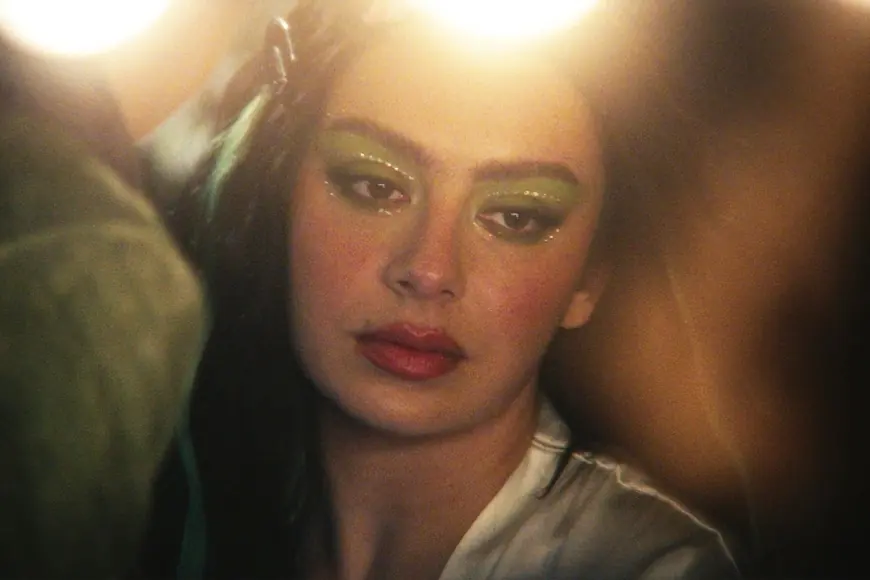
The Moment arrives at a turning point in Charli XCX’s public life: it isn’t just a movie, it’s a calculated career reset that accelerates her push into film and reframes how audiences and industry gatekeepers will see her. The mockumentary doubles as a brand-management move and a kind of funeral pyre for a previous pop era, and its festival stops plus a notable limited U. S. opening make the stakes immediate for the artist and her collaborators.
The Moment’s immediate ripple effects on Charli XCX’s creative trajectory
Here’s the part that matters: the project reframes Charli as an actor-producer intent on leaving the repetitive cycle she described in interviews and testing a new public identity. Festival placements and the early U. S. limited release performance have translated a niche cultural moment into evidence that the pivot can land beyond her core fanbase. What changes now are the expectations — for her film choices, for how her music era will be closed out, and for the kinds of collaborators who will pursue her for cinema projects.
What's easy to miss is how deliberately the film stages that transition: it plays like a mockumentary about a star unspooling and then being remade, using the performer’s own persona as raw material. That design makes the film both a work of image management and a public experiment in rebranding.
Inside the film and its rollout
The Moment is presented as a mockumentary that follows Charli preparing for a large stadium gig while her 2024 album Brat becomes a cultural phenomenon. Early scenes dramatize her uneasy celebrity — a vignette in which she is driven to a rehearsal and awkwardly fielded questions about her work underscores the film’s self-aware tone. The movie was made in the U. K. and has been shown at major festivals, beginning with an appearance at Sundance and moving to an international premiere in Panorama at a prominent European festival.
On the commercial side, the film opened in a limited U. S. release on January 30 and took $427, 940 in that launch window, a performance framed in coverage as strong for a limited rollout after the pandemic. It is also scheduled for release in the U. K. & Ireland from February 20, with festival screenings continuing through a Berlinale run that closes in late February.
- Format: mockumentary centered on a real-life performer playing herself
- Creative aim: pivot from music-era persona to film work
- Festival path: premiered at Sundance, had an international Panorama premiere at Berlinale
- Commercial notes: limited U. S. opening on January 30 ($427, 940); U. K. /Ireland release begins February 20; festival run runs through February 22
- Production choice: shot in the U. K. to keep a specific tone
Fans, festival programmers, and filmmakers are the immediate groups feeling the shift: the fanbase gets a narrated closure of one era, festivals get a high-profile pop-cultural entry, and directors/productions seeking cross-over names may reevaluate Charli as a viable on-screen lead or collaborator. If you’re wondering why this keeps coming up in industry conversations, it’s because the film intentionally blurs marketing, autobiography and theatrical experiment.
Festival commentary around the film has also touched on politics in programming, and the film’s place at a politically minded festival has been noted by participants at press events. That positioning ties the project to an environment that often foregrounds socially angled filmmaking rather than pure star vehicles.
The real question now is whether this kind of staged reinvention will stick beyond festival cycles: will forthcoming projects and collaborations confirm a sustained film career, or will the momentum plateau after the initial buzz? Early signs — from strategic festival premieres to a credible limited opening — point toward a sustained push, but future casting and production choices will determine whether the move is permanent.
Micro timeline (compact):
- Sundance premiere — the film’s first major festival appearance
- Limited U. S. release on January 30 with a $427, 940 opening
- International premiere in Panorama at Berlinale and U. K. /Ireland release starting February 20
Editorial aside: The bigger signal here is that the project was engineered to be read as both an artwork and a career maneuver, and the early festival and box-office footprints are part of that strategy.
What will confirm the next turn? Additional casting announcements, distribution moves in more territories, and the types of filmmakers she teams with next. For now, The Moment has done its immediate job: it’s moved Charli XCX from a pop-era narrative into a visible, festival‑backed film phase and created a set of new expectations about what comes next.