




















How Jack Hughes’ Olympic moment is playing like a masterclass for U.S. development — and who notices first

What matters right now is who in the American hockey ecosystem is watching and learning. At Milano Cortina 2026 the close presence of jack hughes, his brother and their parents is more than family pride: it’s a live demonstration of how summer skates, shared housing and day-to-day mentorship feed a high-performance environment. Younger players, development coaches and team staff are the first to feel that impact.
Jack Hughes in focus for teammates, coaches and rising players
Here’s the part that matters: the Hughes family’s hands-on approach is operating as an informal development hub during the Olympics. Jim and Ellen Hughes have been actively involved — Ellen with the U. S. women’s team and Jim in a supportive, practical role around the men’s team — and that proximity brings daily habits and training culture into plain view for younger skaters and staff. If you’re wondering why this keeps coming up, look at how often players cycle through their routines together and the number of NHL-level names connected to those summer skates.
Details on roles, routines and on-ice signals (embedded context)
At the Games, the Hughes family has been both hosts and hosts of a kind of informal mentorship. Ellen worked with the U. S. women’s team, which won the gold medal in a 2-1 overtime game against Canada. Jim has remained visible at men’s team events and around players, drawing on a background that includes running summer skates at USA Hockey Arena and a front-facing role in player development for a major representation group.
Their sons are central actors on the men’s side: Jack and Quinn are both on the U. S. roster. The team faces Slovakia in the semifinals at Santagiulia Arena at 3: 10 p. m. ET. Through the tournament Quinn recorded six points in four games (one goal, five assists), tied for the U. S. lead with another top forward, while Jack had four points (one goal, three assists). Those production lines are part skill, part the daily sharpening that comes from shared preparation.
- Summer-skate habit: players who attend those sessions push each other and keep skills sharp.
- Household hosting: visiting prospects and peers staying with the family creates off-ice chemistry that shows up on the scoreboard.
- Cross-pollination: players from other national teams have been part of the same summer routines, widening the development impact.
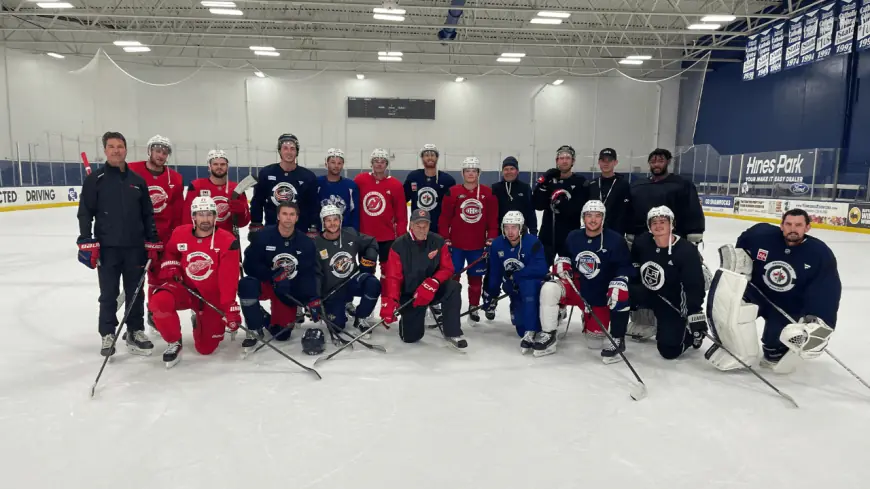
There is a recognizable core group tied to those summer skates and player-development sessions: Jack, Luke and Quinn; several U. S. forwards and defensemen who are part of the national setup; and other NHL-level names who drop in. That network reinforces habits — on-ice and off — that feed Olympic readiness.
Key takeaways:
- Direct exposure matters: young players and coaches seeing elite routines firsthand accelerates learning.
- Small, repeatable practices (summer skates, shared drills) translate to high-pressure consistency during tournaments.
- Household hospitality — hosting peers and prospects — builds intangible chemistry that can influence team performance.
- Visible development roles from parents and local coaches bridge the gap between club and national team culture.
What’s easy to miss is how routine interactions — a drill repeated each summer, a player staying over at the family home, a local skate session — compound into on-ice plays that matter at the Olympic level. The semifinal setup and recent game outputs for Jack and Quinn are practical proof points rather than abstract theory.
Pragmatic signals to watch for next: whether the semifinal performance reflects the same kinds of plays that appear in summer scrimmages, and whether other young American players who participate in those development routines begin showing similar consistency at high-stakes events. Recent updates indicate details of roster roles and match outcomes may evolve as the tournament progresses.
Image and schedule notes: the men’s semifinal is listed for 3: 10 p. m. ET at Santagiulia Arena; schedule subject to change.