





















Mens Hockey Olympics: United States Downs Slovakia 6–2 in Semifinal, Sets Gold-Medal Meeting With Canada; Key Dates, Players and Scenarios

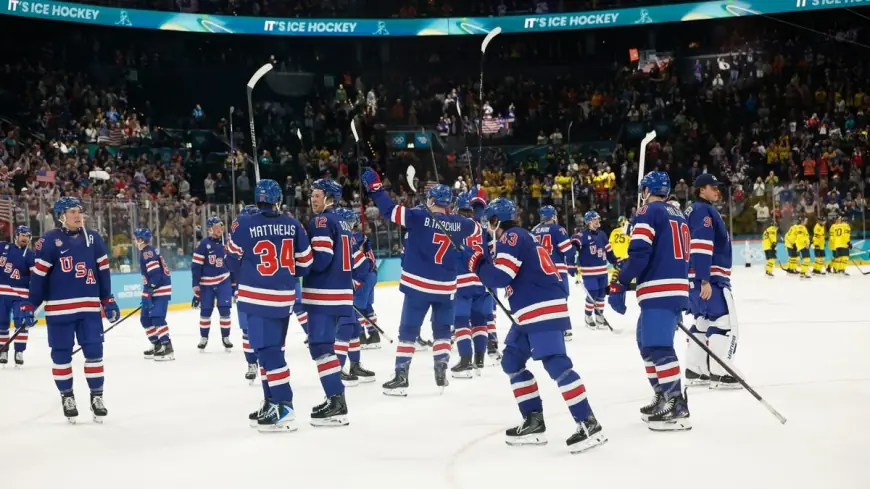
The United States advanced to the gold-medal game at the mens hockey olympics with a 6–2 semifinal victory over Slovakia on Friday afternoon in Milan. The result follows an overtime quarterfinal win that put the U. S. on the same path to a weekend final and confirms a Sunday morning championship matchup against Canada.
What happened and what’s new
Team USA beat Slovakia 6–2 in the semifinal on Friday afternoon at Milano Santagiulia Ice Hockey Arena in Milan. The win moves the United States into the gold medal game on Sunday morning. The semifinal schedule had United States vs. Slovakia set for Friday at 3: 10 p. m. Eastern; the other semifinal, Canada vs. Finland, was scheduled for the same day at 10: 40 a. m. Eastern. The bronze medal game is scheduled for Saturday at 2: 40 p. m. Eastern and the gold medal game for Sunday at 8: 10 a. m. Eastern.
The U. S. advanced to the semifinals after an overtime quarterfinal victory over Sweden, when an overtime goal sent the Americans through. In the semifinal win over Slovakia, Jack Hughes scored twice on four shots and finished with a team-high plus-minus of +2 while remaining penalty-free. Goaltender Connor Hellebuyck stopped 22 of 24 shots in the Slovakia game and, over the course of the olympics, had allowed five goals on 95 shots while leading in his save metrics through the tournament. Slovakia’s Juraj Slafkovsky and Pavol Regenda were credited with third-period goals in that game.
Behind the headline — Mens Hockey Olympics context, incentives and stakeholders
The United States enters the gold-medal game after a dominant stretch: through five games earlier in the tournament the team was 5–0 and had outscored opponents 24–8. Canada likewise remained unbeaten and had outscored opponents 27–8, setting up a championship contest between two teams that have been prolific offensively and steady defensively. Earlier tournament wins for the United States included knockout victories over Latvia, Denmark, Germany and Sweden before the Slovakia semifinal.
- Who gains: The United States gains the opportunity to compete for the gold medal; standout contributors such as Jack Hughes and Connor Hellebuyck strengthen their tournament resumes.
- Who loses: Slovakia is placed into the bronze-medal bracket after the semifinal loss; the losing semifinalist faces one more crucial game for podium placement.
- Leverage and incentives: The U. S. coaching staff can emphasize depth scoring and goaltending stability; Canada enters with a similar incentive to maintain an unbeaten run and offensive momentum.
What we still don’t know
- Lineup decisions and any late-game roster changes for the gold-medal game.
- Injury statuses or availability updates for any key players between the semifinal and the gold-medal game.
- How coaches will adjust special-teams matchups and defensive assignments for the Sunday meeting.
- Detailed split-minute and advanced stat breakdowns for Sunday’s matchup that could influence tactical decisions.
What happens next
- U. S. wins gold: Trigger — the United States defeats Canada on Sunday morning in the gold-medal game, capping the unbeaten run and securing the championship.
- Canada wins gold: Trigger — Canada defeats the United States on Sunday morning, ending both teams’ unbeaten records and taking the title.
- Medal reshuffle bronze: Trigger — the losing semifinalist from the U. S. –Slovakia game or the Canada–Finland game wins the bronze-medal contest on Saturday, altering final podium placements.
- Tactical shift scenario: Trigger — if either finalists show signs of fatigue or injury in the lead-up, coaches may emphasize tighter defensive structures and reduced ice time for vulnerable players.
- Momentum swing scenario: Trigger — an early goal in the gold-medal game could force the trailing team into more aggressive offensive deployment, changing the tempo and risk profile.
Why it matters
Near-term, the outcome determines Olympic gold and silver and completes medal narratives for teams that arrived with high expectations. For players, standout performances in Milan carry implications for tournament legacy and individual recognition. For teams and coaches, the result will reflect the effectiveness of in-tournament adjustments made after earlier knockout rounds. The schedule concentration — semifinals on Friday, bronze on Saturday and gold on Sunday morning Eastern — compresses recovery and preparation time, increasing the premium on goaltending consistency and depth scoring in the final stages of the mens hockey olympics.
What to monitor: roster confirmations ahead of the gold-medal game, pregame deployment of top scorers, and whether goaltending trends continue in the final. Each of these elements will be decisive in determining which team leaves Milan with the top prize.