





















Indiana Committee Advances Plan to Lure Chicago Bears to Hammond as Team Signals Shift

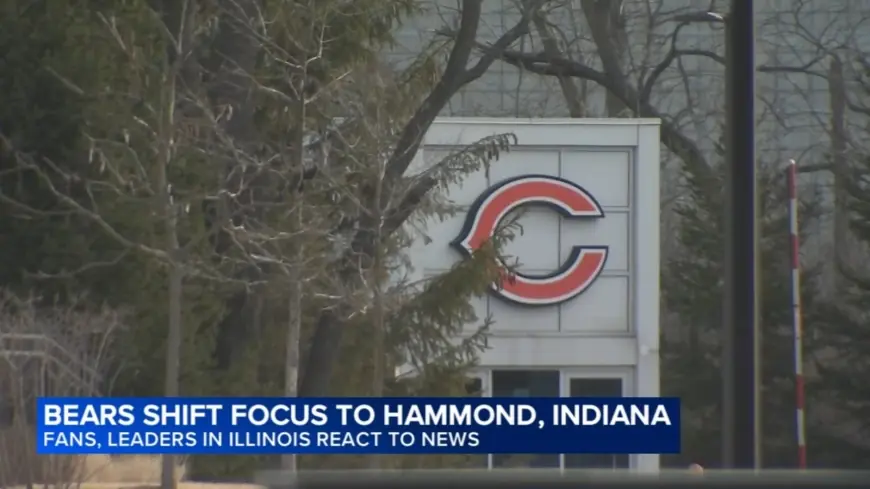
The chicago bears have signaled renewed interest in a potential stadium near Hammond after Indiana lawmakers unanimously moved a stadium bill out of committee, setting up a formal framework for negotiations and drawing reactions from state leaders and fans.
What happened and what's new
Legislators voted unanimously in a Ways and Means Committee meeting on Thursday to advance an amendment to SB 27 that would create a Northwest Indiana stadium authority modeled on an existing Illinois sports authority. The amendment lays a framework for negotiations over a site near Wolf Lake in Hammond and ties public financing tools — including new food, beverage and innkeepers taxes in Indiana's northwest counties — to infrastructure and stadium support.
The plan as discussed by lawmakers includes a pledge that the team would contribute roughly $2 billion toward construction costs. Lawmakers and local leaders framed the proposal as a public-private arrangement intended to attract the team across the state line and accelerate site-specific due diligence required before any final agreement.
released after the committee vote, the team said passage of the bill would be the most meaningful milestone to date in its stadium planning and expressed commitment to completing remaining due diligence for a site near Wolf Lake. State leaders in Indiana issued statements that they have identified a promising site and established a negotiating framework that would allow final terms to be completed if due diligence proceeds smoothly.
Behind the headline — Chicago Bears, incentives and stakeholders
Context: The bill creates a mechanism to offer a formal partnership between the team, a newly formed stadium authority and local government. Hammond's mayor and the Indiana House speaker addressed the committee during the hearing and framed Hammond as primed to support construction and associated infrastructure. Indiana's governor emphasized a pro-growth posture and noted the state has outlined the essential framework for negotiating a final deal contingent on site work.
Stakeholders and incentives:
- Team leadership — gains leverage by having a dedicated authority and tax tools available; gains a potential site and committed negotiating framework, but remains constrained by required due diligence.
- Indiana state and local officials — seek economic development and regional tax revenue; they are offering public financing tools and an authority to streamline approvals.
- Hammond local government — presents itself as a willing partner prepared to facilitate the project and capture regional benefits.
- Illinois officials — expressed surprise and disappointment when the team's statement emerged after recent talks had been held; that reaction signals competing political and legislative pressure in the neighboring state.
- Fans and residents — reaction is mixed, with some expressing opposition to a move out of Illinois and others open to a new regional venue.
What happens next: open questions, scenarios and near-term implications
What we still don't know
- Whether site-specific due diligence near Wolf Lake will clear environmental, transportation and land-use hurdles.
- The timetable for formal negotiations between the team and the new authority, and how long any fiscal mechanisms would take to implement.
- Final construction cost sharing and legal terms of a public-private partnership beyond the team contribution figure discussed in committee.
- How Illinois legislative or executive actions might respond and whether competing proposals will be revived or modified.
What happens next — plausible scenarios and triggers
- Negotiations advance to a conditional agreement: Trigger — completion of site due diligence with acceptable results for both parties; result — a formal memorandum of understanding and a public timeline toward design and approvals.
- Delay or derailment from site or fiscal issues: Trigger — environmental, transportation, or legal barriers identified during due diligence; result — prolonged negotiations or a pause while alternative sites or funding structures are evaluated.
- Competing proposal from Illinois gains momentum: Trigger — rapid legislative or executive action in Illinois offering comparable or superior incentives; result — renewed competition that could split leverage and extend timelines.
- Local backlash shapes terms: Trigger — strong public opposition among fans or Hammond residents to tax changes; result — scaled-back public financing or additional concessions from the team.
- Final deal moves forward with construction plan: Trigger — unanimous approvals across required boards and financial commitments secured; result — formal groundbreaking planning and multi-year construction timeline.
Why it matters
The proposal could shift economic activity, tax revenues and regional identity across state lines if the team ultimately chooses Hammond. Near-term impacts include a political tug-of-war between state governments, immediate planning and infrastructure work in northwest Indiana, and potential changes to how professional sports venues are financed and governed in the region. For fans and local businesses, the choice will influence travel, local commerce and municipal budgets in the years ahead.
Watch next for the results of site due diligence, any formal memoranda establishing negotiating milestones, and legislative actions in both states that could alter the relative attractiveness of competing proposals.