

























Iftar Time Today: Ramadan 2026 Begins After Crescent Sighting as Global Fasting Hours Vary Widely

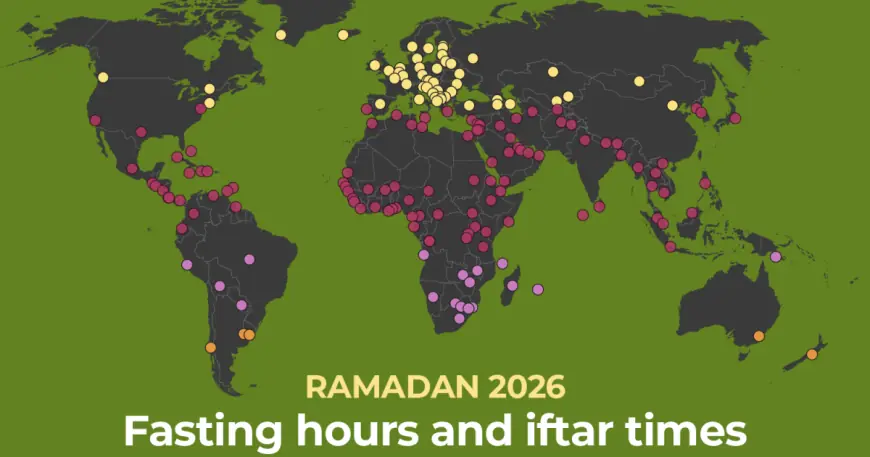
Following a crescent sighting by a moon-sighting committee, Saudi Arabia has set the first day of fasting for Wednesday, February 18, marking the start of Ramadan 2026. For Muslims observing the month, iftar time today will differ across locations as fasting stretches from dawn to dusk for varying lengths.
Iftar Time Today: What happened and what’s new
The moon-sighting committee observed the new crescent on Tuesday, and Saudi authorities announced the first day of Ramadan will be Wednesday, February 18. Ramadan this year will run for either 29 or 30 days, during which observers abstain from eating, drinking, smoking and sexual relations from dawn until dusk to pursue greater taqwa, or consciousness of God.
Global fasting durations differ substantially: the dawn-to-dusk fast lasts anywhere from about 11. 5 to 15. 5 hours depending on location, with a typical range of 12 to 15 hours for many observers. In general, people in much of the Northern Hemisphere will experience shorter fasts this year, around 12 to 13 hours on the first day, with durations increasing through the month. Observers in southern countries such as Chile, New Zealand and South Africa will have longer fasts on the first day, roughly 14 to 15 hours, with durations decreasing over the course of Ramadan.
A timetable framework for suhoor and iftar on the first and last days is compiled for cities worldwide, reflecting local sunrise and sunset times and showing how local schedules will govern daily practice.
Behind the headline
Moon-sighting is central to determining the start of the month under the lunar Hijri calendar, which uses months of 29 or 30 days. Because the lunar year is shorter than the solar year by about 11 days, Ramadan shifts earlier each solar year, typically moving 10 to 12 days earlier than the previous year. This shifting explains why fasting hours change over years and across hemispheres.
Key stakeholders include the moon-sighting committee that observed the crescent, national authorities announcing the start of the month, and Muslim communities worldwide who adjust daily routines for suhoor and iftar. The religious practices and public observance are driven by calendar mechanics and local sunrise-sunset cycles rather than a single uniform timing.
What we still don’t know
- Local suhoor and iftar clock times for specific cities beyond the general ranges presented are not provided here.
- The exact end date for Ramadan in each locality is unconfirmed until local calendars or sightings determine whether the month lasts 29 or 30 days.
- Which national committees beyond the one mentioned will declare their own official start dates in alignment with local observations remains unspecified.
What happens next
- National and local authorities will publish daily suhoor and iftar timetables based on local sunrise and sunset; triggers: release of city-level schedules.
- Throughout the month, observers in the Northern Hemisphere will generally see fasting durations lengthen, while those in many southern locations will see durations shorten; trigger: progression of calendar days and changing daylight.
- Communities will continue traditional greetings and practices during the month, using phrases that wish recipients a blessed or generous month.
- Looking ahead across years, the lunar calendar shift means Ramadan will fall earlier each solar year; one noted consequence is that Ramadan will occur twice in a single solar year in certain future years under the lunar cycle framework.
Why it matters
Practical implications are immediate for observers planning daily schedules: iftar time today and throughout the month will be set by local sunset, with fasting durations shaping mealtimes, work and social patterns. Shorter fasts in much of the Northern Hemisphere this year may ease daily timing pressures for those communities, while longer fasts in some southern locales will require longer daytime abstinence on the first day. The shifting lunar calendar also means annual adjustments for planners and participants, as Ramadan moves roughly 10 to 12 days earlier each year.
Near-term attention will focus on the rollout of city-level suhoor and iftar timetables and confirmations of the month’s precise length in each jurisdiction, which together determine the day-to-day rhythms of observance.