





















Kaori Sakamoto’s silver-clad goodbye reshapes the Olympic women’s story — who feels the hit first

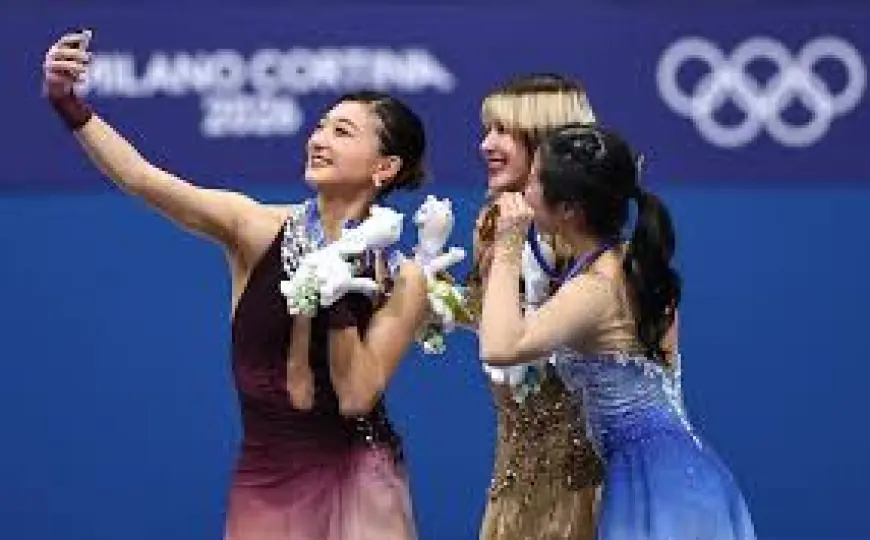
Kaori Sakamoto’s final Olympic skate, which ended in tears and a silver medal, immediately changes who is under pressure and who inherits momentum heading into the free skate. For Sakamoto herself, young teammates, and rivals, the emotional finish reframes expectations: confidence has shifted, narratives have hardened, and a freshly revealed contender has already arrived to complicate the picture.
Kaori Sakamoto’s result and the immediate impact on competitors, teammates and the event mood
Here’s the part that matters: a veteran’s tearful silver does more than award a podium spot — it alters how the field approaches the remaining contest. Kaori Sakamoto’s closing performance crystallizes a contrast between experience and emergent talent, and it forces a reappraisal of who must chase and who must defend. That change is tangible in the locker room psychology and in the scoreboard dynamics that now shape free-skate strategies.
What’s easy to miss is how quickly a single program can reassign momentum. The short program’s joy — a phrase that has surfaced in recent analysis — created an upbeat baseline for many skaters; Sakamoto’s emotional finish then pinched that optimism in one key place while amplifying it elsewhere.
Event details embedded: short program mood, a surprise newcomer, and the emotional final skate
The available headlines set a compact sequence: the women’s short program delivered a wave of joy; a 17-year-old named Nakai Ami made an early arrival onto the Olympic scene; and Kaori Sakamoto’s final Olympic skate concluded with tears and a silver medal. Taken together, those facts frame the present contest as both celebratory and unsettled — joyful performances have not erased uncertainty about how the free skate will unfold.
Timeline (recent headlines):
- Two days earlier — analysis noted that the women’s short program produced joy while leaving open questions for the free skate.
- One day later — coverage highlighted the early arrival of 17-year-old Nakai Ami at the Winter Olympics.
- Most recently — Kaori Sakamoto’s final Olympic skate ended in tears and silver.
These items together imply a shifting competitive landscape rather than a settled result.
Three brief questions the field and fans will be parsing
The real question now is how these developments will map onto the free skate and the final standings. A short micro Q&A to clarify what to expect next:
- Q: Who is most affected by Sakamoto’s silver?
A: Direct rivals and teammates face altered expectations; some must chase a podium position while others carry momentum. - Q: Why does Nakai Ami’s emergence matter?
A: The early arrival of a 17-year-old introduces an unpredictable element to the field and reframes the experience-versus-youth narrative. - Q: What will confirm the next shift?
A: Performances in the free skate that either consolidate the short program’s joy or overturn it will be the clearest signals.
Strategic note for followers: a silver from a final Olympic skate both cements an athlete’s legacy and hands tactical leverage to others — expect competitors to adjust technical risk and program composition in response.
It’s easy to overlook, but the emotional texture of a closing performance can ripple across a competition: a tearful farewell can become a psychological hurdle for some and a rallying emblem for others. Recent coverage has supplied the raw headlines; the unfolding free skate will show which threads tighten and which snap.
If you’re wondering why this keeps coming up, think of the competition as a live narrative where tonight’s moods rewrite tomorrow’s possibilities. The short program’s joy set the tone, the 17-year-old’s arrival altered the cast, and Kaori Sakamoto’s silver-sealing final skate has now set a new baseline for the free skate battle.