







Ain Country: What AIN stands for at the Winter Olympics

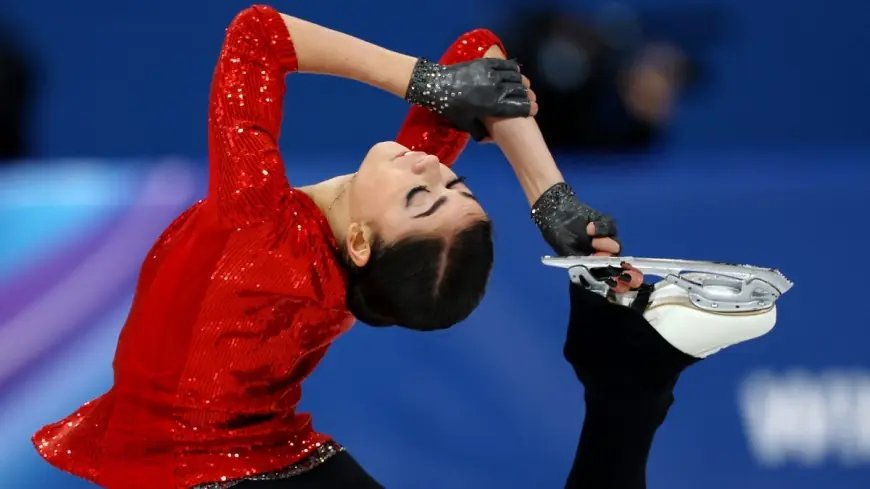
Adeliia Petrosian, an 18-year-old skater listed under the ain country designation, will take to the ice in the women's free skate around 4: 15 p. m. ET today — a moment that could change the AIN medal tally. Petrosian sits fifth after the short programme and is among a contingent of athletes competing as neutrals at these Winter Games.
What Ain Country means
AIN stands for "Athletes Individuels Neutres, " a French phrase used to identify individual neutral athletes from Russia and Belarus. The AIN label is exclusive to those athletes cleared to compete without national symbols; there is no AIN flag, and no Russian or Belarusian national anthems are played for AIN competitors. The ain country designation appears on start lists and results to signal that an athlete is competing under neutral status rather than representing a national team.
Why Russia and Belarus are banned
Russia and Belarus are barred from competing under their national flags at these Olympics because of the ongoing war in Ukraine. The ban carried over from previous Games, with Russia and Belarus also excluded from the 2024 Summer Olympics in Paris for the same reason. Longstanding doping scandals involving Russian sport have also shaped how the international movement has handled Russian athletes, with state-sponsored doping at the Sochi Olympics and high-profile cases in later Games noted in the recent coverage.
Petrosian's bid and AIN numbers
Petrosian — who sometimes spells her name Adeliya on social media — is one of 13 AIN athletes from Russia; Belarus contributes seven, bringing the total AIN delegation to 20 athletes across multiple disciplines. AIN's medal count stands at one silver as of Feb. 19, earned by Nikita Filippov in the men's ski mountaineering sprint. Petrosian skates near 4: 15 p. m. ET in the women's free skate order; a podium finish would increase the AIN total beyond that single silver.
Two other individual neutral athletes have been named in women's figure skating, and the pool of AIN competitors spans alpine skiing, cross-country skiing, figure skating, freestyle skiing, luge, short track, skimo, and speed skating. To be permitted to compete as AIN, athletes underwent screening that included review of public social media to confirm no overt support for the war in Ukraine and other eligibility checks.
Russian reaction and short-term prospects
Recent coverage shows a shift in official and public sentiment in Russia toward the current Games, with prominent figures expressing renewed support for those competing under neutral status. Commentary from Moscow has been notably more positive than at earlier Games, when athletes who participated without national symbols faced harsh criticism at home. Some Russian officials and sports leaders have signaled confidence that a fuller return to competing under the Russian flag could follow soon; one official suggested a return under national symbols might be possible as early as April or May and warned of legal action if cases are not addressed promptly.
Looking ahead, the immediate indicator to watch is results in events such as the women's free skate. If AIN athletes add medals in the coming sessions, the neutral delegation's visibility and medal tally will increase. Separately, moves by international bodies on youth participation and clearance rules will shape whether and when more athletes from Russia and Belarus compete under national emblems in future events. Those are observable factors that could alter the status quo in the short term; any timeline beyond that remains conditional and not publicly confirmed.