























Quinn Hughes' overtime wrist shot beats Sweden, sends U.S. to Olympic men's hockey semifinals

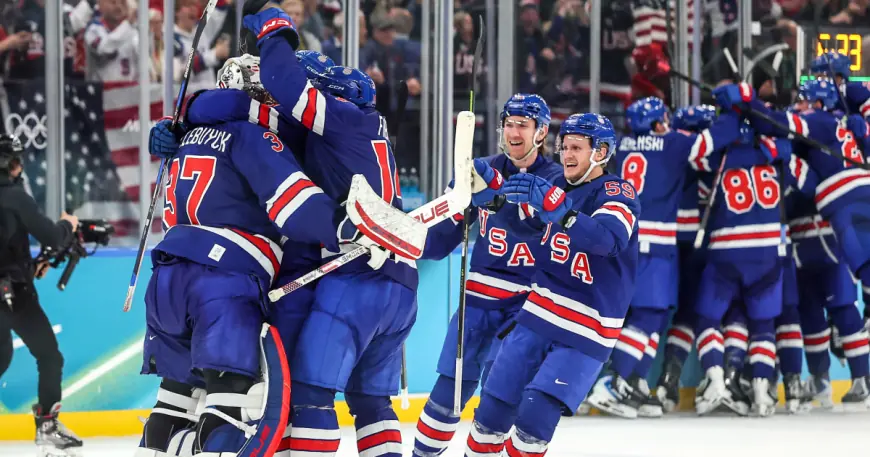
Quinn Hughes scored the overtime winner that lifted the United States past Sweden 2-1, advancing Team USA to the semifinals and preserving its bid for an Olympic medal. The goal came in sudden-death extra time and stands as the decisive moment that kept American medal hopes intact.
What happened: Quinn Hughes' overtime wrist shot
In overtime, with the puck atop the left faceoff circle, Quinn Hughes moved toward the goal and released a wrist shot that climbed as it approached the net and slipped past the left glove of Sweden's goaltender. The play finished with 6: 33 remaining in extra time and produced a 2-1 quarterfinal victory for the United States at Milano Santagiulia Ice Hockey Arena.
The United States had opened the scoring in the second period when a shot from just inside the blue line was deflected in midair for a 1-0 lead. Sweden pulled its goaltender late in regulation to create a man advantage; a cross-ice pass led to a tying one-timer that forced overtime. The first period had been scoreless, highlighted by key saves from both goaltenders early in the game.
With the win, the U. S. advances to face Slovakia in the semifinals. The Americans entered the quarterfinals unbeaten in the tournament and now sit at 4-0. A victory in the semifinal would guarantee a medal, while a loss would send the team to the bronze-medal game. The U. S. and Sweden were among three teams in the field composed entirely of NHL players, alongside Canada.
Behind the headline
The goal delivers an immediate confidence boost for a U. S. squad navigating a high-stakes tournament match. The overtime winner came against a team made up of NHL players, intensifying the significance of the victory. For the roster and coaching staff, the outcome preserves the straightforward objective that accompanies single-elimination play: win and advance, lose and regroup for the next opportunity.
Key stakeholders include the players on the ice, the coaching staff managing match-to-match strategy, and teammates whose performances set up pivotal moments. Rival teams remain potential beneficiaries or challengers depending on bracket progress, with the possibility of a high-profile final if the U. S. and Canada both advance through their respective matchups.
What we still don't know
- Final outcome of the semifinal between the United States and Slovakia.
- Whether the United States will meet Canada later in the tournament.
- Any roster changes, injuries, or tactical adjustments ahead of the semifinal.
- Detailed postgame comments beyond the immediate reactions from players on the ice.
What happens next
- United States defeats Slovakia in the semifinal — trigger: U. S. wins the semifinal game; consequence: a win guarantees an Olympic medal and advances the team to either a gold-medal final or secures at least silver depending on bracket outcomes.
- United States loses the semifinal — trigger: U. S. loses the semifinal game; consequence: the team moves to the bronze-medal game and must win again to secure a medal.
- Potential final matchup with Canada — trigger: both countries win their semifinal games; consequence: a rivalry final that would draw heightened attention and raise the stakes for both teams.
Why it matters
The overtime winner preserves the U. S. team's momentum and guarantees continued contention in the medal rounds. For players and staff, the result maintains the simple tournament calculus: opportunities to secure Olympic hardware remain live. For supporters and national organizers, the victory keeps alive hopes of a deep tournament run and a medal finish for the first time since the last noted Olympic medal appearance referenced in this tournament context.
Near-term implications include a compressed preparation window facing Slovakia in the semifinals and intensified media and public attention on roster decisions and game strategy. The outcome also affects competitive matchups later in the bracket, including the possibility of a high-profile meeting with Canada if both teams continue to advance.