
























Scotusblog: Democrats Ask Supreme Court Not to Disrupt New York Redistricting Dispute After State Trial Ruling

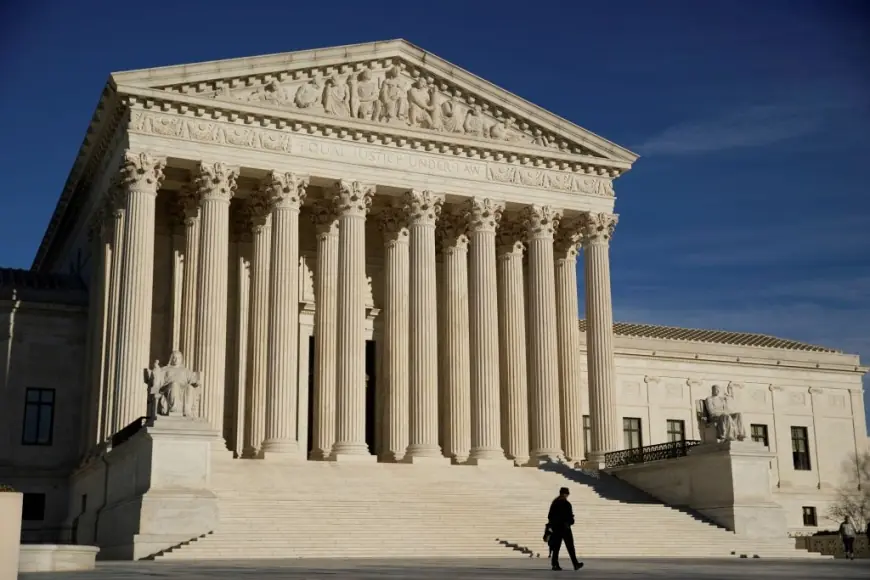
The latest filings in a high-stakes redistricting fight prompted swift intervention requests at the nation’s highest court, and scotusblog coverage of the filings highlights competing claims over federal review of state-court judgments. The submissions seek to preserve a state trial court order that would bar New York from using its current congressional map in the 2026 elections.
What happened and what’s new
Two separate groups of New York voters and elected officials filed requests on Thursday urging the Supreme Court to leave intact a Manhattan trial judge’s ruling that would prohibit the state from using its existing congressional map in the 2026 elections. The state trial judge, Justice Jeffrey Pearlman of the New York Supreme Court, found that the current boundaries diluted the votes of Black and Latino residents in the only New York City district held by a Republican and ordered the state to redraw the map.
That ruling, issued on Jan. 21, 2026, directed the state’s independent redistricting commission to propose a new map by Feb. 6. The dispute traces to a challenge filed last fall against the boundaries of the 11th Congressional District, which covers all of Staten Island and parts of southern Brooklyn. Plaintiffs argued the district’s lines violated the state constitution by diluting the voting power of Black and Latino residents, who make up roughly 30% of Staten Island’s population, and by denying them an equal opportunity to elect representatives of their choice.
Representative Nicole Malliotakis and other defenders of the existing map sought to stay Pearlman’s order in state appellate courts. The state’s highest court declined to take the case, and the intermediate appellate court denied the stay request on Thursday, Feb. 19. The map’s defenders then asked the Supreme Court to intervene and pause the state-court ruling while the legal fight continues.
Scotusblog: Behind the headline
The filings framing the dispute for the Supreme Court raise two core procedural arguments. One set of petitioners contends that a federal court may not pause a state-court ruling unless the state’s highest court has issued a final decision on the federal question; they argue the current posture falls outside the Supreme Court’s usual power to stay state-court judgments. The map’s defenders countered in filings to the high court that the trial judge’s decision runs afoul of federal equal protection precedents by effectively requiring a racial reallocation of voters to create a majority for Black and Latino voters in the district.
The matter has attracted additional briefs from federal actors who view the case through a constitutional lens, and commentary has noted that the dispute presents questions about when and how the Supreme Court should intervene in state-court redistricting rulings. The case name in circulation is Williams v. Board of Elections of the State of New York.
What we still don’t know
- Whether the Supreme Court will grant emergency relief or pause the state-court ruling before the 2026 election cycle.
- How the independent redistricting commission will respond if ordered to propose a new map by the court-imposed deadline.
- What specific remedy a federal intervention would impose and how it would interact with ongoing state-court proceedings.
- The ultimate factual findings regarding vote dilution and whether appellate courts will affirm or reverse the trial judge’s conclusions.
What happens next
- Supreme Court grants a temporary stay: The court could pause the trial judge’s order, allowing the current map to remain in place while federal review proceeds — this would be triggered by a successful emergency motion from the map’s defenders.
- Supreme Court declines emergency relief: The high court could refuse to intervene now, leaving the trial court’s timetable and the commission’s redraw mandate intact and pushing the dispute back to state-court resolution.
- Case moves to full merits review: The court might take the case for full briefing and argument on the merits, extending the timeline and potentially producing a decision with broader precedential effect.
- State compliance and parallel appeals: The redistricting commission could propose a new map under the trial judge’s order while defenders pursue appellate relief, creating parallel state and federal tracks.
Why it matters
The immediate practical consequence is a potential change in the map used for upcoming congressional elections, with effects on representation in a district that includes Staten Island and parts of Brooklyn. The legal stakes extend beyond one district: the procedural question of when the Supreme Court may halt state-court rulings could affect how and when litigants bring federal claims that intersect with state constitutional litigation. Near term, voters, candidates and election officials face uncertainty about which map will govern candidate filings and ballots for the 2026 cycle. Observers will watch the high court’s response for signals about its willingness to intervene in state-court redistricting outcomes and how it will treat race-related challenges in this posture.