























Flights To Denver Delayed as High Winds Trigger FAA Ground Delay at DIA

More than 1, 100 flights to denver were delayed or canceled Tuesday after high winds battered Colorado’s Front Range and Eastern Plains. The Federal Aviation Administration imposed a wind-based ground delay early Tuesday, pushing average departure delays to roughly two hours and the restriction remained in place until 8 p. m. ET.
Flights To Denver: Ground Delay Details
The ground delay was described in an FAA advisory as a Traffic Management Program for arrivals at Denver International Airport that produced average arrival delays of about two hours. A separate advisory noted an average delay figure of roughly two hours and two minutes for affected flights. A red flag warning for dangerous, windy conditions was also active until 7 p. m. ET on Tuesday.
Airlines and disruption totals
Data from flight-tracking software show that by the end of the day, 1, 120 flights had been delayed and 96 had been canceled at Denver International Airport. The delays were concentrated across several carriers: 417 United flights, 326 Southwest flights, 241 SkyWest flights, 49 Frontier flights, 28 Delta flights, 25 American Airlines flights and 11 Key Lime Air flights. Eight other carriers recorded between one and seven delayed flights each.
Cancellation tallies at the airport included 64 SkyWest cancellations, 25 Southwest cancellations and seven United cancellations. A broader compilation of national delay tallies for the same day counted 5, 373 flight delays within, into, or out of the United States and 306 cancellations; that compilation listed 705 United delays and 1, 393 Southwest delays nationwide for the day.
- End-of-day Denver totals: 1, 120 delays and 96 cancellations.
- Major carrier delays at Denver included 417 United and 326 Southwest flights.
- National tallies showed 5, 373 delays and 306 cancellations on the same day.
Passenger experience and outlook
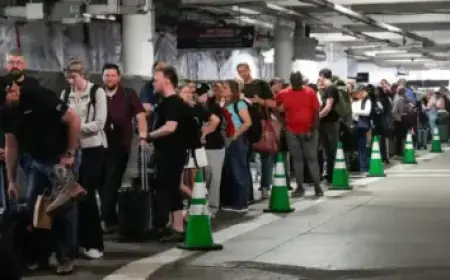
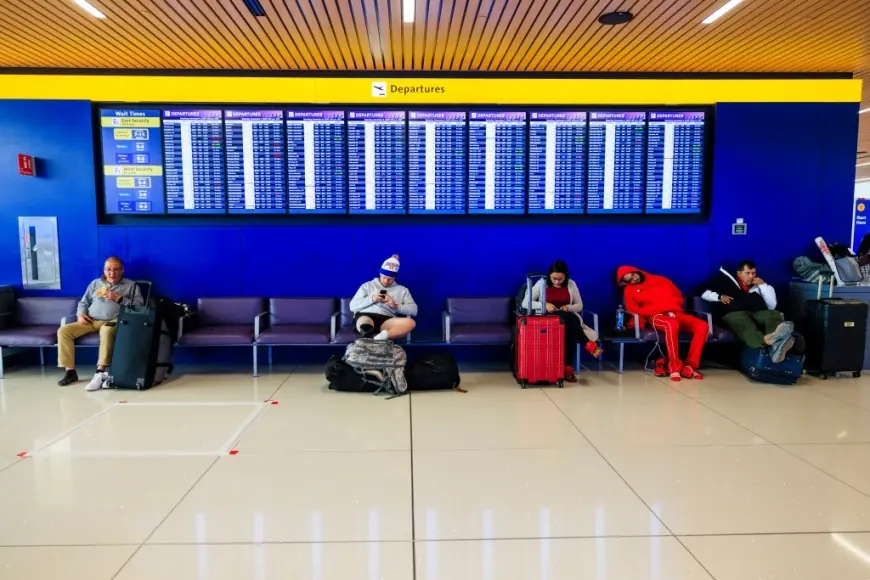
Passenger processing through check-in and security remained broadly smooth earlier in the day, but many travelers encountered waits at boarding gates once the ground delay was in effect. The gate delays reflect the shifted departure and arrival windows caused by the traffic management program rather than screening backups.
Looking ahead, flight operations at the airport were expected to return to more normal schedules the following day. Airlines operating heavily at the hub signaled plans for minimal disruptions the next day; one carrier’s early-morning status showed a sharp reduction in its active delays and cancellations, with only a small number of departures still listed as affected.
This remains a developing operational story for the airport and airlines involved. Where details were not publicly confirmed in compiled data, they are described here as unclear at this time and may be updated as airlines and the FAA publish further status updates.