
























Hazing captured on body cam shows 56 blindfolded pledges in fraternity basement, footage reveals

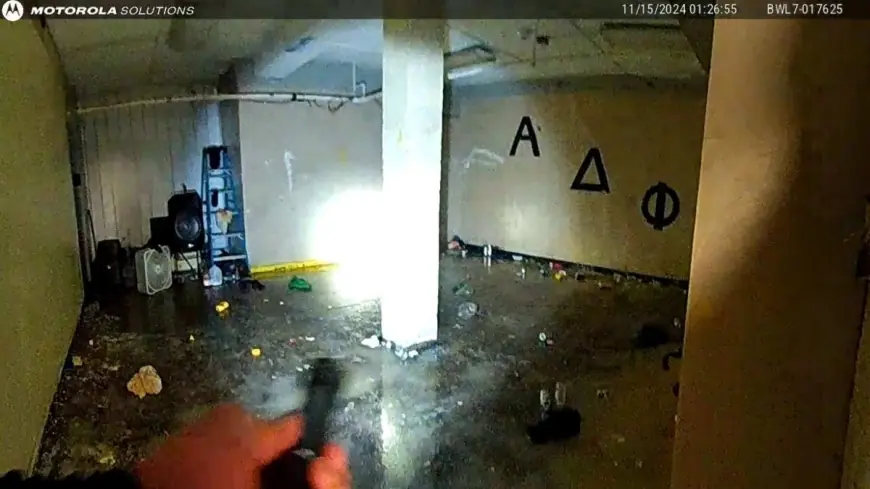
Newly released police body camera footage documents a hazing scene at a university fraternity house in which officers found dozens of blindfolded pledges packed into basement rooms; the footage has prompted institutional discipline and renewed public scrutiny. The images and audio, circulating widely online, depict the moment emergency responders encountered the group during a fire alarm in November 2024.
Hazing — What happened and what’s new
In body camera footage from emergency responders, officers and firefighters arriving at a fraternity house in mid-November 2024 entered a basement where they encountered 56 pledges assembled in dark rooms. Many of the young men were blindfolded, some were shirtless, and a number appeared to be covered in food or other substances of varying colors. Responders sought to determine whether anyone required medical attention or was being held against their will; those in the rooms indicated they were not being restrained.
The episode unfolded after a fire alarm prompted the joint response. Emergency personnel moved through the house looking for someone in charge but encountered silence and limited cooperation in directing them. At one point, an individual confronted officers and was later taken into custody on an interference charge; prosecutors subsequently dropped that charge. Following the incident the university suspended the fraternity chapter until 2029, and multiple fraternities at the same campus were noted as under suspension at the time of reporting.
Behind the headline
Context: The footage was released and has circulated online, drawing attention because it shows a large group of pledges blindfolded in a confined space while emergency services responded. The images have been edited into shorter clips that have spread on social platforms, increasing public visibility and prompting institutional response.
Incentives and constraints: The university imposed a multi-year suspension on the chapter, reflecting institutional pressure to address hazing when visible evidence emerges. Emergency responders had the immediate operational incentives to ensure safety and to identify responsible adults; university administrators faced reputational and compliance incentives to act once the scene was documented.
Stakeholders and exposure:
- Pledges who were present: potential for physical and reputational harm, and subjects of any disciplinary review.
- Fraternity chapter: faces suspension and reputational damage; loss of campus privileges through 2029 is confirmed.
- The university: exposed to scrutiny over campus culture and enforcement of anti-hazing rules.
- Emergency services and prosecutors: operational conduct and charging decisions have already been part of the public record.
What we still don’t know:
- Whether any medical evaluations after the event identified injuries or other health concerns for those present.
- Who specifically organized or directed the activity inside the basement beyond participants who identified themselves to officers.
- The outcome of any internal disciplinary processes for individual members beyond the chapter suspension.
- Whether additional criminal charges were considered or remain pending in relation to the event.
What happens next
- Institutional enforcement and appeals: The suspended chapter may pursue internal appeals of the university disciplinary action; the university could hold further hearings or maintain the suspension through the stated period depending on review outcomes.
- Disciplinary action for individuals: University or organizational proceedings could result in individual sanctions, expulsions, or other penalties if investigators identify responsible actors; a lack of publicly confirmed individual discipline remains an open matter.
- Criminal follow-up: Prosecutors may reassess whether additional charges are appropriate if new evidence emerges; prior interference charges tied to this episode were dropped, demonstrating that charging decisions can change as cases develop.
- Policy and oversight response: The university may announce additional anti-hazing measures, enforcement changes, or educational programming in response to public scrutiny and the chapter suspension.
- Public and social-media impact: Continued sharing of edited footage could shape public debate, influence campus sentiment, and prompt other institutions to review similar practices.
Why it matters: The footage provides visual confirmation of a large-scale initiation activity involving blindfolded and partially disrobed pledges, elevating questions about safety, consent, and institutional oversight. Near-term implications include prolonged campus disciplinary consequences for the chapter, possible individual investigations, and heightened attention to hazing practices on other campuses. For students and families, the episode underscores risks associated with clandestine initiation rituals and the role of emergency responders in intervening when alarms draw them into such situations.
For observers and decision-makers, the most immediate items to monitor are the results of any ongoing disciplinary reviews, whether further criminal actions are pursued, and any formal steps the university takes to address the conduct highlighted by the footage.