

























Suhoor Time and Ramadan 2026: Start Date Confirmed, Fasting Hours and What to Expect

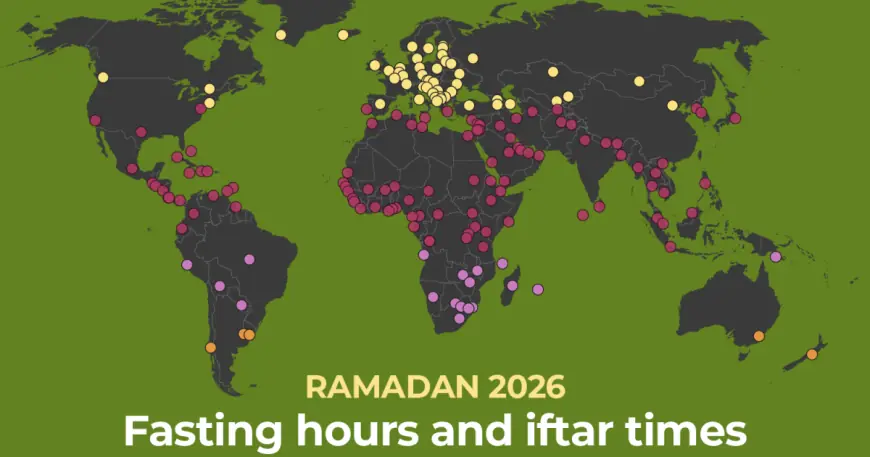
Following a confirmed crescent sighting, Ramadan is set to begin with the fast starting at sundown on Tuesday and the first full day of fasting on Wednesday, February 18. Observant Muslims preparing for pre-dawn meals will want to note suhoor time as the daily rhythm shifts through the month; fasting hours and daily schedules will vary widely depending on location.
Suhoor Time: Pre-dawn Meal and Daily Rhythm
Suhoor time marks the final opportunity to eat and drink before daylight fasting begins. Observers wake before dawn to eat suhoor, then begin abstaining from food and drink once day breaks; the fast is broken each evening at iftar. The month of Ramadan lasts 29 or 30 days, so suhoor time and nightly iftar will move gradually through the calendar as the month proceeds.
Fasting hours, global patterns and what the confirmation means
The dawn-to-dusk fast this year will range from about 11. 5 to 15. 5 hours depending on where people live, with typical durations falling between 12 and 15 hours. For nearly 90 percent of the world’s population in the Northern Hemisphere, fasting hours will be a bit shorter this year and are set to decrease further until 2031 when Ramadan aligns with the winter solstice. In contrast, observers living south of the equator will face longer fasting hours than last year.
- Northern Hemisphere: first-day fasts are expected to be about 12 to 13 hours, with durations increasing over the month.
- Southern Hemisphere: first-day fasts in countries such as Chile, New Zealand and South Africa are expected to be about 14 to 15 hours, with durations decreasing over the month.
Because the Islamic calendar is lunar, Ramadan moves earlier on the solar calendar by roughly 10 to 12 days each year. That steady shift across seasons also produces larger patterns: the lunar year is shorter than the solar year by about 11 days, a dynamic that will result in Ramadan occurring twice in the year 2030.
Practices, exemptions and the month’s arc
During daylight hours, observers refrain from eating, drinking, smoking and sexual relations as part of spiritual discipline aimed at increasing taqwa, or consciousness of God. Exemptions exist for those who are not healthy individuals of age; people who are unable to make up missed fasts because of illness can provide a meal donation in place of each missed fast when appropriate. Religious practice during the month also commonly includes increased reading of sacred texts, nightly prayers, and communal iftar gatherings.
With the official start tied to the sighting of the waxing crescent moon, communities have traditionally awaited confirmation from trained moon spotters before finalizing schedules. The confirmation that led to the upcoming start underscores the central role of the moon sighting in fixing the beginning of the month.
Looking ahead, observers should expect suhoor time and iftar to shift through the weeks of Ramadan as daylight hours change by region. The likely beginning of the Eid al-Fitr celebration will follow the completion of the month; current information indicates the celebration is likely to begin on the night of March 18, 2026, contingent on the final count of days in the month.
Practical planning for families and institutions should account for varying daily fast lengths and local determinations of religious observance. Timetables and local announcements will determine exact suhoor time and iftar times in each community; schedules are subject to change based on local sighting and calendar decisions.