

























Suhoor Time, Ramadan 2026: Fasting Hours and Global Iftar Start Times

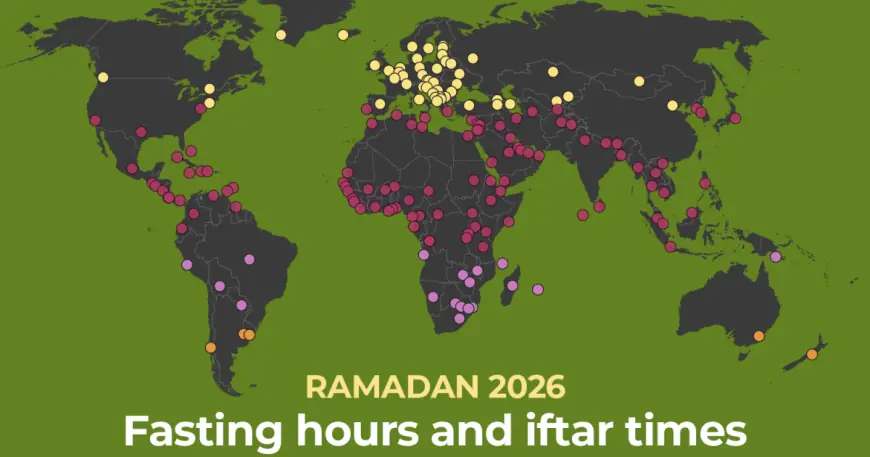
Moon sighting activity in Saudi Arabia has set Ramadan 2026 to begin the night of February 17, meaning the first full day of fasting will be Wednesday, February 18 (ET). For observant Muslims preparing schedules, suhoor time planning and iftar arrangements will reflect wide regional variation: the dawn-to-dusk fast is expected to run roughly 11. 5 to 15. 5 hours depending on location.
Suhoor Time and fasting hours
On the first day of Ramadan 2026, most locations in the Northern Hemisphere will see shorter dawn-to-dusk fasts, typically about 12 to 13 hours, with durations increasing as the month progresses. In contrast, countries south of the equator such as Chile, New Zealand and South Africa are expected to face longer fasts of about 14 to 15 hours on the first day, with those durations decreasing through the month. The overall global range for daylight fasting this year runs from approximately 11. 5 to 15. 5 hours.
Crescent sighting and start date
Moon spotters in Saudi Arabia verified the waxing crescent was visible on Tuesday, February 17, 2026 (ET), which sets the beginning of Ramadan at sundown that night. Following that sighting, Saudi authorities announced that the first day of fasting will be Wednesday, February 18 (ET). Ramadan will last either 29 or 30 days, depending on the lunar cycle.
Practices, observance and Eid timing
During daylight hours in Ramadan, observers abstain from eating, drinking, smoking and sexual relations as part of a fast meant to foster religious consciousness. Days typically begin before dawn with a pre-dawn meal and end at sunset with an iftar meal; the pre-dawn meal is commonly referred to with the term referenced in this article and guides daily timing decisions for millions. Muslim communities worldwide will mark the end of the month with Eid al-Fitr; the celebration is likely to begin on the night of March 18, 2026 (ET), depending on moon sightings and local determinations.
Regional outlook and calendar notes
Because the Islamic calendar is lunar, Ramadan shifts earlier by about 10 to 12 days each Gregorian year. For nearly 90 percent of the world's population living in the Northern Hemisphere, fasting hours will be a bit shorter this year and are projected to continue decreasing until 2031, when Ramadan will overlap the winter solstice. Conversely, those south of the equator will generally experience longer daylight periods than last year at the start of the month. Over longer cycles, the shorter lunar year means Ramadan can fall twice in a Gregorian year; one cited projection notes that will occur in 2030.
- Key takeaways: Ramadan begins night of Feb. 17, first fasting day Feb. 18 (ET); dawn-to-dusk fasts range ~11. 5–15. 5 hours; Eid likely begins night of Mar. 18 (ET).
Nearly 2 billion Muslims worldwide observe Ramadan, and communities will use local sighting decisions and established calendars to set precise daily suhoor time and iftar schedules for the month. Where exact local timings are not yet published, observers should expect suhoor and iftar to follow the pattern of dawn-to-dusk fasting described above and to vary by latitude and date within the month.