
























Women’s figure skating medals settle at Milano Cortina as podiums reshape the field

The women’s side of figure skating at the Milano Cortina Winter Games has delivered a clear headline: new Olympic champions, familiar contenders holding firm, and a medal table that underscores how narrow the margins have become in the post-quad era. By Friday, February 20, 2026 (ET), women competitors have been central to three Olympic figure skating podiums—women’s singles, pairs, and ice dance—along with the team event that opened the sport’s schedule.
Women’s figure skating medals: the full Olympic podium snapshot
Here’s how the medal picture stands across the four figure skating events that include women athletes, based on final results posted for the Games:
| Event | Gold | Silver | Bronze |
|---|---|---|---|
| Women’s singles | Alysa Liu (USA) | Kaori Sakamoto (Japan) | Ami Nakai (Japan) |
| Pairs | Riku Miura / Ryuichi Kihara (Japan) | Anastasiia Metelkina / Luka Berulava (Georgia) | Minerva Fabienne Hase / Nikita Volodin (Germany) |
| Ice dance | Laurence Fournier Beaudry / Guillaume Cizeron (France) | Madison Chock / Evan Bates (USA) | Piper Gilles / Paul Poirier (Canada) |
| Team event | USA (Liu, Amber Glenn, Ilia Malinin, Ellie Kam/Daniel O’Shea, Chock/Bates) | Japan | Italy |
Women’s singles: Liu lands the long-awaited U.S. breakthrough
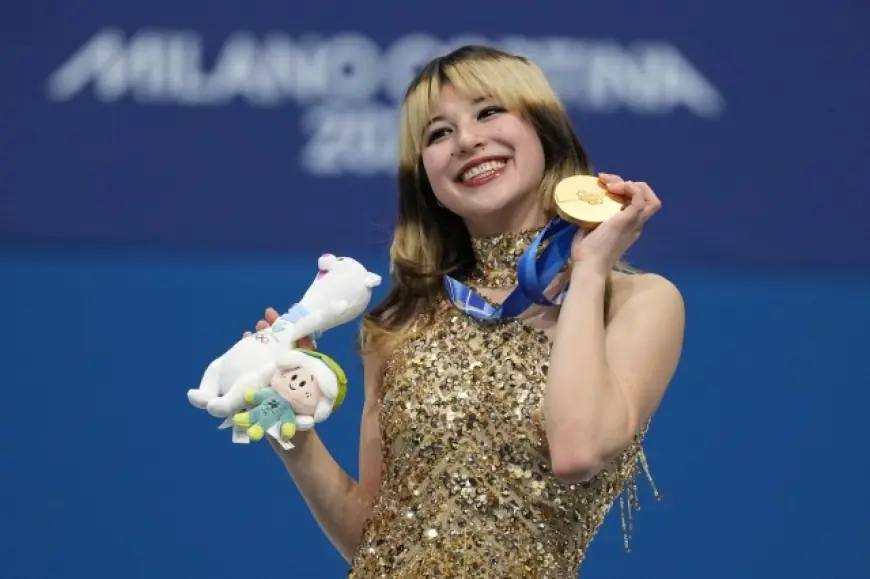
Women’s singles concluded on Thursday, February 19, 2026 (ET), with Alysa Liu taking gold on a winning total of 226.79. The result ends a long wait for an American women’s Olympic singles champion and arrives in a cycle where consistency and base value have been unusually tightly matched among the top group.
Japan’s Kaori Sakamoto took silver, reinforcing her status as a championship mainstay who rarely gives away points in components and execution. Japan’s Ami Nakai earned bronze, giving Japan two medals in the event and showcasing the depth of its women’s pipeline at the exact moment the discipline is shifting toward cleaner, higher-percentage layouts rather than all-or-nothing risk.
The bigger takeaway isn’t just the winner—it’s the spread. The top three scores are close enough that one pop, a single under-rotation call, or a step-out can flip medals. That is likely to shape how federations and coaches approach program construction going forward: fewer “hero” elements, more points secured through sequence quality, spins, and second-half stamina.
Pairs: Japan’s breakthrough, Georgia’s first Winter podium
Pairs wrapped on Monday, February 16, 2026 (ET), with Riku Miura and Ryuichi Kihara winning gold—Japan’s first Olympic medal in pair skating, and a landmark moment for a country historically stronger in singles than in pairs.
The silver medal for Anastasiia Metelkina and Luka Berulava delivered Georgia’s first Winter Olympic medals in history, a result that will likely reverberate well beyond figure skating. Germany’s Minerva Fabienne Hase and Nikita Volodin took bronze, continuing a trend of European pairs teams strengthening depth through technical steadiness and clean execution rather than chasing maximum risk.
For women in pairs, the event again highlighted how much the podium depends on lift security and throw quality. The margin for error is unforgiving: one small instability can cascade into time loss, missed levels, and negative grades of execution.
Ice dance: a new partnership hits gold standard timing
Ice dance concluded on Wednesday, February 11, 2026 (ET), with Laurence Fournier Beaudry and Guillaume Cizeron winning gold. Madison Chock and Evan Bates earned silver, while Piper Gilles and Paul Poirier claimed bronze.
The gold is especially notable because it validates a relatively new partnership at the sport’s highest-pressure moment. Ice dance medals are often decided by fine distinctions in edges, speed, and pattern clarity, and this podium suggests the judging panel rewarded a blend of technical precision and program cohesion rather than pure difficulty alone.
For the women’s side of dance, the broader story is that competitive longevity and partnership stability still matter. Chock and Gilles have been at the top for multiple cycles, and their ability to remain in the medal mix under evolving rules remains one of the discipline’s defining traits.
Team event: the early tone-setter that mattered
The figure skating team event ran from Thursday, February 6 through Saturday, February 8, 2026 (ET), and it proved more than an appetizer. The United States won gold, Japan took silver, and Italy earned bronze—results driven by consistent placements across segments rather than a single blowout skate.
From a women’s perspective, the team event carried two practical impacts. First, it created immediate performance momentum (and pressure) for women who later skated in individual disciplines. Second, it spotlighted roster depth—countries that can field medal-level women, plus credible pairs and dance, are better positioned to contend over a full Olympic schedule.
What to watch after the medals
With the major women-involved figure skating medals decided, the next conversation shifts to trajectories: which medalists can sustain form into the next season, and which near-podium skaters will retool content. If the top-three closeness in women’s singles becomes the norm, expect more strategic program layouts, tighter technical calls becoming decisive, and a premium on clean second skates under pressure.