






















2026 winter olympics women's single skating free skating: Nakai's short program ignites medal race

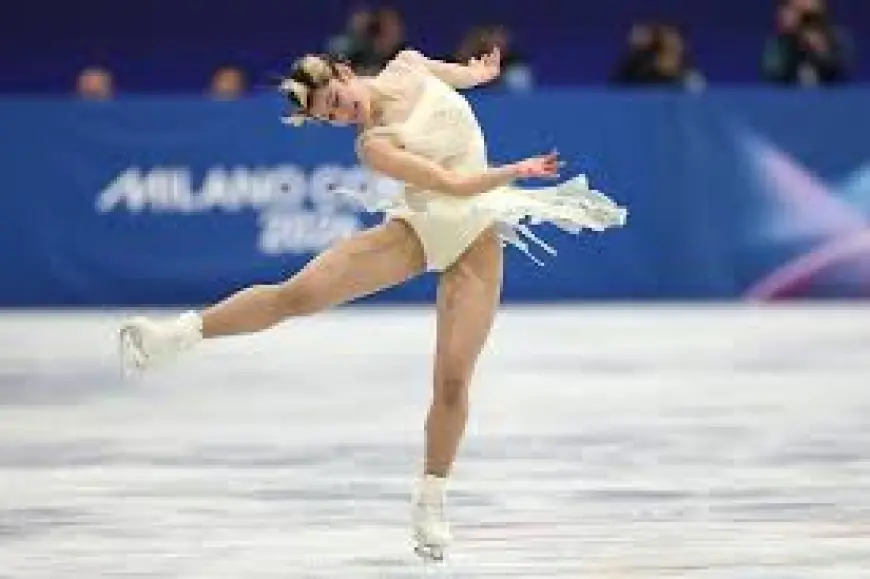
The women's free skate on Thursday (Feb. 20 ET) has been elevated to must-see status after 17-year-old Ami Nakai stunned the field with a season-best short program on Tuesday night (Feb. 18 ET). Nakai's clean, high-energy display — highlighted by a triple Axel — left established stars under pressure and opened the door for a potential historic finish for Japan.
Nakai's breakthrough and what it means for the podium
Nakai, the youngest skater in the women's competition, rose from a relatively low world ranking and an 18th starting position to top the leaderboard after the short program. Her performance combined technical ambition and poise: a soaring triple Axel, a triple Lutz–toe loop combination and crisp spins produced what became a personal-best mark in the low-to-high 78 range, outperforming expectations for a debutant on the senior tour this season.
The immediate impact is twofold. First, Nakai has injected unpredictability into a field that had looked governed by experience; second, her result amplifies the case that Japan could complete a podium sweep — a feat never achieved in Olympic women's single skating. With teammates already collecting medals in other figure skating disciplines at these Games, the momentum sits firmly with the Japanese delegation.
Key challengers and the tactical picture for Thursday
Kaori Sakamoto, who sits just behind Nakai after the short program, remains the clearest foil. At 25, Sakamoto brings three consecutive world titles and the kind of championship mettle that typically tightens in free-skate pressure situations. This is framed as her farewell season; she has signalled she will step away after Thursday, which could sharpen her focus and emotional connection for the free skate.
Alysa Liu of the United States is another major factor. Liu delivered a powerful short program featuring a high-difficulty jump content and sits squarely in the medal mix. Were she to reach the podium on Thursday, it would end a long American drought in this event. Other contenders include Mone Chiba, who posted strong marks staying close to the top group, and veteran competitors capable of clean, high-scoring long programs.
Thursday's free skate will demand both risk and consistency. The judging environment rewards high base-value elements — triple Axels and combinations — but also penalises under-rotation and skated-out elements. Skaters who balance demanding technical layouts with secure execution and strong component scores will emerge as favoured medalists.
Outlook: tactics, pressure and the race to the podium
Expect strategies to diverge. Some skaters may front-load the free program with their most difficult jumps to bank points early; others will aim for a cleaner, more conservative approach that relies on performance quality, transitions and interpretation to boost component scores. Mental resilience will be decisive: Nakai's rise shows a young skater can harness big moments, but the free skate, as the medal-deciding segment, often favours those who can marry technical bravery with flawless delivery under pressure.
Beyond individual ambitions, national narratives are in play. Japan's depth has already produced multiple medals at these Games, and a strong free skate performance by Nakai, Sakamoto and Chiba would underline the country's dominance. For the United States, Liu carries the burden of breaking a two-decade absence from the Olympic podium in the women's event. The free skate on Thursday (Feb. 20 ET) promises to resolve these storylines in dramatic fashion.
Finals will begin in the evening in local competition scheduling; viewers should watch for the skaters' opening choices, jump execution in the first minute of each program, and how competitors handle the final combination elements — the points gained or lost there will likely determine the medals.