

























Newark Airport Closed Wednesday Night After JetBlue Emergency Landing, Triggering Ground Stop and Major Delays Across the Region

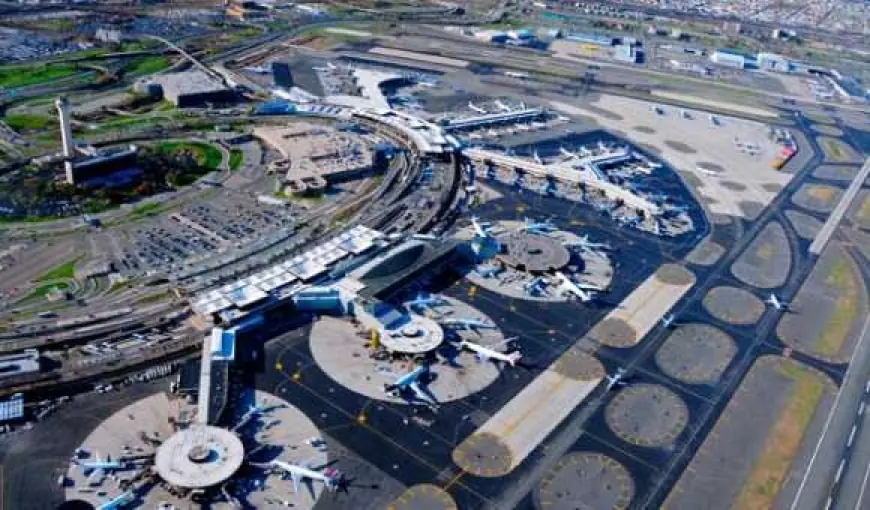
Newark Liberty International Airport was effectively shut down for several hours on Wednesday, February 18, 2026, after an in-flight emergency forced a JetBlue aircraft to return shortly after takeoff and prompted a broad pause in flight operations. The airport was listed as closed through 11 p.m. ET, with the most severe disruption concentrated in the evening window when the incident unfolded and safety teams worked on the airfield.
If you’re searching “Newark airport closed” today, the key detail is timing: this was a temporary closure tied to a specific aircraft emergency, not a long-term shutdown. Even after operations resume, ripple effects often last into the next day as airlines and crews reposition and schedules untangle.
What happened at Newark Liberty on February 18, 2026
The disruption began after JetBlue Flight 543 departed Newark around 5:45 p.m. ET for Florida, then turned back almost immediately following reported engine trouble. After the aircraft landed safely, the crew reported smoke in the cockpit and passengers evacuated using emergency slides.
That sequence triggered an aggressive operational response. The FAA issued traffic restrictions and pauses while the runway environment and aircraft situation were addressed. Newark was listed as closed from roughly 6 p.m. ET to 11 p.m. ET, with a ground stop and additional flow controls contributing to widespread cancellations, diversions, and long departure holds.
Why a single incident can close a major airport
Newark sits in one of the most constrained airspace corridors in the country. Even short disruptions can cascade quickly because there’s limited slack in the system.
A few practical reasons an emergency can halt operations fast:
-
Runway access and safety checks: responders may need to secure the area, inspect surfaces, and confirm there’s no debris or hazard
-
Taxiway and gate congestion: if arrivals keep coming while departures stall, gates fill and aircraft can’t park
-
Airspace flow controls: controllers may need to meter arrivals and departures to prevent airborne holding from stacking up
-
Evacuation and medical response: once slides deploy and passengers are moved, the incident shifts into a multi-agency operation that can slow the return to normal
In other words, “closed” is often less about the terminal doors and more about the runway environment and traffic management.
Behind the headline: the incentives and pressures shaping the response
In an emergency, decision-makers are pushed by two competing incentives.
The first is obvious: safety first. Nobody gets rewarded for keeping an airport moving if the runway environment isn’t fully secure. Aviation risk management is designed to be conservative, and it becomes more conservative when there’s smoke, evacuations, and uncertainty.
The second incentive is operational: get the system moving again before disruptions become unmanageable. Every hour of stoppage multiplies crew timeouts, missed connections, baggage complications, and aircraft out-of-position problems that can take a full day to unwind.
Stakeholders with immediate exposure include:
-
Passengers, dealing with missed connections, overnight delays, and rebooking scarcity
-
Airlines, absorbing costs from diversions, crew reassignments, and customer care obligations
-
Airport operations and emergency teams, balancing speed with strict safety protocols
-
Regional airports, which can receive diverted traffic and inherit congestion
-
Air traffic control, managing a complex return-to-flow in crowded Northeast airspace
The tension between safety and speed is why airport closures often have a hard end time listed, but still leave travelers facing unpredictable knock-on delays.
What we still don’t know
Even with clear video and a publicly visible shutdown, several important details can remain unresolved in the first 24 hours:
-
The precise technical cause of the aircraft’s engine issue and smoke report
-
The extent of any injuries tied to the evacuation and whether medical issues occurred after passengers left the aircraft
-
Whether any runway or taxiway restrictions persisted after the listed reopening time
-
How many flights were diverted versus canceled outright, and the true recovery timeline for airline schedules
Those unknowns matter because they shape the next steps: investigations, maintenance actions, and whether operational changes are needed for similar aircraft or procedures.
What happens next: realistic scenarios for travelers and the airport
After a late-evening closure, the next day usually plays out in one of a few predictable ways:
-
Fast recovery by morning: schedules normalize quickly if aircraft and crews are already positioned. Trigger: limited cancellations and quick airfield clearance.
-
Rolling delays through the day: residual disruptions linger as crews time out and inbound aircraft arrive late. Trigger: high cancellation volume and constrained rebooking.
-
A second wave of congestion: normal traffic returns, but the backlog collides with peak periods. Trigger: heavy morning departure banks and limited gate availability.
-
Targeted cancellations: airlines proactively trim schedules to stabilize operations. Trigger: aircraft out of place and crew legality constraints.
Why it matters
This incident is a reminder that the Northeast air travel system can be thrown off by a single event, especially at a busy hub with limited breathing room. For travelers, “Newark airport closed” isn’t just a yes-or-no question. It’s a signal that even a short shutdown can create a full-day aftershock in cancellations, missed connections, and crowded customer-service lines.
If you’re traveling through Newark today, the practical takeaway is simple: even if the airport is open, plan for residual disruption, check your flight status frequently, and assume rebooking options may tighten quickly during peak hours.