

















Wolves vs Arsenal Ends 2–2 as Premier League Leaders Let Another Lead Slip and Wolves Snatch a Late Lifeline

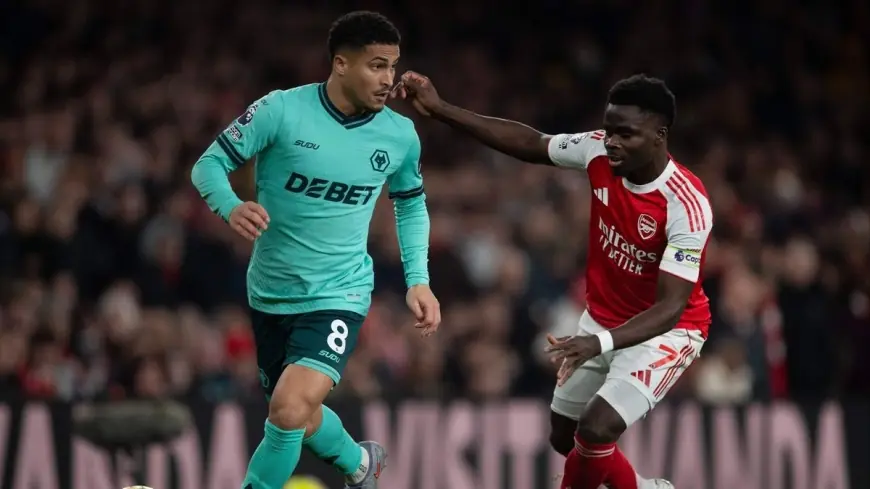
Wolves held Arsenal to a dramatic 2–2 draw at Molineux on Wednesday, February 18, 2026 ET, scoring deep into stoppage time to deny the Premier League leaders a win that would have steadied their title charge. Arsenal raced ahead early and rebuilt a two-goal cushion after the break, but Wolves struck twice in the second half, including a last-gasp equaliser on debutant Tom Edozie’s late touch that sent the home crowd into disbelief and left Arsenal with a familiar, uncomfortable question: why do games that look controlled keep turning into nerve tests?
For Wolves, the point is about survival, pride, and proof they can compete even from the foot of the table. For Arsenal, it is about the thin line between a champion’s inevitability and a front-runner’s wobble.
What happened in Wolves vs Arsenal
Arsenal started sharply and were rewarded almost immediately. Bukayo Saka opened the scoring in the fifth minute, continuing a pattern in which Arsenal’s best moments come when their tempo is highest and their passing is most direct. Wolves absorbed pressure and tried to slow the match into a series of set pieces, fouls, and stoppages, but Arsenal still looked the more likely to add a second before halftime.
That second goal did arrive shortly after the break. Piero Hincapie made it 2–0 in the 56th minute, and at that point the match looked like it was drifting toward a routine away win.
Wolves changed the emotional temperature with a thunderous strike from Hugo Bueno in the 61st minute, his first Premier League goal. The stadium woke up, Arsenal’s rhythm frayed, and the game turned into the sort of stretched, frantic contest Wolves wanted.
Then came the twist. With time nearly gone, Wolves levelled in stoppage time, credited to Edozie on his senior debut after a scramble at the far post. The match ended 2–2, and Arsenal walked away with a single point that felt far smaller than it should have given their position in the table.
Premier League table context: why the draw matters
Arsenal remain top of the Premier League, but the margin for error is shrinking. After dropping points in consecutive league matches, Arsenal’s lead sits at five points over second-place Manchester City, with Arsenal having played one more game. That is not a crisis, but it is an invitation.
The title race does not only respond to results; it responds to patterns. Back-to-back dropped points tell rivals there is oxygen in the chase, and it tells mid-table and relegation-threatened opponents there is a blueprint: stay in the game, frustrate Arsenal’s central progression, and wait for a moment of looseness.
For Wolves, the point is tangible. They are still bottom of the table, but a late equaliser against the leaders reinforces that they can fight for results even when the broader season has been grim. In relegation battles, belief is often worth as much as tactics.
Behind the headline: incentives, pressure, and what Wolves exposed
This match is a case study in how incentives shape the final half-hour.
Arsenal’s incentive is clear: protect the lead, manage minutes, and keep the machine humming through a congested stretch. But protecting a lead can quietly flip a team’s posture from proactive to cautious. When caution becomes passivity, opponents feel it and start taking bigger risks.
Wolves’ incentive is the opposite: there is little to lose and everything to gain. A team at the bottom can treat the final 20 minutes as a controlled gamble, pushing numbers forward and forcing the favourite to make repeated defensive decisions under stress. That is exactly what happened after Bueno’s goal.
The stakeholders are not just players and coaches. Arsenal’s dropped points reshape the behaviour of every title-race actor: City gains belief, other challengers gain leverage, and upcoming opponents see the value of staying within one goal as long as possible. Wolves, meanwhile, gain a rare positive headline that can translate into sharper home energy in their next matches.
What we still don’t know
Several questions will define how this result is remembered:
-
Was Arsenal’s late collapse primarily tactical, physical, or psychological?
-
How much did lineup availability and fitness shape Arsenal’s ability to control the final phase?
-
Can Wolves reproduce this intensity consistently, or was it a one-night surge driven by the opponent and the moment?
There is also the unanswered question that always hangs over late equalisers: whether Arsenal’s game management is a short-term wobble or a recurring vulnerability that better teams will punish even more harshly.
What happens next: realistic scenarios and triggers
-
Arsenal stabilize quickly if they start the next match with the same urgency they showed in the opening 15 minutes at Molineux, turning early dominance into a second goal before the game can tighten.
-
The title race narrows further if Arsenal keep turning two-goal advantages into one-goal defenses, inviting pressure and chaos.
-
Wolves climb off the bottom if this late-stage aggression becomes a template, especially at home, where momentum can cover structural weaknesses.
-
Wolves remain trapped if they cannot pair their emotion with cleaner defending in the first hour, because constant comebacks are an exhausting way to chase safety.
Where to watch Wolverhampton Wanderers vs Arsenal
Because this match has already been played, “where to watch” depends on whether you want replays or highlights.
-
In the United Kingdom, the match aired on the primary domestic Premier League rightsholder for midweek fixtures, and extended highlights typically appear on the official league and club channels after full time.
-
In the United States, it aired via the league’s main national broadcast partner and its streaming service, with replays commonly available on-demand shortly after the match window.
-
In Canada and Australia, it followed the usual Premier League rights packages for those territories, with match replays and condensed highlights generally offered through the same subscription services that carry live games.
If you tell me your country, I can point you to the correct broadcast package and the most reliable replay option for your region without guessing.