




















2026 Winter Olympics Men’s Snowboarding Slopestyle: Su Yiming Wins Gold in Livigno as Japan and USA Grab Breakthrough Podium Moments

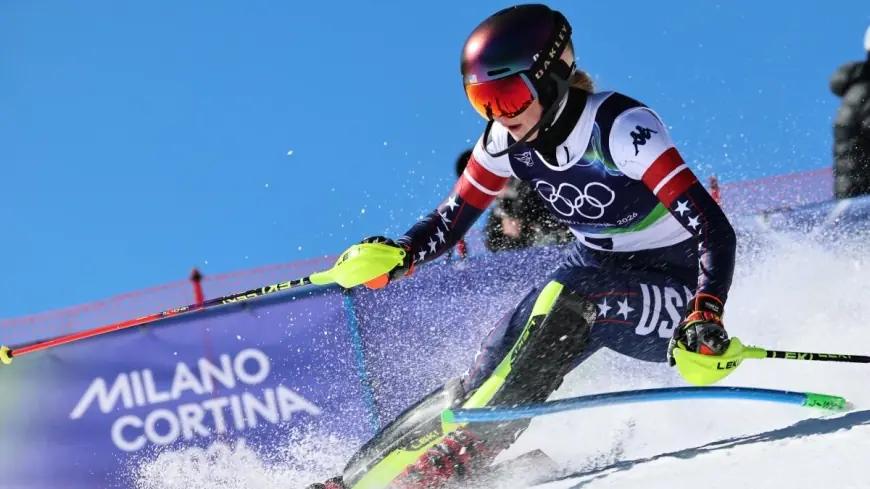
The men’s snowboarding slopestyle final at the 2026 Winter Olympics delivered a familiar headline with a new edge: Su Yiming captured Olympic gold on Wednesday, February 18, 2026 ET, turning a high-pressure finals session in Livigno into both a personal milestone and a broader statement for China’s freestyle program. Japan’s Taiga Hasegawa took silver, and American Jake Canter earned bronze, a podium that reflects how quickly the discipline’s power map is shifting.
The result lands at a moment when slopestyle is wrestling with its own identity. The sport is still defined by creativity and style, but the scoring ecosystem increasingly rewards risk management, consistency, and “hit rate” under finals pressure. Livigno’s final underlined that reality: the medals went to riders who paired difficulty with a run that looked repeatable, not just spectacular.
What happened in the men’s snowboard slopestyle final
Su Yiming put down the top score of the day to secure gold. Hasegawa finished close behind for silver, and Canter’s late push moved him onto the podium for bronze. The winning mark came from a run that balanced amplitude on jumps with clean landings and sharp rail execution, the kind of package that forces judges to reward completeness rather than a single standout trick.
The margins mattered. Hasegawa’s silver was separated by a fraction of a point, the kind of gap that usually comes down to tiny differences in execution, landing stability, and how decisively a rider links the course from feature to feature. Canter’s bronze, meanwhile, was the classic slopestyle story: hold it together when it counts, then let the final run do the talking.
Why this podium is bigger than one event
Slopestyle medals often look like individual achievements, but they’re also program statements.
For China, Su’s gold is a signal that the country’s snowboarding investment is not a one-cycle story. In slopestyle, dominance is hard to sustain because course design changes, judging trends evolve, and the trick progression never stops. Winning here suggests depth in coaching, preparation, and competitive composure—especially when the run lands under Olympic finals pressure.
For Japan, Hasegawa’s silver continues a larger theme: Japan is not just producing one-off stars, it’s producing a pipeline. The country’s riders have been arriving at elite-level difficulty younger than ever, and the competitive confidence is obvious—less “happy to be here,” more “expected to contend.”
For the United States, Canter’s bronze is meaningful because it looks like a handoff moment. U.S. slopestyle has had iconic figures and strong teams, but the discipline punishes inconsistency, and podiums tend to cluster around athletes who can land a finals run on demand. A new medalist signals renewed depth and a stronger near-term outlook heading into future cycles.
Behind the headline: incentives, stakeholders, and the pressure cooker effect
Slopestyle is uniquely shaped by incentives that can pull riders in opposite directions.
Athletes are incentivized to escalate trick difficulty because the ceiling keeps rising. At the same time, Olympic finals reward the athlete who can deliver one fully complete run—rails and jumps—without “dead spots,” hesitations, or sketchy landings. That creates a strategic tension: do you chase the biggest tricks, or do you chase the cleanest full-course story?
Stakeholders feel that tension differently:
-
Riders want legacy moments and medal security, but they also protect long-term health in a sport where injuries can erase seasons.
-
National programs want medals as proof of investment, which can create pressure to push progression faster.
-
Event organizers and judges want a contest that rewards creativity, not just math, while keeping scoring defensible under scrutiny.
-
Fans want spectacle, but also want the sport’s “style” roots to remain visible as trick difficulty accelerates.
Livigno’s final showed the modern equilibrium: medal runs are increasingly engineered—still creative, but built to survive finals.
What we still don’t know
Even with a clear podium, several questions linger that will shape how this result is remembered:
-
Whether judging trends will continue to favor maximum difficulty, or swing back toward flow, originality, and rail variety in upcoming events.
-
How much the course design and snow conditions influenced risk choices in the final.
-
Which riders will translate this slopestyle momentum into other park disciplines, especially big air.
-
Whether the tight margins signal a broader leveling of the field—or simply one finals day where execution separated equally difficult run plans.
Those unknowns matter because slopestyle is as much about trend lines as it is about medals.
What happens next: realistic scenarios and triggers
-
Su becomes the focal point of strategic adjustments by rivals. Trigger: teams refining run construction to match his “complete package” template.
-
Japan’s pipeline accelerates. Trigger: younger riders seeing Hasegawa’s silver as proof that early progression can convert into Olympic medals.
-
The U.S. team leans into consistency-first training blocks. Trigger: Canter’s medal reinforcing the value of finals composure over flash.
-
Judges face renewed scrutiny over fractional-point outcomes. Trigger: more finals decided by razor-thin gaps, prompting demands for clearer scoring explanations.
-
Slopestyle run design becomes more conservative in big moments. Trigger: athletes prioritizing “land it clean” over “invent the wildest.”
Why it matters
The men’s snowboarding slopestyle final at Milano Cortina 2026 was not just a highlight reel—it was a snapshot of where the sport is heading. Su Yiming’s gold, Taiga Hasegawa’s silver, and Jake Canter’s bronze collectively point to a discipline that is globalizing fast, tightening at the top, and increasingly decided by who can land elite difficulty with clinical reliability when the Olympic spotlight is brightest.