














Robert Duvall Cause of Death: What’s Confirmed, What Isn’t, and Why the Answer Matters

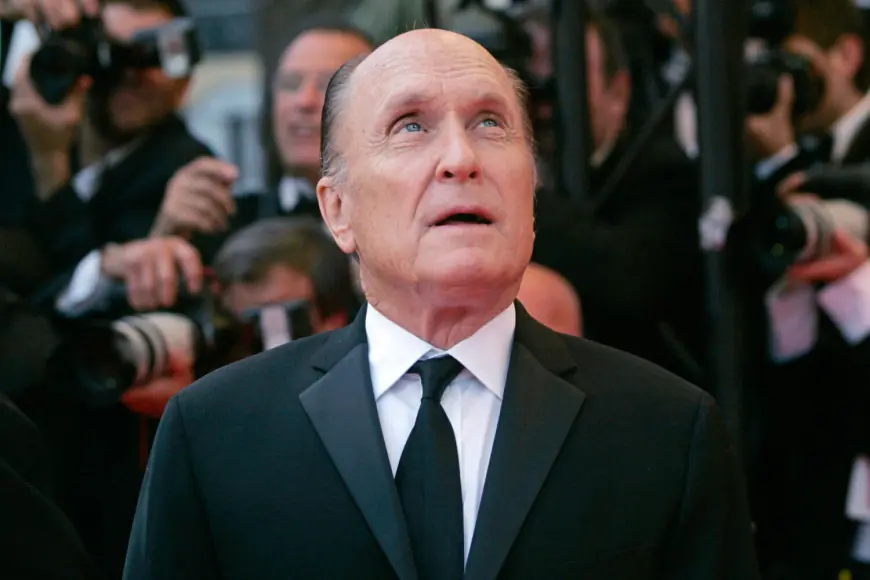
As of Thursday, February 19, 2026, Robert Duvall’s specific cause of death has not been publicly disclosed in a detailed medical sense. What has been confirmed publicly is that the Oscar-winning actor died peacefully at home in Middleburg, Virginia, on Sunday, February 15, 2026, at age 95, following a statement shared by his family and relayed widely in subsequent reporting.
That distinction matters because a wave of online posts has circulated more definitive-sounding claims, often presenting “natural causes” as if it were an official medical determination. In many cases, “natural causes” is a general description used when no traumatic event is involved and the family chooses not to share further details. It is not the same thing as a public diagnosis, an autopsy finding, or a physician’s statement outlining a specific condition.
What happened and what is actually confirmed
Here is the clean, confirmed baseline in USA Eastern Time:
-
Robert Duvall died on Sunday, February 15, 2026.
-
He died at home in Middleburg, Virginia.
-
He was 95 years old.
-
Public statements described his passing as peaceful.
-
No precise medical cause has been released publicly in a definitive, specific form.
Everything beyond that, including claims naming a particular illness, a medical event, or a finalized medical conclusion, should be treated as unconfirmed unless the family, a medical authority, or official records state otherwise.
Behind the headline: why “cause of death” often stays private
When a famous person dies at an advanced age, families frequently keep the medical specifics private for a mix of reasons:
-
Privacy and dignity: Many families see no public benefit to releasing health details.
-
Avoiding rumor cascades: Detailed medical information can be misused, sensationalized, or turned into speculation.
-
Clarity and timing: Families may not want to speak until they have processed the loss, completed arrangements, or resolved documentation.
-
No public obligation: There is usually no requirement to disclose a cause unless there is a public-safety issue or legal proceeding.
In a media environment that rewards quick answers, the absence of detail can get filled in by confident-sounding guesses. That is how a simple statement like “passed peacefully at home” morphs into viral posts claiming certainty.
Stakeholders and incentives: who benefits from premature certainty
This kind of question sits at the center of a modern information problem.
-
Fans want closure, and the internet is optimized to supply it quickly, whether or not it’s accurate.
-
Content publishers have a powerful incentive to turn a “not disclosed” situation into a clickable “answer.”
-
The family’s incentive is usually the opposite: protect privacy, reduce noise, and keep the focus on the life lived rather than the medical details at the end.
The result is predictable: a lot of confident claims, and very little verified specificity.
What we still don’t know
If you are asking for a precise medical cause, the key missing pieces are:
-
Whether the family intends to share more detail later
-
Whether any official medical statement will be released
-
Whether any formal report will become public through normal records processes
Absent those, the most accurate answer remains: it has not been publicly specified beyond a peaceful death at home.
What happens next: realistic scenarios to watch
If more detail ever emerges, it will usually happen in one of these ways:
-
A family statement includes a specific illness or condition.
-
A representative provides a brief clarification for accuracy.
-
An official record becomes accessible through standard procedures, depending on jurisdiction and privacy rules.
-
A memorial tribute references a particular health struggle in a non-technical way.
If none of that happens, the public record will likely remain as it is now: peaceful passing, no detailed cause shared.
Why it matters
Robert Duvall’s career spans decades and includes performances that became cultural shorthand for authority, vulnerability, menace, and grace. When the public conversation fixates on medical specifics that the family has not shared, it can pull focus from what people are actually trying to honor: the work, the legacy, and the impact.
If you want, tell me whether you’re seeing a specific claim about his cause of death that you’re trying to verify, and I can assess whether that claim is supported by confirmed public statements or appears to be rumor.