






















U.S. Military Prepares for Potential Strikes in Iran

The escalating tensions between the United States and Iran have prompted a significant military buildup in the Middle East. U.S. officials have indicated that President Trump could initiate military action against Iran as early as this weekend. The dilemma lies in whether to proceed with military strikes or to continue pursuing diplomatic solutions.
U.S. Military Buildup in the Middle East
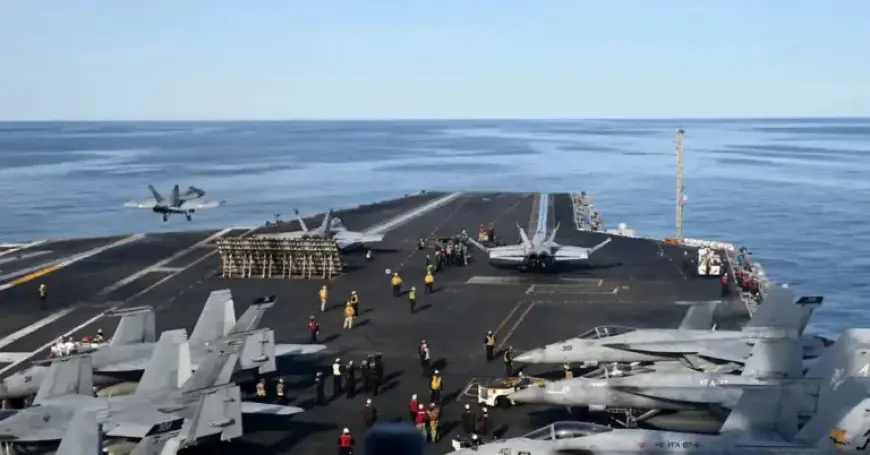
The Pentagon is assembling a formidable force capable of targeting Iran’s nuclear program and missile sites. This buildup includes:
- Dozens of additional F-35, F-22, and F-16 fighter jets.
- Two aircraft carrier strike groups, including the U.S.S. Gerald R. Ford and the U.S.S. Abraham Lincoln.
- Refueling tankers for extended air operations.
The U.S.S. Gerald R. Ford is currently approaching the Mediterranean. It will join the Abraham Lincoln in the region to provide support for potential strikes. These preparations coincide with the backdrop of indirect talks between the U.S. and Iran, aimed at reaching a diplomatic resolution.
Iran’s Nuclear Program and Missile Threats
President Trump has been vocal about his demands for Iran to cease its nuclear activities, particularly uranium enrichment. Israeli Prime Minister Benjamin Netanyahu has also advocated for military action to weaken Iran’s missile capabilities, particularly threats toward Israel.
Officials in Israel have reported escalating military preparations, anticipating a possible coordinated strike with the U.S. They aim to apply pressure on Iran by targeting military and nuclear sites.
Military Readiness and Strategic Challenges
Despite the significant buildup in military assets, officials express concerns regarding the Pentagon’s readiness for a prolonged conflict. Recent enhancements to defensive measures, such as the deployment of Patriot missile systems and THAAD, aim to protect U.S. troops in the region from Iranian retaliation.
Here are some key points regarding U.S. military assets in the region:
- 30,000 to 40,000 U.S. troops stationed at eight permanent bases.
- Defensive capabilities enhanced, but air defenses remain a concern.
- Additional fighter jets are relocating from bases in Europe and the U.S. to bolster forces in the Middle East.
The Impact of Diplomatic Talks
While the administration pursues military options, skepticism about achieving a diplomatic solution remains. Recent talks in Geneva resulted in a set of guiding principles, but substantial gaps still exist between the two sides. Experts suggest that time spent negotiating may allow Iran to further prepare for any potential U.S. strikes.
The decision-making process for military action now lies heavily with President Trump, who must balance the costs and benefits of escalating military intervention against Iran.
As tensions continue to mount, the stakes have never been higher. This military buildup indicates the seriousness of the U.S. response to Iran’s nuclear ambitions and missile capabilities. How this situation unfolds will significantly impact regional stability and international relations in the coming weeks.