











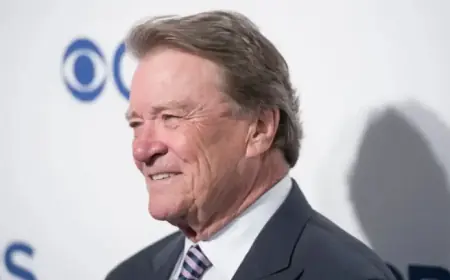









Stephen Colbert and James Talarico Interview Sparks Censorship Fight as Jasmine Crockett Weighs In

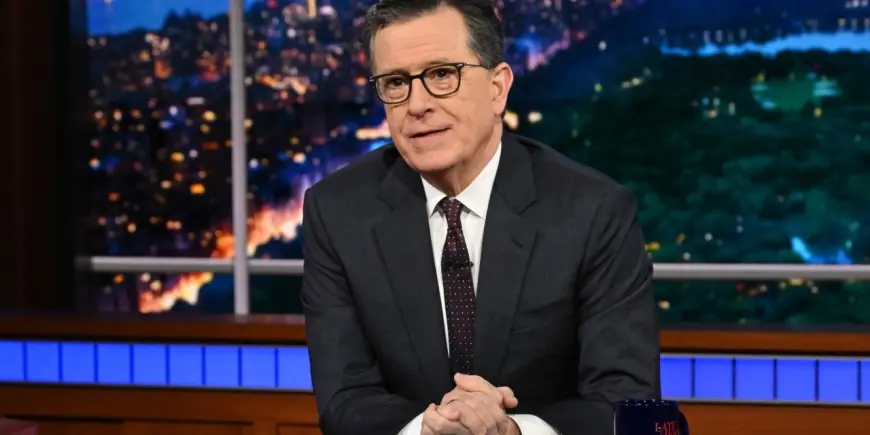
A dispute over a Stephen Colbert interview with Texas Senate candidate James Talarico has erupted into a larger political-media flashpoint this week, after Colbert said a major broadcast network’s lawyers stopped the segment from airing on television. The interview, recorded for Colbert’s late-night show, was ultimately released online instead, turning what would have been a routine candidate conversation into a test case for how broadcasters handle election-season rules, corporate risk, and political pressure.
The controversy is unfolding as early voting ramps up in Texas and as Talarico and U.S. Representative Jasmine Crockett compete for the Democratic nomination for U.S. Senate. In other words, the timing is exactly what makes the situation combustible: a candidate appears on a high-profile entertainment platform, lawyers worry about equal-time obligations, and the public instantly frames the decision as either censorship or compliance.
What happened with Colbert, Talarico, and the pulled interview
Colbert said the network’s legal team warned that airing his conversation with Talarico could trigger equal-time requirements that would force the network to provide comparable airtime to Talarico’s rivals. Colbert also suggested he was told not to discuss the cancellation on-air, escalating the story from legal caution to an allegation of silencing.
The network has pushed back against the idea that it “banned” the interview, describing its role more as legal guidance and outlining options for compliance. Meanwhile, federal officials connected to communications regulation have publicly rejected the idea that the government censored anything, arguing that broadcasters can choose to air candidate appearances if they are prepared to meet equal-time obligations.
That back-and-forth matters because it creates two competing narratives that are both plausible on their face: one side says it is risk management under election rules, the other says it is self-censorship encouraged by political pressure.
Where Jasmine Crockett fits into the story
Jasmine Crockett’s involvement is unavoidable because she is Talarico’s primary opponent and a national-profile political voice. Her public comments have focused less on attacking Talarico for the appearance and more on the broader implications of how powerful gatekeepers shape who gets heard and when.
From Crockett’s perspective, the episode spotlights an uneven playing field: if entertainment programming is treated like a regulated campaign megaphone, candidates can be advantaged or disadvantaged based on legal interpretations, corporate caution, and who has access to high-visibility bookings. For viewers, it also raises an uncomfortable question: are the biggest filters on political speech the rules themselves, or the way companies preemptively enforce them when they fear retaliation?
Behind the headline: incentives, stakeholders, and why this blew up
This story is not just about one interview. It is about incentives colliding:
Corporate incentives: Broadcast executives and lawyers are trained to avoid regulatory exposure and costly political fights, especially in an election year. When rules feel uncertain, many organizations default to the most conservative interpretation.
Political incentives: Candidates benefit from “earned media” that looks organic rather than campaign-driven. A late-night conversation can humanize a candidate and reach voters who ignore traditional politics coverage.
Regulatory incentives: Officials may want to demonstrate toughness, discourage perceived bias, or clarify the boundaries of old rules in a new media environment.
Colbert’s incentive is different: he is a performer whose brand is built on commentary and confrontation. Turning a blocked segment into a public controversy is, for him, both a principled stance and an on-brand escalation.
The stakeholders are equally clear: the candidates, the network, the regulator, Texas voters, advertisers, and the broader entertainment ecosystem that now has to decide whether booking candidates is worth the headache.
What we still don’t know
Several key details remain murky, and those missing pieces are driving the outrage cycle:
Whether the legal risk was truly unavoidable, or whether a narrower compliance path existed that the network rejected out of caution.
How aggressively regulators intend to apply equal-time expectations to entertainment programming during the 2026 cycle.
Whether internal corporate dynamics, including leadership and business interests, influenced the decision beyond pure legal analysis.
What, if anything, changes for future candidate bookings on late-night and daytime talk formats.
Until those questions are clarified, this will remain less a single incident and more a precedent-setting warning to producers.
What happens next: realistic scenarios and the triggers to watch
Scenario one: Networks broadly reduce candidate interviews on entertainment shows.
Trigger: continued uncertainty or credible threat of enforcement.
Scenario two: Networks adopt a standardized compliance playbook.
Trigger: clearer guidance from regulators, or a widely accepted industry standard.
Scenario three: Candidates shift appearances toward online-first platforms.
Trigger: fewer broadcast opportunities paired with low friction digital reach.
Scenario four: The Texas primary becomes a proxy fight about media access.
Trigger: campaigns weaponize the incident in fundraising and messaging.
Scenario five: A public clarification narrows the rule’s practical reach.
Trigger: formal statements, internal memos leaked, or legal analysis that sticks.
Why it matters beyond one Colbert segment
If entertainment programming becomes effectively off-limits for candidates unless broadcasters are willing to offer equal time to every rival, the practical result is fewer spontaneous moments and more controlled campaign media. That pushes politics toward paid advertising and partisan channels, where messaging is narrower and audiences are already sorted.
For voters, the stakes are simple: access. Whether you view the decision as censorship or compliance, the outcome is the same if it spreads: fewer places to hear candidates outside the usual political megaphones. And in a high-stakes Texas contest, the smallest shifts in attention can matter.