




















tahoe avalanche: 8 skiers found dead, 1 missing in deadliest modern California avalanche

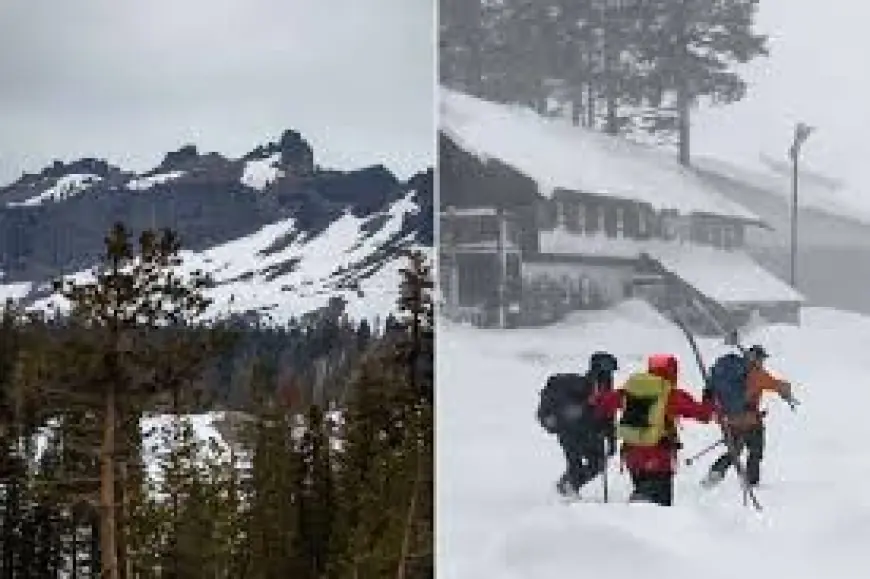
A backcountry expedition near Lake Tahoe ended in tragedy after an avalanche on Tuesday that has left eight skiers dead and a ninth missing and presumed dead. Nevada County in a Wednesday news conference (ET) that the group, which had set out on a three-day trip, was caught in rapidly deteriorating conditions that had forecasters warning of heavy snowfall and high winds across the northern Sierra Nevada.
Search, rescues and survivors
Fifteen people were part of the expedition, including four guides. Members of the group were staying at remote huts near Truckee and were returning to the trailhead when the avalanche struck below Castle Peak, a popular but rugged area that rises to about 9, 100 feet. Rescuers reached six survivors late Tuesday night after those skiers used emergency beacons and iPhone S. O. S. functions to call for help. Two of the survivors were evacuated to a hospital; one has been released and the other remains under care with non-life-threatening injuries.
Emergency crews worked through hazardous conditions to locate the victims. By Wednesday, teams had recovered the bodies of eight victims; one member of the party remains missing and is presumed dead. Officials warned that worsening weather and additional snowfall will complicate ongoing search and recovery efforts.
Weather, warnings and terrain
Forecasters had issued a backcountry avalanche warning for a broad stretch of the Sierra Nevada early Tuesday because of a dangerous combination of rapid snowfall and strong winds. Nearly three feet of snow accumulated at Donner Peak in the 48 hours before the slide, and more heavy snowfall was expected through Thursday. Ridge-top accumulations of up to 18 inches were forecast for Thursday and Friday, with additional storms possible over the weekend that could bring several more feet.
The conditions underscore how quickly backcountry risks can escalate. Officials emphasized that the upper elevations around Castle Peak and the Frog Lake huts can be particularly volatile: heavy new snow overlays wind-transported slabs, creating unstable layers that are prone to collapsing under additional weight or a trigger.
Questions about decision-making and safety
The high death toll has prompted scrutiny of why the group was traveling in the backcountry while forecasters warned of hazardous conditions. Longtime local residents and officials noted that weather in the high Sierra can change rapidly and unpredictably, and that even experienced travelers can be overwhelmed by large, deep avalanches. Sheriff Shannan Moon of Nevada County said the backcountry remains an attractive place for recreation but warned of the power of nature: “The backcountry, it’s beautiful, ” she said, adding, “to Mother Nature, it doesn’t seem to matter. ”
The group had been using a guided tour operator and had stayed at the remote huts popular with backcountry skiers. Officials and experienced guides say that modern emergency technology—beacons, probes, airbags and satellite communication—improves the chances of survival, but no equipment can fully negate the danger posed by massive avalanches or rapidly changing conditions.
Mountain guide Heinz Mueller, who survived a catastrophic avalanche in the Swiss Alps in 1993 after being buried for two and a half hours, described how overwhelming such events can be: “The whole slope came down and covered the valley, including us, ” he recalled, noting that survivors often owe their lives to rapid, visible rescues by companions. Mueller’s experience highlights how critical immediate, coordinated response is, and how difficult recovery becomes when weather limits access and visibility.
Search and rescue teams warned that operations will remain challenging while heavy snow continues to fall. Families of those involved have been notified, and authorities said they will continue recovery efforts as weather and safety considerations allow.