
























lent 2026: Lunar New Year, Mardi Gras and a solar eclipse converge

One of the most crowded weeks on the lunar and liturgical calendars produced a striking overlap in February 2026. Cultural festivals, religious observances and a notable celestial event all fell within days of one another, creating a mix of pageantry, reflection and skywatching that drew attention around the globe.
A rare cultural and celestial confluence
Tuesday, Feb. 17, marked the start of the Lunar New Year—ushering in the Year of the Horse—on the night of the new moon. That same day also hosted Mardi Gras parades and an annular solar eclipse. The proximity of these events is unusual: Mardi Gras, the culmination of Carnival festivities, traditionally falls the day before Ash Wednesday. With the new moon heralding Lunar New Year and the lunar cycle also driving Islamic observances, multiple calendars briefly aligned.
For many communities this created parallel observances: in the South, cities continued Carnival celebrations through Fat Tuesday with parades, king cake and traditional colors; Asian communities began a 15-day Lunar New Year festival of family gatherings, lanterns and public festivities; and congregations prepared for Ash Wednesday and the beginning of Lent on Wednesday, Feb. 18.
The eclipse and where it was visible
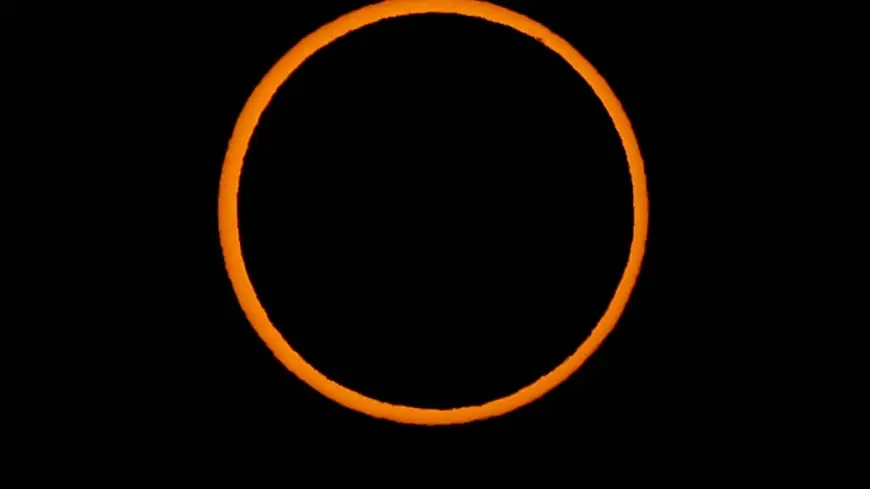
Feb. 17 also delivered an annular solar eclipse—the phenomenon often called a "ring of fire" when the moon covers the sun's center but leaves a bright ring. The eclipse track crossed mainly remote southern latitudes. Antarctica experienced the most dramatic view, with about 91% coverage, while Madagascar saw roughly 20% coverage. Southern tips of South America and Africa observed only partial phases. Wildlife in Antarctica, notably penguins, were among the few living observers in prime eclipse territory.
Skywatchers elsewhere saw only a partial dimming or none at all. The eclipse sequence had concluded by 9: 37 a. m. ET on Feb. 17.
What comes next: Lent, Ramadan and festival finales
With Ash Wednesday on Feb. 18, the Christian season of Lent began. Lent is traditionally a 40-day period of fasting, reflection and preparation leading toward Holy Week; in 2026, the Lenten season moved communities toward Easter in early April.
At the same time, the Islamic holy month of Ramadan was poised to begin either the night of Feb. 18 or Feb. 19, depending on local moon sightings. The lunar-based Islamic calendar means the precise start of Ramadan can vary by location, as communities and moon-sighting committees confirm the first crescent. When it begins, Ramadan brings daytime fasting, increased prayer and communal acts of charity, with the month concluding in spring with Eid al-Fitr.
The Lunar New Year festivities stretch across two weeks, generally ending with lantern festivals. In 2026 the celebration that began Feb. 17 was set to conclude on the night of March 3, coinciding with a full lunar eclipse later in the sequence.
For many, the overlap of pageantry and prayer was more than scheduling trivia: it created moments where public celebration and private observance coexisted in the same streets and neighborhoods. Parades ran alongside religious services and quiet observances, and the rare sky show added an unexpected backdrop to ceremonies already rich with meaning.