
























why is the air quality bad today: Dense fog advisory and air quality alert for New York and New Jersey

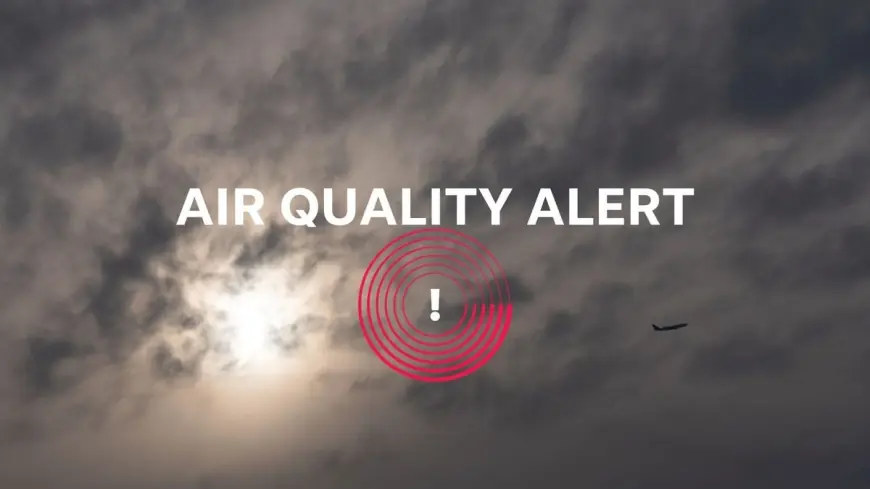
Updated on February 18, 2026 at 6: 40 AM ET — A combination of dense morning fog and stagnant air has led to an air quality health advisory across large portions of the metropolitan region. Officials are warning that fine particulate levels are expected to push the Air Quality Index above 100 in several counties, creating heightened risk for sensitive groups.
What is causing the poor air quality?
Two weather-related factors are coming together to produce the current conditions. First, a dense fog advisory is in effect for parts of southern Connecticut, northeastern New Jersey and southeastern New York through mid-morning, with visibility reduced to a quarter-mile or less in some spots. Fog and low clouds are signs of a stable, moist layer near the surface.
Second, winds are light and the atmosphere is relatively stagnant. That limited mixing traps pollutants near the ground, allowing fine particulate matter (PM2. 5) to accumulate. Officials have predicted outdoor PM2. 5 concentrations that will push the region’s Air Quality Index into the 100–150 range — classified as "unhealthy for sensitive groups. " In plain terms, children, older adults, pregnant people and those with heart or lung conditions face an elevated risk of symptoms such as throat or eye irritation, and may experience worsened breathing or cardiac issues.
Wildfire smoke remains a possible contributor when air masses transport particles from distant fires, but local sources also play a role. Vehicle exhaust, heating emissions and other combustion-related activities add fine particles that, without stronger winds to disperse them, accumulate under calm conditions.
Who should be concerned and what to do
Sensitive individuals should limit prolonged or heavy outdoor exertion while the advisory remains in effect. For the broader public, reducing time spent outdoors is a sensible precaution until winds pick up or rain helps clear the air. Officials have advised that the air quality alert will remain until midnight in many counties, and some areas may see the advisory extended if conditions do not improve.
Practical steps to reduce exposure include staying indoors with windows and doors closed, avoiding strenuous exercise outdoors, and postponing activities like burning yard waste or using gas-powered equipment that produce additional smoke and particles. Those who experience new or worsening respiratory symptoms are urged to consult their personal physician.
Safety on the roads and what motorists should know
The morning fog advisory, in place until 10: 00 AM ET for affected corridors, is producing pockets of very low visibility. Motorists should slow down, use headlights (not high beams), and increase following distances. Road crews caution that bridges and overpasses may be foggiest and drivers should expect sudden changes in visibility.
Combining limited visibility with poor air quality creates two separate hazards: breathe-protective choices for sensitive people, and visibility-related driving risks for everyone. If travel is necessary, plan extra time, avoid peak fog patches where possible, and consider alternative routes that move away from low-lying, fog-prone areas.
Officials continue to monitor conditions and will update advisories as the situation evolves. If winds strengthen or precipitation moves in later in the day, particulate concentrations should decline and air quality will improve.