




















How the Start of ramadan Is Determined — Does It Begin in the UK Today?

Saudi authorities and a number of Gulf states have declared Wednesday, February 18, 2026 (ET) the first day of ramadan, but Muslim communities in the UK remain divided over whether to begin fasting the same day. The disagreement stems from different interpretations of the tradition that each Islamic month starts with the sighting of the new crescent moon.
Why the date can differ
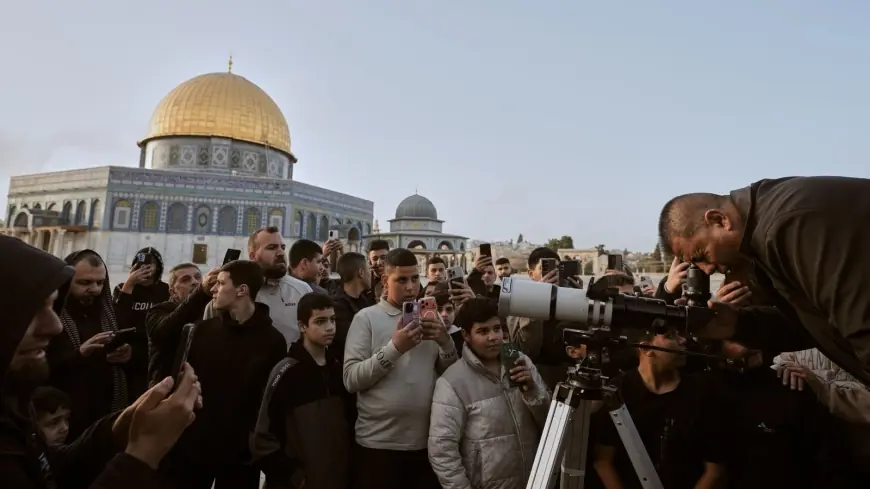
Islamic months are based on the lunar cycle, and the start of ramadan has traditionally been marked by the appearance of the new crescent. Some communities follow sightings made near the Arabian Peninsula, where the religion began, while others insist on local sightings or those observed in nearby countries. The technical challenge is simple: the crescent can be invisible to the naked eye or obscured by clouds depending on geography and atmospheric conditions, meaning one country may see it a day earlier than another.
Observatories and expert agencies use a combination of naked-eye observations and astronomical calculations to forecast visibility. Teams that look for the crescent often begin searches after local sunset; for example, observers at facilities used annually in Saudi Arabia began looking following sunset at roughly 10: 00 a. m. ET the day they carried out their checks. Some national offices that provide astronomical data warned that clear visibility would be limited on the relevant nights, which helps explain why declarations have varied across jurisdictions.
The result is a patchwork of start dates this year: some countries declared the month begins on Wednesday, February 18, 2026 (ET), while others declared Thursday, February 19, 2026 (ET). The different outcomes reflect both meteorological realities and long-standing theological and practical differences about whether to accept sightings from elsewhere or to rely on a locally observed crescent.
What this means for Muslims in the UK
In the UK the lack of a single approach means communities are split. A sizeable group follows the announcements made by authorities in the Arabian Peninsula, choosing to align with a sighting there. Another group starts ramadan when the moon is seen in closer Muslim-majority countries or when it is sighted over the UK itself. That can lead to households observing the fast on different days, and it affects communal events such as nightly prayers and the timing of the end-of-month festival, Eid al-Fitr.
Community leaders have called for more cohesion. Some argue a unified national approach would reduce confusion and help families, workplaces and mosques plan. Others caution that unity should not come at the expense of established religious practice, and many defend the legitimacy of local moon-sighting traditions. Organisations that promote local observation emphasise teaching and community engagement so people can perform the sighting themselves and collectively determine the start of each Islamic month.
For individual Muslims in the UK, the practical advice is straightforward: check with local mosques or community groups for their decision on when to begin fasting, and be mindful that neighbours or family members may follow a different timetable. In many places the first day chosen by one group is followed by the other a day later, and Eid observances can also fall on different dates as a result.
Whatever the calendar outcome, ramadan remains a month centred on fasting, prayer, reflection and charity. The differing start dates underscore the diversity of practice within Muslim communities in the UK and beyond, and they highlight an ongoing conversation about whether and how those communities might move toward a more unified approach in future years.