























Annular 'Ring of Fire' Solar Eclipse to Sweep a Sliver of Antarctica on Feb. 17, 2026 (ET)

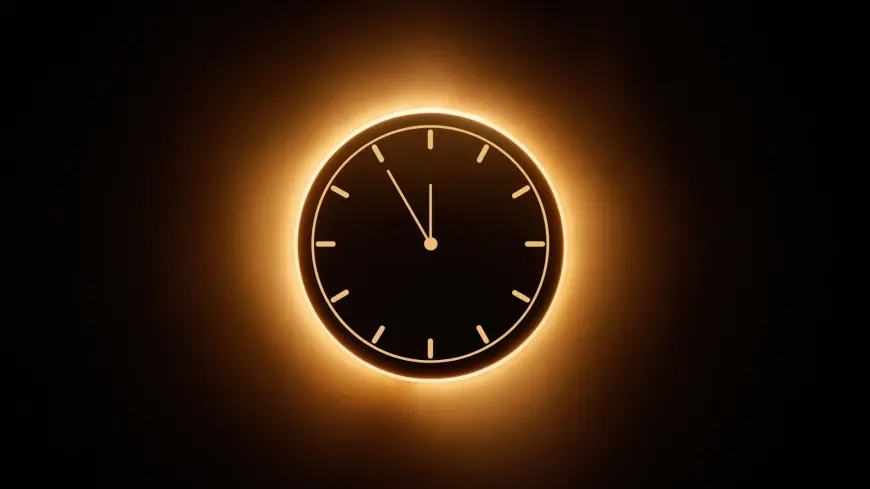
A rare annular solar eclipse will turn the sun into a dramatic "ring of fire" on Feb. 17, 2026 (ET), as the moon passes between Earth and the sun but does not fully cover the solar disk. The spectacle will be confined to a narrow corridor of Antarctica, with partial views available across wider southern latitudes.
What viewers can expect
An annular eclipse occurs when the moon is too distant from Earth to completely obscure the sun, leaving a bright outer ring visible at maximum eclipse. Observers located in the path of annularity will witness that classic "ring of fire" effect; the longest central phase will last up to about 2 minutes and 20 seconds at the point of greatest eclipse. At that moment the moon will cover roughly 96% of the sun's disk, producing a stunning, thin luminous ring.
The corridor where annularity will be visible is narrow: roughly 2, 661 miles long and about 383 miles wide (approximately 4, 282 by 616 kilometers). Only a very small portion of Antarctica falls inside that strip, so the full ring will be visible to a limited number of observers stationed along that route.
Who will see the eclipse and where partial views will appear
Because the path of annularity crosses a remote polar region, most of the world will not see the full ring. Elsewhere in Antarctica outside the central corridor, observers will see a partial solar eclipse. Partial phases will also be visible across parts of southern Africa and the southernmost tips of South America, where the sun will appear partially covered by the moon rather than forming a complete ring.
Skywatchers planning to attempt observations should confirm local visibility and timing for their specific location in Eastern Time (ET) before making travel plans. The narrowness of the annular path and the Antarctic setting mean that, for most people, the best opportunity to witness an eclipse this season will be as a partial event rather than the full annular display.
Safety first — and what comes next for eclipse watchers
Never look directly at the sun without proper protection. Whether watching an annular or partial eclipse, observers must use certified solar filters at all times. Solar eclipse glasses that meet international safety standards are required for direct viewing; cameras, telescopes and binoculars must have appropriate solar filters placed in front of the lenses. Ordinary sunglasses are not safe for eclipse viewing.
For those who miss the Feb. 17 event, there are significant eclipse opportunities on the near-term calendar. A total solar eclipse will arrive on Aug. 12, 2026 (ET), with totality crossing parts of Greenland, Iceland and northern Spain; broader regions of Europe and Africa will experience a partial eclipse. Additionally, a total lunar eclipse on March 3, 2026 (ET) will produce a deep red or "blood moon" visible across North America, Australia, New Zealand, East Asia and the Pacific.
Photographers and amateur astronomers should prepare gear with proper solar filters and verify observing conditions well ahead of time. Weather and the remoteness of the Antarctic path mean that many interested viewers will rely on planned scientific expeditions, live feeds, and later media coverage to experience the full annular phase. Regardless of how you watch, safety and realistic expectations will ensure the eclipse remains a memorable celestial event rather than a hazardous one.