

























‘Ring of fire’ solar eclipse to sweep Antarctica in February 2026; partial views for South Africa

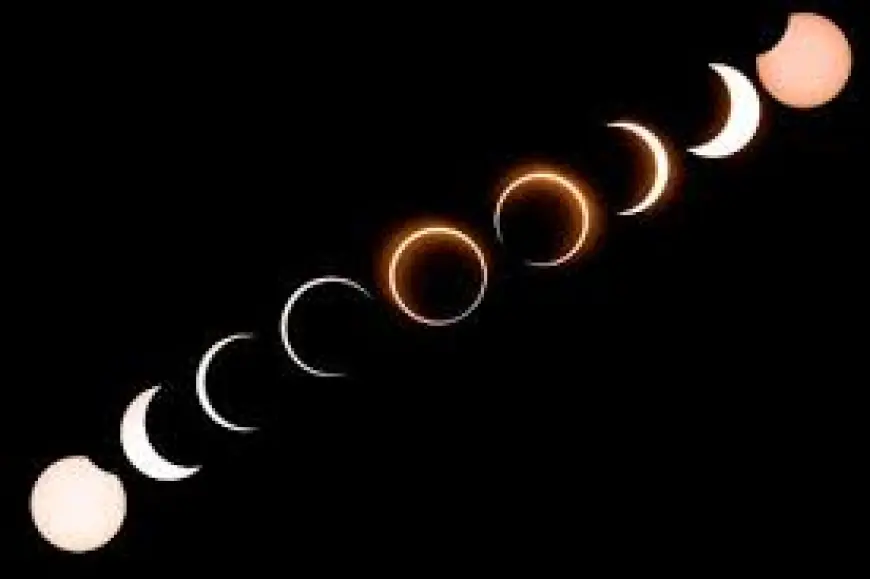
Skywatchers are turning their attention to mid-February 2026 for one of the next striking solar eclipses. The event will produce an annular "ring of fire" look across Antarctica while observers in parts of southern Africa, including South Africa, can expect a partial eclipse.
Path and visibility: where the eclipse will be seen
The eclipse in February 2026 is annular, which means the Moon will pass centrally in front of the Sun but will not cover it completely, leaving a bright ring visible around the lunar disk. The narrow path of annularity crosses parts of Antarctica, with the most dramatic views confined to the polar region. Much wider areas beyond that path will experience a partial eclipse.
Observers in southern Africa will see the Sun partially obscured during daylight hours. Exact start, maximum and end times will depend on your location; events like this are commonly presented in local time zones and in Eastern Time for international briefings. Those planning observations should check local eclipse timetables close to the date to pin down the precise windows for their towns and cities.
Because the path of annularity crosses remote and icy terrain, the best chance of a full ring-of-fire sightline will come from expedition cruises, research stations, or aerial operations near the Antarctic coastline. Such travel requires advance planning and contingency allowances for weather and logistics.
What viewers can expect and how to stay safe
Annular solar eclipses produce a distinctive appearance: a thin, luminous ring surrounding the silhouetted Moon. That effect is spectacular through proper optics but can be dangerously bright to the naked eye. Looking directly at the Sun without certified solar filters is unsafe at all stages of an annular eclipse. Specialized eclipse glasses or solar viewers that meet international safety standards must be used. Improvised filters such as smoked glass, unapproved sunglasses, or camera viewfinders are not safe substitutes.
Public viewing events typically employ projection methods and filtered telescopes for group audiences. Photographers should use dedicated solar filters over lenses and sensors; remove filters only during totality in a total solar eclipse, but for an annular eclipse the Sun is never fully covered, so filters remain necessary throughout the event. Tripods, remote shutters and lower ISO settings help capture crisp images while protecting equipment and eyesight.
For people in urban settings who cannot travel, the eclipse will still be meaningful: even a partial obscuration changes daylight quality and can offer dramatic photographs of crescent-shaped highlights on the ground and through tree leaves. Check local outreach programs and planetariums for planned viewing sessions and safety guidance.
Why these solar eclipses matter to scientists and the public
Solar eclipses provide rare opportunities for both scientific observation and public engagement. Researchers use eclipses to study the solar limb, chromosphere and the response of Earth’s upper atmosphere to sudden changes in solar radiation. For educators and amateur astronomers, an eclipse is a compelling moment to showcase celestial mechanics—the precise orbital choreography that leads to either total or annular events.
Because the February 2026 annular path sits largely over Antarctica, the event also highlights how geography influences eclipse visibility and why some of the most dramatic astronomical sights are often in remote locations. Enthusiasts considering travel now should confirm expedition availability, verify safety protocols, and allow time for gear and training. Organizers and institutions that plan public viewing programs should emphasize eye safety, provide vetted equipment, and prepare contingency plans for weather disruptions.
As February 2026 approaches, those interested in witnessing a ring of fire or a partial solar eclipse should make safety their top priority and plan logistics early. Solar eclipses remain among the most accessible and awe-inspiring astronomical events, whether experienced from an icy coastline, a southern city, or a backyard with proper protection.