























Jesse Jackson, towering civil rights icon, dies following lengthy illness

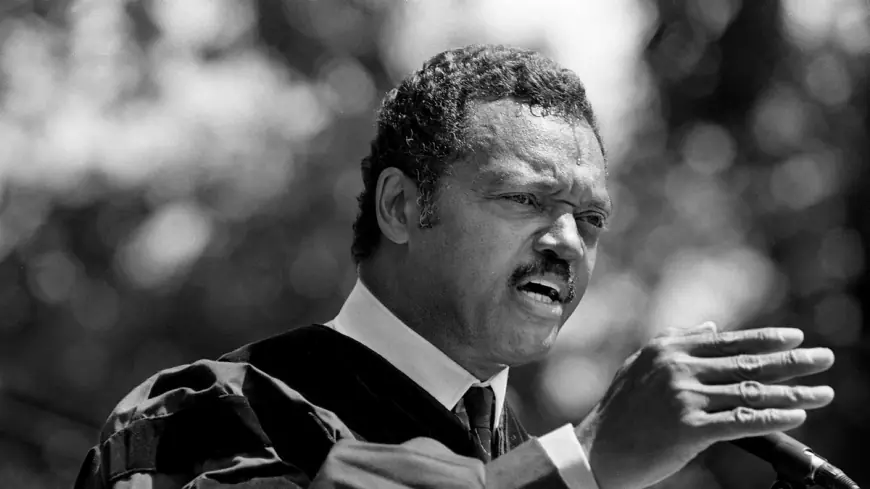
The Rev. Jesse Jackson, a singular force in American civil rights who marched with Martin Luther King Jr., ran for president and built a lasting national movement for Black political power, has died. He was 84. The Rainbow/PUSH Coalition said he died peacefully on Tuesday morning (ET), surrounded by family.
From a teen protester to a national leader
Born in Greenville, South Carolina, in the fall of 1941, Jackson’s life of activism began as a teenager. At 18 he and seven other young men were arrested in 1960 for protesting segregation at their town’s public library. He soon became a close lieutenant to Martin Luther King Jr., participating in pivotal campaigns for voting rights and civil equality throughout the 1960s.
By 1965 he walked from Selma to Montgomery to press for Black voting rights, and by 1967 he was running operations for a major civil rights organization in Chicago, a city that became his base. He was just feet away when King was assassinated in 1968, an event that steeled his resolve to push for political and economic power for Black Americans.
Jackson founded what became the Rainbow/PUSH Coalition and used both moral pressure and public campaigns to challenge corporations and institutions on issues of diversity and voting access. He negotiated the release of hostages overseas and helped register millions of voters during his national presidential runs in 1984 and 1988, campaigns that broadened the scope of Black political engagement in the Democratic Party.
Illness, later activism and final days
Jackson’s public voice and presence had been softened in recent years by a lengthy battle with progressive supranuclear palsy, a degenerative neuromuscular condition similar to Parkinson’s disease. He announced the diagnosis in 2017, urging supporters to keep pushing for human rights even in the darkest moments. In November he was hospitalized after complications related to that illness on Nov. 12 (ET) and was later released.
Despite physical limitations that affected his voice and mobility, Jackson remained engaged in contemporary struggles. He was arrested twice in 2021 in protests over the Senate filibuster rule, underscoring his willingness to court arrest for political causes. That year he and his wife Jacqueline were hospitalized with COVID-19 complications, an episode that tested the couple’s health but did not end their public advocacy.
Jackson’s presence was notable at critical moments in the past decade. He traveled to Minneapolis in 2021 to support protesters awaiting a verdict in the trial of a police officer charged in the killing of George Floyd and attended services for Daunte Wright, urging younger activists to sustain their movements with discipline and moral clarity.
Legacy and the movement ahead
Jackson’s career fused grassroots organizing, electoral politics and direct moral pressure on economic power. He earned a Presidential Medal of Freedom and became one of the best-known Black activists worldwide. His presidential campaigns energized a new generation of voters and highlighted questions of economic justice and corporate responsibility that continue to shape political debate.
Leaders in the broader justice community noted his longevity and persistence. One civil-rights leader described Jackson as someone who repeatedly chose activism over an easier life, embodying a sustained commitment that bridged the civil-rights era and today’s struggles over voting access and resurgent white nationalism.
As the country absorbs the loss of another veteran civil-rights figure, advocates and organizers are likely to draw on Jackson’s playbook—combining public protest, voter registration and strategic pressure on institutions—to press for policy change. His life spanned the arc of the modern movement for Black equality, from sit-ins and marches to courtroom fights and corporate campaigns, leaving a complex and enduring imprint on American political life.